WHAT I READ IN 2019 and the first month of 2020

This topic often comes up in conversation, and I often lead with “I don’t read nearly as much as I did before I started writing.” While that may be true, after doing a little back-tracking into 2019, I came up with a fairly healthy list of books that I somehow found the time to read.

I’d like to share that list with you, to include a few words about the titles or series. I’ll also link these titles to Amazon if you want to dig deeper. No affiliate income is derived from these links. I probably missed a few books…as I created the list, I thought of more.

LITERARY FICTION:

  • We Were the Lucky Ones by Georgia Hunter – Heart wrenching, based on the true story about one Polish-Jewish family’s epic struggle to survive the World War II. Compelling from star to finish.
  • YES…I need to expand this section in 2020!

HORROR:

  • Head Full of Ghosts by Paul Tremblay – Modern day, sublime version of The Exorcist…and so much more. The end will blow you away.
  • Disappearance at Devil’s Rock by Paul Trembly – Made me scared to get up in the middle of the night…again.
  • The Outsider by Stephen King – King at his best. Read the book and then watch the HBO series. They compliment each other perfectly.
  • The Institute by Stephen King – Loved this one. Had an epic feel. The end will leave you thinking hard for days to come.
  • We Sang In The Dark by Joe Hart – (Not yet released) This one left me afraid of the dark for a while. Joe has a way of doing that with his novels.

THRILLER (Any subgenre):

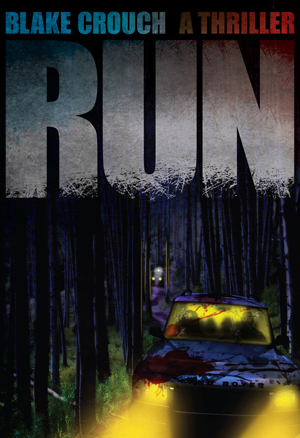
  • Recursion by Blake Crouch – Mind-blowing. Just get it right now and take this incredible journey.
  • Don’t Make a Sound by T.R. Ragan – (Not yet released) Takes the revenge thriller to the next level in a gritty and chillingly realistic hunt for a killer.
  • Origami Man by Matthew FitzSimmons – (Not yet released) Hard to beat the first four books in the Gibson Vaughn series, but FitzSimmons does it handily. Highly recommend the series!
  • A Gambler’s Jury by Victor Methos – Underdog, scrappy lawyer caught up in vicious conspiracy. Edgar nomination for Best Novel.
  • The Killer’s Wife by Victor Methos – Serial killers and a haunted prosecutor. Twists and turns galore.
  • Pray for the Girl by Joseph Souza – Edgy, tense…will keep you guessing until the end.
  • The Chain by Adrian McKinty – One of the most inventive premises I’ve read in a long time. Unputdownable.
  • Green Sun by Kent Anderson – A hypnotic cop thriller set in early 1980’s Oakland, California. Couldn’t put it down.
  • The Eighth Sister (Charles Jenkins Book 1) by Robert Dugoni – Flawlessly executed espionage novel and white-knuckle journey through the byzantine world of modern intelligence.
  • The Last Agent by Robert Dugoni – (Not yet released) Book 2 in Charles Jenkins series. Knocks it out of the park with a full throttle cat and mouse spy story.
  • The Killer Collective by Barry Eisler – A mashup of Eisler’s most iconic characters in full-tilt covert operations thriller.
  • Dark Tomorrow (Lisa Tanchik Book 2) by Reece Hirsch – (Not yet released) Cyber-espionage and warfare amidst a high stakes federal manhunt for a murderous sleeper agent.
  • The Spider Heist by Jason Kasper – Not your ordinary bank heist book. Not by a long shot. High octane action and twisty plot.
  • The David Rivers Thrillers (Books 1-5) by Jason Kasper – Gritty, brutal, unapologetic action by a former Green Beret. Burned through these books one after another.
  • Murder Board (Boston Crime Thriller Book 1) by Brian Shea – Brian Shea is the real deal. A veteran detective turned thriller author…It truly doesn’t get any better.
  • The Little Drummer Girl by John le Carre – Classic le Carre. Meticulous. Sets the standard.

POST-APOCALYPTIC/DYSTOPIAN/SCI-FI:

  • Bar at the End of the World by Tom Abrahams – Tom takes a killer premise and builds a dystopian world like you’ve never seen before.
  • Winter World (The Long Winter Trilogy Book 1) by A.G. Riddle – Classic A.G. Riddle. End of the world story that takes reader across space and time.
  • Solar War by A.G. Riddle – Book 2 in the Long Winter Trilogy. Riddle does what he does best…pushes the story to unimaginable places.
  • Our War by Craig DiLouie – A second civil war burns out of control across America. Brilliant rendering of a worst case scenario that feels all too real.
  • Sons of War by Nicholas Sansbury Smith – (Not yet released) As always, Smith reboots the post-apocalyptic genre with a unique story of a societal collapse.
  • The Path Between Worlds by Paul Antony Jones – Epic, saga like potential set in a world beyond imagination, but eerily familiar.
  • Forward Collection (short stories by Andy Weir, Blake Crouch, NK Jemisin, Paul Tremblay, Veronica Roth and Amor Towles) – Take your pick…you can’t go wrong with this powerhouse group of authors.
  • The Second Sleep by Robert Harris – Eerie from start to finish. A slow burn, dystopian masterpiece.

NON-FICTION:

  • Red Notice by Bill Browder – A sweeping indictment of Russian corruption and malice. Fast paced, expertly crafted. A must read.
  • Bad Blood by John Carreyrou – Investigative masterpiece chronicling the rise and fall of Theranous, a nebulous and sinister Silicon Valley startup.
  • The Road to Unfreedom by Timothy Snyder – Hard hitting book. “A stunning new chronicle of the rise of authoritarianism from Russia to Europe and America.
  • The Fifth Risk by Michael Lewis – “Masterfully and vividly unspools the consequences if the people given control over our government have no idea how it works.

THE RAID (Ryan Decker 2) is now available

Book 2 in the Ryan Decker series is now available internationally at Amazon (see links below book cover) in ebook, paper and audiobook formats.

A Border Patrol murder exposes a high-level conspiracy in USA Today bestselling author Steven Konkoly’s explosive thriller.

After exposing and dismantling a deep-state conspiracy that nearly destroyed his life, Ryan Decker finds his covert skills have put him on the radar of influential Senator Steele. Now Steele needs his help. Two patrol agents were killed in a bizarre explosion near the US-Mexico border—and the evidence doesn’t line up with the official story.

Enlisted by Steele to run an undercover, off-the-books investigation, Decker and his partner, Harlow, head to the border town of Tecate. But when they’re caught in an ambush, Decker realizes they’ve stumbled onto something far more dangerous than any of them understood.

The cover-up is rooted deep in the Department of Defense itself. Fearful for their own lives and unable to trust anyone outside their small circle of skilled associates, Decker and Harlow set in motion a risky plan to stop a criminal conspiracy.

US AND INTERNATIONAL LINKS BELOW! Available at AMAZON in ebook, hard copy, hard cover and audiobook form.

CLICK HERE FOR THE U.S. STORE

CLICK HERE FOR THE UK STORE

CLICK HERE FOR AUSTRALIA

CLICK HERE FOR CANADA

THE RESCUE (Ryan Decker Book One) — The #1 Thriller on Amazon during March 2019!

WOW! It has been over a year since I last posted here. Crazy that more than a year has passed since the last Steven Konkoly book. I promise I won’t make you wait that long again. That said, I think you’ll find the long wait to have been well worth it.

THE RESCUE has arrived, featuring Ryan Decker, Harlow Mackenzie and a cast of memorable characters that early readers have thoroughly enjoyed. Don’t take my word for it! Over 600 reviews with a 4.6 out of 5 average speak for THE RESCUE.

US AND INTERNATIONAL LINKS BELOW! Available at AMAZON in ebook, hard copy, hard cover and audiobook form.

CLICK HERE FOR THE U.S. STORE

CLICK HERE FOR THE UK STORE

CLICK HERE FOR AUSTRALIA

CLICK HERE FOR CANADA


Sucked into a FIRE STORM

That’s what will happen when you start reading book 3 in The Zulu Virus Chronicles!

SO WHAT ARE YOU WAITING FOR? Fire extinguisher is probably the right answer.

FIRE STORM: Book 3 in The Zulu Virus Chronicles is now available in ebook and hard copy format. Audiobook will be available in mid-March.

CLICK HERE TO ORDER THE KINDLE BOOK

CLICK HERE OT ORDER A PAPER COPY

SOMETHING MERCILESS WATCHES OVER THE OUTBREAK–GUIDING ITS COURSE.

Having narrowly survived the KILL BOX, HOT ZONE’s hardened survivors and their KILL BOX allies separate to pursue different objectives–outside of the Indianapolis quarantine zone.

For David Olson, that means bringing his son south, to the safe haven of his parents’ home–far away from the infected cities. Eric Larsen takes him up on the offer to rest and heal at the house, before departing on the long journey to find his family in Colorado.

For Rich and his secretive black ops team, that means transporting Dr. Chang and Dr. Hale to a secure facility out east, where they will join the nation’s few surviving bioweapons researchers–with the hopes of pinpointing the source of the virus and possibly developing a vaccine.

Neither group will get very far, before the true face of the evil controlling the Zulu Virus arrives–tempting them with irresistible opportunities.

DANGEROUS OPPORTUNITIES, WITH THE POTENTIAL TO SWEEP THEM RIGHT INTO A LETHAL FIRESTORM

Your KILL BOX has arrived

Not something you normally hear! 

FOURTEEN NOVELS—8,000 pages—6,300 Amazon reviews later, I bring you….

A FIFTEENTH NOVEL. 

KILL BOX: Book 2 in The Zulu Virus Chronicles is now available in ebook and hard copy format. Audiobook is on the way (early January).

CLICK HERE TO ORDER THE EBOOK

CLICK HERE TO ORDER A PAPER COPY

A LETHAL BIOWEAPON HAS BEEN RELEASED ACROSS AMERICA.

With their daring escape plan thwarted at the last possible moment, HOT ZONE’s motley band of survivors faces a worst-case scenario. Forced to take refuge near the epicenter of the bioweapons outbreak, deep inside in a city gone mad, THEIR TIME IS RUNNING OUT.

Unable to slow or adequately contain the infected population, the government has triggered KILL BOX, a desperate and merciless contingency protocol.

HOT ZONE’s survivors have less than twenty-four hours to escape the KILL BOX.

The Zulu Virus Chronicles places you at ground zero during a chillingly realistic, insidious “event.” This is a story about regular people from different walks of life coming together to survive an unthinkable disaster.

Welcome to the KILL BOX!


Author Steven Konkoly and the Wonderful World of Audiobooks

I know. The blog post title sounds like some kind of movie nobody should watch, or an audiobook nobody should listen to! I figured the worse the title, the more curious you’d be. Morbidly curious.

HOT ZONE just hit the audiobook shelves at Audible and iTunes, so instead of a post with a single title, I thought I’d create a post listing all of my audiobook titles. A one stop reference for those of you with long commutes, long walks to take, long breaks at work OR those of you who simply don’t like to “READ.” I know who you are!

CLICK ON THE LINKS BELOW FOR EACH STORE

I’ll start with HOT ZONE and break it down by series after that. Happy Listening!

HOT ZONE at  AUDIBLE | iTUNES


THE PERSEID COLLAPSE SERIES


THE PERSEID COLLAPSE (BOOK 1) at  AUDIBLE | iTUNES

EVENT HORIZON (BOOK 2) at  AUDIBLE | iTUNES

POINT OF CRISIS (BOOK 3) at  AUDIBLE | iTUNES

DISPATCHES (BOOK 4) at  AUDIBLE | iTUNES

THE JAKARTA PANDEMIC at  AUDIBLE | iTUNES (sort of a prequel)


THE BLACK FLAGGED SERIES


ALPHA (Book 1) at  AUDIBLE | iTUNES

REDUX (Book 2) at  AUDIBLE | iTUNES

APEX (Book 3) at  AUDIBLE | iTUNES

VEKTOR (Book 4) at  AUDIBLE | iTUNES

OMEGA (Book 5) at  AUDIBLE | iTUNES


THE FRACTURED STATE SERIES


FRACTURED STATE (Book 1) at  AUDIBLE | iTUNES

ROGUE STATE (Book 2) at  AUDIBLE | iTUNES


Welcome to the HOT ZONE

Not words you’d typically want to hear under any other circumstances.

HOT ZONE, the first book in THE ZULU VIRUS CHRONICLES, is now available in Kindle or hard copy on Amazon. The audiobook version will follow in August. HOT ZONE is also enrolled in the Kindle Unlimited program.

CLICK HERE TO GRAB THE KINDLE VERSION

CLICK HERE TO GRAB A PAPER COPY

While you wait for you book to arrive or download, check out my recent chat with LEE WEST, author of the Blue Lives Apocalypse series. Lee was one of first to read HOT ZONE, providing some spot on developmental advice. You can also CLICK HERE to check out THE ZULU CHRONICLES VIRUS PRIMER for more information about the series.

QUESTION AND ANSWER WITH STEVEN KONKOLY:

Lee: Having just finished HOT ZONE, I’ll start out by saying “I see what you did there.”

Steve: Is that a good or bad thing?

Lee: It’s a very good thing. For those of you wondering, there’s a subtle tie-in to one of your previous series, I won’t give it away, but let’s just say that it’s brilliant, hiding just below the surface. Obviously, you did this on purpose. Can you expand on that?

Steve: Guilty as charged. When I set out to write another series in the post-apocalyptic/dystopian/disaster genre, I wanted to take it in a different direction than most of the books recently written in the genre. I didn’t have to look very far. I had been sitting on a devastating scenario since 2012, when I wrote REDUX: A Black Flagged thriller. I had already created the perfect bioweapon, and put it in the hands of some very nefarious people. They just never got to use it thanks to some skilled and enterprising American operatives. The ZULU VIRUS CHRONICLES imagines what might have happened if that virus had been released.

Lee: So this isn’t a Black Flagged book.

Steve: Right. Fans of those books will find a few Easter Eggs, but this is an entirely new story that every thriller reader will enjoy. There’s no homework required to read the ZVC books.

Lee: That’s good to hear. Nobody likes homework. You obviously enjoy unleashing viruses on the world—that sounded kind of odd, didn’t it?

Steve: It did, but let’s go with it.

Lee: I’ll rephrase it. This isn’t the first time you’ve fictionally unleashed a virus on an unsuspecting world. Your first novel, The Jakarta Pandemic, imagined what it might take for an everyday family to survive a lethal pandemic and the ensuing societal collapse. In HOT ZONE, I strongly sensed a return to that type of storytelling.

Steve: I can’t tell you how happy I am to hear that. I really wanted to return to my roots with the ZULU VIRUS CHRONICLES, and tell the kind of story that launched my career. The Jakarta Pandemic was an intimate, if not claustrophobic, look at a pandemic’s impact on “normal people.” It focused less on the disease itself and more on the unpredictability of the human factor.

Lee: That’s what made it so fascinating in my opinion. It bucked all previous trends, focusing on regular citizens instead of the usual “CDC scientist running around the world saving the day.” Your characters barely left their neighborhood, and the neighborhood nearly killed them.

Steve: I take a similar approach in HOT ZONE, but the characters won’t have the luxury of lingering in one place for very long. Readers will get a taste of several different walks of life, as the disaster unfolds around this diverse group of characters. By the time the outbreak is in full swing, the characters will be doing what they do best in my books. Trying to survive. Moving frequently will be one of the keys to survival in this series.

Lee: You certainly don’t make it easy on your characters in this one. I can attest to that. I do have to call you out on one thing. There’s a hint of conspiracy in HOT ZONE, and a scientist who looks like he might be in a position to “save the day.” He definitely falls into the regular character category for now, but I see some potential. Am I wrong?

Steve: I can neither confirm nor deny the expansion of his role in future books, but I do like to take characters out of their comfort zones, so we’ll see. As for hints of conspiracy in HOT ZONE—don’t forget that we’re talking about a suspected, widespread bioweapons release on U.S. soil. A conspiracy lurks. I just haven’t decided how much of it will come into play within the series. Right now, it’s in the background, where it might reach out from time to time to hinder or even help the characters—the true focus of the story.

Lee: HOT ZONE is a frighteningly realistic look at a bioweapons attack from several angles on the ground. You obviously put a ton of research and thought into this scenario. So…why bioweapons?

Steve: Because bioweapons scare the $#@% out of me! Seriously. I wrote The Jakarta Pandemic partly because I’ve always been obsessed with viruses and biological warfare. I blame Stephen King’s The Stand, which I read as a teenager. People forget that Captain Trips, the virus in The Stand, originated in a fictional U.S. bioweapons lab. The beginning of that book was brilliant, and stuck with me for years. Still does. I’m rambling. After The Jakarta Pandemic, I didn’t stray far from viruses. No wonder. Right?

Lee: I see where you’re coming from, now.

Steve: I don’t like to be predictable. That’s a bad thing for an author.

Lee: You’re hardly predictable, especially with HOT ZONE. I guarantee readers won’t see where this book is headed. Last question. You claimed to have “created” the perfect bioweapon. What did you mean by that, fictionally of course.

Steve: I appreciate the disclaimer. I don’t need any more black vans on the block. Bioweapons in general are horrifying by nature, designed not only to kill and maim, but to inflict fear. A slow killer that requires the maximum amount of resources to handle. There’s no easy solution when dealing with an effective bioweapons attack. Unlike bullets or bombs, a properly designed bioweapon can cripple everyone, but leave them alive—needing extensive on site care and support. The impact of a bioweapon can’t be underestimated or overstated. It’s more like the “perfect weapon.” And in the grand scheme of terrorist weapons, they can be relatively inexpensive, flying under the radar in hidden laboratories around the world, or right here in the U.S.

Lee: Thanks for scaring the $#@! out of me, Steve.

Steve: Any time. Sleep tight.

THE ZULU VIRUS CHRONICLES PRIMER

WITH LESS THAN TWO MONTHS BEFORE THE PROJECTED RELEASE IN LATE JUNE…I figured it was time to give give you more than just a few teasers about HOT ZONE, book one in The Zulu Virus Chronicles.

Before I go crazy here, I want to highlight an opportunity to be an integral part of the The Zulu Virus Chronicles launch. I plan to provide advanced reader copies (ARCs) of HOT ZONE (and all future books in this series) to a sizable group of readers. I can’t include everyone in this, but for those of you that would be willing to read a free copy of the books ahead of the launch, and possibly share your opinion of the book with the pubic, I will consider you a candidate. I will also form a members only group on Facebook, where we can “hang out,” and I can pass news, launch material and get your opinion on aspects of the story. You don’t have to be on Facebook to be part of this group. If you’re interested in doing this, send me an email at freebooks@striblingmedia.com OR message me directly at my author page on Facebook by CLICKING HERE.  

NOW FOR THE FUN STUFF. What exactly can you expect from The Zulu Virus Chronicles?

Fans of my Black Flagged books will be somewhat familiar with the Zulu Virus, which has been featured in that series. The Zulu Virus Chronicles, however, takes place in a world mostly separate from the Black Flagged series. An alternate reality, so to speak. Black Flagged readers will catch a few “Easter eggs,” but The Zulu Virus Chronicles is a post-apocalyptic thriller saga, with a strong hint of political/government conspiracy. The setting is current day, in a Midwest city—Indianapolis. Much of the action takes place within a thirty minute drive of my house. I’ve driven the routes. Walked the streets. Shopped in the same stores. Visited the locations. I kind of feel bad inflicting this disaster on my new hometown, but it’s what I do. Scarborough, Maine was never the same after The Jakarta Pandemic. I just hope my new neighbors don’t think I’m crazy…too.

With that said, here’s the cover and blurb for HOT ZONE, BOOK ONE. After the blurb, you’ll find several sample chapters, which will introduce you to all of the main characters, and hopefully scare the $#@! out of you. Keep in mind. The weaponized virus you’ll meet in these chapters was not my idea. Minds far more disturbed thought of this first. I just hope they never successfully create and deploy it.

By the pricking of my thumbs,

Something wicked this way comes.

-William Shakespeare’s Macbeth-

SOMETHING INSIDIOUS HAS EMERGED—RIGHT IN THE HEARTLAND OF OUR NATION.

Dr. Lauren Hale, a hospital resident, is nearly killed by a raving mad emergency room patient, in a senseless, unprovoked attack.

Officer David Olson, veteran cop and former Marine, returns from a father-son camping trip to discover that his ex-wife has vanished under bizarre circumstances, and his police department is on the verge of collapse.

Jack and Emma Harper, a young upwardly mobile couple, find their cozy, city neighborhood rapidly descending into madness.

Dr. Eugene Chang, a research scientist for major pharmaceutical company, makes a shocking discovery that might explain the rapidly spreading wave of illness and violence gripping the city.

Eric Larsen, leader of a top-secret, rapid-response unit, circles high above Indianapolis, in an unmarked military transport. Mission still unknown, his team waits to parachute into the night.

WITHIN FORTY-EIGHT HOURS, ALL OF THEIR WORLDS WILL COLLIDE, driving them to join forces to survive the living nightmare that has been unleashed on their city—AND THE NATION.

WELCOME TO THE HOT ZONE!


SAMPLE CHAPTERS BELOW. Keep in mind, these have not been professionally edited. This is a raw, sneak peek into HOT ZONE.

CLICK HERE TO DOWNLOAD SAMPLE CHAPTERS IN WORD FORMAT

CLICK HERE TO DOWNLOAD SAMPLE CHAPTERS IN PDF FORMAT


MAY DEALS

THE DEALS AND NEW RELEASES KEEP ON COMING! I’ll keep this short, in bullet format, because my wife informed me that I have a tendency to ramble…and she’s the boss.

1.) Both novels in my Fractured State series (near future covert operations and conspiracy thriller) have been discounted by my publisher to $1.99. They aren’t free, but at $1.99 each, you’re looking at a 75% discount for the series. Click the images below to grab a copy from the U.S. Amazon store. Sorry, but the deal is not available outside of the U.S.


2.) Long time good friend and fellow author, Lee West, just released Resist and Evade, sequel to the smash hit, Survive and Escape. Lee’s Blue Lives Apocalypse Series focuses on the police response during a widespread EMP event; a unique twist in an overworked genre. At my recommendation, Lee keeps the series at a very affordable $2.99 each. Trust me. These books are a steal at the price. Check out this series if you’re looking for something new in the post-apocalyptic genre. CLICK ON THE IMAGES for the U.S. Amazon Store.


3.) Bestselling author and good friend, Nicholas Sansbury Smith, has taken the post-apocalyptic genre by storm with his TRACKERS series. Nick rocked the military post-apocalyptic thriller world with his EXTINCTION CYCLE series, bringing that same expertise to the TRACKERS books. THE HUNTED, book 2 in the series hits the shelves (ebook and paper) on May 4. THE STORM, book 3, comes in October 2017. This is a very reasonably priced, rock-solid series of books. The first book is $2.99, a complete steal for this USA Today Bestselling author. CLICK ON THE IMAGES for the U.S. Amazon Store. You can also follow Nick through his newsletter by CLICKING HERE.


4.) Later this week, I’m going to reveal the full premise of my upcoming series, THE ZULU VIRUS CHRONICLES, to include a few initial chapters. I’m beyond excited about this series—the first book will be available in June 2017.

THANK YOU FOR YOUR CONTINUED READERSHIP AND SUPPORT!


A CONSPIRACY COME FULL CIRCLE—THE BLACK FLAGGED LEGACY AND BEYOND

***Post-apocalyptic fans will find some VERY exciting news at the end of this post (new series), so keep reading. Warning: Spoilers ahead if you haven’t read the Black Flagged series***

I’ve led readers on a wild ride through the Black Flagged series, most of that ride centered around a particularly nasty, weaponized virus created by Dr. Anatoly Reznikov, a devilishly unhinged, former employee of the Russian Federation’s State Research Center of Virology and Biotechnology (VECTOR Institute).

REDUX (Book 2) followed Dr. Reznikov to Monchegorsk, Russia, where he infected a city of 60,000 inhabitants with the ZULU Virus—in a twisted revenge plot against the Russian government. Readers saw first hand what can happen to a populated area hit with the virus.

1549-steven-konkoly-redux_s

APEX (Book 3) brought the ZULU Virus to the United States, where it was snatched from the hands of Al Qaeda, by a sophisticated domestic terrorist group that had orchestrated the creation and delivery of the virus from the very start.

1550-steven-konkoly_apex_2

VEKTOR (Book 4) extinguished the bioweapons threat created by Dr. Reznikov, along with the illegal bioweapons research program at the Vector Institute—ALMOST.

1551-steven-konkoly-vektor_l

OMEGA (Book 5) brings Dr. Reznikov and his designer viruses back into the spotlight, amidst political turmoil in the United States and a blossoming conspiracy.

1543-steven-konkoly-omega_2

VORTEX (Book 6)—TO BE RELEASED IN 2017 OR EARLY 2018—will marry Dr. Reznikov’s lethal creations to the ultimate conspiracy against the United States.

Excited yet! I am. The conspiracy introduced in REDUX (Book 2) will come full circle in VORTEX (Book 6), which I promise will be unlike anything you’ve read before. I know, that’s a tall order.


Why should post-apocalyptic readers and fans be excited by all of this?

Think The Jakarta Pandemic meets The Perseid Collapse, with a hint of conspiracy. Still not convinced?

CLICK HERE (PDF) to read a few of the hard core post-apocalyptic chapters from Black Flagged Redux to get a taste of what’s to come. This series will not be directly linked to the current Black Flagged books. It is a standalone, post-apocalyptic series based on a worst-case scenario release of the ZULU Virus in the United States.

virus-imageWHAT IS THE ZULU VIRUS? Check out the description of the virus taken directly from the Black Flagged novels. 

“A weaponized form of herpes simplex encephalitis, genetically modified to aggressively attack the brain’s temporal lobe. Left untreated, herpes simplex encephalitis has a high fatality rate. Near seventy percent. Treated aggressively, we can reduce this to thirty percent.”

“If the Zulu virus is released into a public water source, containment of the disease itself will not be our biggest challenge. Physical containment of the impacted community and the management of information will be your biggest priority. Weaponized encephalitis is the ultimate biological weapon.”

“Herpes simplex encephalitis does more than produce casualties…In those treated aggressively, less than three percent regain normal brain function. This can vary from very mild to severe impairment, depending upon several factors. Early treatment with high dose, intravenous acyclovir is the only modifiable factor scientists have identified.”

“If released in a municipal water supply, unknown to the population, it has the potential to affect nearly everyone. Take a small town of twenty thousand people. Even if we discovered the attack immediately after the virus circulated through the drinking water and treated everyone in the town with acyclovir, 95% of them will suffer neurological impairment at varying levels. 19,000 citizens. Neurological impairment will range from full homicidal rage and hyper-aggressive behavior to minor seizures. Brain damage in almost every case.”

Media Report regarding situation in Monchegorsk, Russian Federation taken from Black Flagged Apex—IMAGINE THE SAME REPORT COMING OUT OF INDIANAPOLIS.

“Confirmed news from the area is scarce, but persistent rumors of a deadly epidemic continue to surface. So far, nobody has been able to confirm the shocking and unbelievable footage sent anonymously to Reuters, suggesting that the Russian military is systematically destroying the city and killing its inhabitants. Russian officials have made no comment. One thing is for certain, the Russian government has taken extraordinary measures to seal off the area surrounding Monchegorsk. What is truly frightening is the fact that the world hasn’t seen an emergency government response on this scale from the Russian government since Chernobyl.”

MORE NEWS ABOUT THIS SERIES TO COME! Enjoy this cover reveal. 

OMEGA

1160 Steve Konkoly BLACK FLAGGED banner

FINALLY! Three years isn’t that long…right?

Don’t spend another second waiting. CLICK HERE TO ORDER

1543-steven-konkoly-omega_2THANK YOU for very patiently waiting for this book. I released Black Flagged VEKTOR (Book 4) in the summer of 2013, after deciding to take a short break from the series. I’d written four books back-to-back in two years and was starting to see the Black Flagged characters in my sleep. That short break turned into a long detour. Six books and several novellas, in two different series, to be exact. I really appreciate your loyalty and patience. I think you’ll find OMEGA worth the wait.

I had a lot of time to ponder the fifth book, which I thought would be the last novel in the core series. I’m very pleased to let you know that there will be a sixth book. Halfway through OMEGA, I realized that the finale I had in mind for this story was worth a full novel, so you can expect book six within the next year or so. I don’t want to give too much away, but the scope of the conspiracy unveiled in OMEGA is vast and devastating, unlike anything you may have read before.

On that note, I need to make a statement that I’ve never included in my books before OMEGA:

All characters and corporations or establishments appearing in this work are fictitious. Any resemblance to real persons, living or dead, is purely coincidental.

Why the disclaimer? You’ll soon find out. Here’s a little background and a hint. In 2012, I created a fictitious political movement for Black Flagged APEX, called True America. Some similarities in core beliefs between the Tea Party movement and True America existed, but my intention, as stated in APEX, was to create a third, viable party vying for political power. I had plans for True America later in the series. Fast-forward to the spring of 2016, when I finished the first third of OMEGA, in which True America shocks the establishment and wins the 2008 (series time) presidential election. You can probably see where this is headed.

“Truth is stranger than fiction, but because Fiction is obliged to stick to possibilities; Truth isn’t” — Mark Twain.

Black Flagged OMEGA takes place in 2009, roughly two years after the events of Black Flagged VEKTOR.

CLICK HERE TO ORDER OMEGA TODAY

OMEGA is available in Kindlebook and Hardcopy. The audiobook version will be available in April 2017.

THREE YEARS LATER—HOW DO YOU REIGNITE A SERIES?

WITH A BIGGER CONSPIRACY, AND A COMPLETE SHAKE-UP


1543-steven-konkoly-omega_2OMEGA: A BLACK FLAGGED THRILLER (Book 5) redefines the characters, organizations and all of the relationships readers have come to known in the Black Flagged series. At the same time, OMEGA introduces a blistering conspiracy perpetrated at the highest levels of power.

VORTEX: A BLACK FLAGGED THRILLER (Book 6—COMING IN 2018) will unleash a disturbingly familiar, but entirely reimagined conspiracy to the American people.

CLICK HERE TO ORDER TODAY AND GET IT TONIGHT AT MIDNIGHT!

“A joint U.S.- Russian Special Forces raid against a hidden laboratory yields an alarming discovery. Anatoly Reznikov, the deranged bioweapons scientist stolen from U.S. custody a few years earlier, vanished minutes before the attack—taking his deadly work with him.

In the United States, Beltway power brokers grapple withTrue America’s surprise presidential win, finding the new administration to be anything but easy to work with. Karl Berg, demoted within the CIA due to the sudden shift in agency leadership, seeks to stay out of trouble, and retire quietly—a task he finds impossible when news of Reznikov’s near-capture unofficially reaches his desk.

Oblivious to the growing threats domestic and abroad, Daniel and Jessica Petrovich finalize their plan to abandon the “Black Flag” business for good, only to have it delayed by close-hitting news. A last minute trip to the United States drags them closer to an unfolding plot in the heart of Washington D.C.

A plot connected to everyone and everything the Petrovich’s have touched. A diabolical conspiracy none of them saw coming—AND ONLY ONE GROUP CAN STOP!”


Behind the Scenes of the Fractured State Series: Part Five—THE UNFOLDING BATTLE OVER WATER

1469 Steven Konkoly FRACTURED STATE FB banner_2

For those of you who’ve read FRACTURED STATE, you’ve probably guessed that the key conflict of the series revolves around WATER. While the public faces of the One Nation Coalition (anti-secessionists) and the California Liberation Movement (secessionists) fight over the fate of California and the disposition of its natural and man-made resources in Fractured State, a game changing plot has been set in motion that will be exposed in ROGUE STATE. A plot that could potentially undermine the billions of dollars invested by One Nation Coalition supporters to ensure the future of the profits in the Golden State. 

Nathan Fisher’s family, along with David Quinn find themselves at the very heart of a second conspiracy aimed at virtually guaranteeing California’s secession from the United States. I don’t want to give too much away, but I’ll leave you with a few clues.

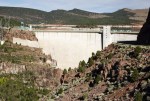
1.) The image below shows a recent picture of Lake Mead, on the reservoir side of the Hoover Dam. The light colored rock represents the water level several years ago. The drop over the last decade has been drastic, unlike anything seen since the dam’s construction. The continuing drought has dropped the water level of Lake Mead to critical levels. In the 2035 world of Fractured State, the level would be at least four to five times lower,  at the point where water trickles downriver. At that level, no water can be pumped to Las Vegas, or diverted to Arizona. The electrical power plant run by the flowing water has been decommissioned. California receives little to no water from a source that had once provided most of Southern California’s water supply.

shutterstock_371366533


2.) In 2035, the only peaceful way to restore the Colorado River flow would be to either convince multi-billionaire agriculture barons in the Great Plains to stop illegally diverting water, the only way for them to currently water their crops, OR, to convince the U.S. government to stop the illegal redirection of water from the Colorado River. Southwestern states have pursued both options for nearly two decades, but nothing has changed.

3.) Another option exists. Rivers flow naturally, unless they’re obstructed. You can probably guess the rest.

shutterstock_123014143shutterstock_87129412shutterstock_22342507


If you’re interested in digging deeper into the politics,history and controversies surrounding the Colorado River Basin and other major fresh water sources, you can explore this links:

Overview of the Colorado River Basin

The disappearance of ground water throughout the world

Lake Powell slowly vanishing

Lake Mead sinks to record lows

$650 million pump station constructed to draw water from lowest levels of Lake Mead

California continues to draw from Lake Mead water bank despite record low levels

Spoiler article for Book 3. Read the entire article. 

Draining of the Ogallala Aquifer, the largest source of fresh water in the Great Plains.

Speculative article about what happens if the Colorado is denied to California

Dust Bowl days are here again.

Return of the Dust Bowl.

CLICK HERE TO GRAB A COPY OF ROGUE STATE 

Read Behind the Scenes PART 1, PART 2, PART 3 and PART 4


Behind the Scenes of the Fractured State Series: Part Four—WHAT’S NEW IN ROGUE STATE?

If you missed them, read Part One, Part Two and Part Three of Behind the Scenes of the Fractured State series!

Konkoly-RogueState-21878-CV-FL-V1With the launch of ROGUE STATE (Book 2 in the Fractured State Series) a few days away, I wanted to give readers and fans a look behind the curtains of the upcoming release. I thought I’d go with a TOP TEN list, because it’s early and I don’t have to come up with clever seaways between paragraphs. I have a 10 hour writing day ahead of me, so bear with this streamlined process. What this really means is that 1.) I haven’t had enough coffee yet. AND 2.) I’m getting a little lazier, truth be told.

HERE’S WHAT READERS CAN EXPECT ON JANUARY 10th!

predator-invisible-camo1.) Adaptive Camouflage: Sometimes called “active camouflage,” this fledgling technology today will be fully developed and available to the military and highest bidder in the 2035 world created for Rogue State. You can imagine the tactical benefits of rendering a vehicle or operative invisible to the naked eye or infrared detection. Check out a few links describing today’s efforts to harness this technology. The image to the right is from the movie Predator, I couldn’t resist…the ultimate in adaptive camouflage.

http://www.popularmechanics.com/science/animals/a11105/behold-the-octopus-inspired-adaptive-camouflage-17108661/

http://www.military.com/video/logistics-and-supplies/military-equipment/new-hi-tech-adaptiv-camo-system/2450498175001

http://www.popsci.com/technology/article/2011-01/active-camouflage-system-uses-e-ink-make-tanks-invisible-battlefield

http://www.dailymail.co.uk/sciencetech/article-3072599/US-Army-developing-invisibility-suit-soldiers-say-begin-trials-just-18-months.html

rifle-camera2.) Rifle mounted, goggle integrated cameras: This isn’t exactly something new, but it isn’t routinely fielded today. I got the idea from playing Call of Duty and did some research. Like anything that might provide the modern day field operative or soldier an advantage, companies are putting consider time and money into development. Consider the benefit of being able to stick your rifle around a corner, see a target and shoot it.

http://www.dailymail.co.uk/sciencetech/article-2649051/The-app-lets-shoot-round-corners-Smart-rifle-uses-Google-glass-sight.html

https://defensesystems.com/articles/2016/10/31/wireless.aspx

face_recognition_fr_pic33.) Facial Recognition Software is widely, publicly and openly used by law enforcement and government agencies in 2035. A few states have declared it unconstitutional and prohibit the use of FRS technology. This isn’t new either, but as far as we know, proactive, wide scale use by the government hasn’t been implemented yet—OR HAS IT?  Here’s a quick paragraph from Rogue State describing the problem.

“Federal law enforcement agencies devoted significant funding to co-opting municipal and state FRS feeds, posing a significant detection risk. The Department of Homeland Security maintained a massive persons-of-interest FRS database, reportedly tracking the real-time movements of nearly a million people.”

http://www.forbes.com/sites/kalevleetaru/2016/10/20/from-cellphone-tracking-to-facial-recognition-minority-report-is-here/#25840ce6742a

4.) Most of  Texas, the American Southwest and the western half of the lower breadbasket states have become the New Dust Bowl, an area ravaged by drought severe weather patterns. Massive dust storms and firestorms have driven most of the population, in the worst hit areas (Arizona, New Mexico and west Texas) away permanently.

mexi35.) Taking advantage of the population resettlement, drug cartels from Mexico have seized control of most of Arizona and New Mexico. The U.S.-Mexico border no longer exists as a barrier in those areas, and fierce battles rage between well equipped cartel soldiers and National Guard units in key border cities along the Texas border. It’s fair to say that the State Department has issued a travel advisory to Americans thinking about vacationing in Mexico. Much of Rogue State takes place a few miles south of the border or in these lawless U.S. areas.

6.) Social Media Network monitoring provides real time crime and terrorist information for law enforcement agencies and our government. Once again, this isn’t something I imagined. It’s happening today—I just took it to a new level in Rogue State.

http://www.thenewamerican.com/tech/computers/item/7248-fbi-pursues-social-media-surveillance-to-gather-intelligence

https://it.ojp.gov/documents/roleoffusioncentersincounteringviolentextremism_compliant.pdf

i-qyrtdrhisa7.) Mercenaries used by corporations to achieve their “goals.” You already got a good taste of this in Fractured State. CERBERUS is essentially a high-end mercenary outfit retained by corporations to safeguard their financial interests—or create new ones. In Rogue State, you’ll meet a slightly less refined group of mercenaries, comprised of former Russian Special Forces (GRU) operators. They specialize in murder and mayhem, which will unfold spectacularly and gruesomely.

https://informnapalm.org/en/russian-private-military-companies-as-licensed-tool-of-terror/

8.) New Characters: Sounds kind of boring, but trust me, you’ll like some of the new faces that appear in Rogue State. David Quinn’s father, Stuart Quinn plays a key role, along with David’s brother in-law, Blake. The Russian mercenary commander, Chukov, won’t fail to make an impression. He’s a piece of work, and was a pleasure to write. Nissie Keane, a hacker employed by CERBERUS will play an important role in Rogue State and future books (spoiler). Finally, readers will get to know Jose (Nathan and company’s mysterious savior from book one) very well, along with some of his most trusted California Liberation Movement operatives.

9.) Fracking: And not the kind from the rebooted Battlestar Galactica show. I won’t say much about this, because it would be a big spoiler for the rest of the series. Let’s just say that CERBERUS isn’t looking for oil in the California desert.

shutterstock_12301414310.) A Bigger Plot Unfolds: I’ll talk more about this in the fifth Behind The Scenes article, but it will become clear to Nathan Fisher and David Quinn that the California Liberation Movement is far more than what it seems to the public. They’ll face a tough decision when confronted with the full scope of Jose’s plan.

Click here to order ROGUE STATE TODAY for $4.99 and grab FRACTURED STATE for $1.99. 

Check out Part One, Part Two, Part Three and Part Five of Behind the Scenes of the Fractured State series!

1469 Steven Konkoly FRACTURED STATE FB banner_2

2016 YEAR IN REVIEW (Part Two): Thriller reads

(Click here for Part One-Post Apocalyptic and Dystopian novels)

If you’re read this in the other post, go ahead and skip this paragraph. Instead of the traditional “end of the year review” about what I’ve accomplished as a writer, I wanted to highlight something different this year. What I accomplished as a reader. 2016 was without a doubt my best year as an author from every angle, but it was also one of the best years I can remember as a reader.

2016 introduced me to new writers and firmly solidified my commitment to some of my previous favorites. Below you’ll find my 2016 THRILLER reading list, in no particular order. This is not an all encompassing list by any means. I’ll probably add to the list as the days go forward. It’s also worth mentioning that you should strongly consider checking out the backlists and earlier in series books for ALL of these authors. 

Poisonfeather by Matthew Fitzsimmons

51x37ngezml-_ac_us160_


Dark Matter by Blake Crouch 

51yrivigtyl-_ac_us160_


Embrace the Fire by Stephen England

51ugow0a2al-_ac_us160_


The Last Girl by Joe Hart

41mwyhfxval-_ac_us160_


First to Kill by Andrew Peterson

519yn7ma3l


The God’s Eye View by Barry Eisler

61gdiou-efl


Pushing Brilliance by Tim Tigner

51hzvmkqenl


Furious by T.R. Ragan

517lo5313hl


Need to Find You by Joseph Souza

51ywqe9txfl-_sx331_bo1204203200_


Written in Fire by Marcus Sakey

51kvczflvl


Once Was Lost by Matt Iden

51htpjfdqdl


Captive in Chief by Murray McDonald

51ejyjhackl


Jihadi Apprentice by David Bruns and J.R. Olson

51fwokzxe3l


The Eagle Has Landed by Jack Higgins

51c7brp7xol


Rules for Revenge by Ian Graham

51yx4gk2vul


Cold Blood by Alex Shaw

51fq5hfirql

2016 YEAR IN REVIEW (Part One): Post Apocalyptic and Dystopian reads

(Click here for Part Two-Thrillers if post-apocalyptic/dystopian isn’t your kind of story)

Instead of the traditional “end of the year review” about what I’ve accomplished as a writer, I wanted to highlight something different this year. What I accomplished as a reader. 2016 was without a doubt my best year as an author from every angle, but it was also one of the best years I can remember as a reader.

2016 brought some exciting new names to the POST APOCALYPTIC and DYSTOPIAN genres, in addition to plenty of releases from the “tried and true” PA authors of the past several years. Below you’ll find my 2016 reading list, in no particular order. Some of the books are first in a new series. Some are a 5th or 6th in a series. Each author is worth checking out in full! Many have written multiple series. I hope you get as much entertainment out of these as I did.

Survive and Escape by Lee West

1565-lee-west-ebook-survive-and-escape_8


Trackers by Nicholas Sansbury Smith

510qaa3y7gl


Surrender the Sun by A.R Shaw

surrender


Spaceman by Tom Abrahams

511dbkz7gul-_ac_us160_


Push Back by R.E. McDermott

51ji1ockf1l-_ac_us160_


Blood Honor by Russell Blake

51ft9jzgmwl-_ac_us160_


Unexpected World by Chris Pike

51oyvocxuhl-_ac_us160_


Devil Dog by Boyd Craven

51djmkw9il-_ac_us160_


Canine Plague by Burt Walker

510vlkvlzil


Cry Havoc by Angery American

51yq9ovzw-l-_ac_us160_


Locker Nine by Franklin Horton

51sobxxqvrl-_ac_us160_


Hell Divers by Nicholas Sansbury Smith

514kf4clgkl


Trial by Murray McDonald

515vx7ggtql


Razor’s Edge by G. Michael Hopf

51krvjvww7l


Gavin’s Woman 

51y-flnbtcl

99 CENT CHARITY BOXSETS for the holidays!

UPDATE 12/14/16: The THRILLER THIRTEEN boxset raised close to $4,000 for the International Justice Mission. A HUGE THANK YOU to the thousands of readers that supported this cause, and grabbed a great compilation of stories. On top of that, the boxset hit the USA Today Bestseller List! See below:

screen-shot-2016-12-15-at-8-59-18-am

SOMETHING FOR EVERYONE HERE! Each boxset on sale for 99 CENTS! The best part? One of my stories is included in each set! Already read my books? No worries. You’ll find novels and novellas by some of the top authors out there.

thriller-thirteen

UPDATE 12/11/16: THIS BOXSET IS NO LONGER AVAILABLE FOR THE LIMITED TIME OFFER OF 99 CENTS. 

THRILLER THIRTEEN  features novellas and short stories by bestselling authors in thriller, mystery and crime. All proceeds go to the International Justice Mission, an organization dedicated to fighting human slavery and trafficking around the globe. You’ll find ORIGINS: A Black Flagged Short Story in this boxset, which takes readers back to Daniel Petrovich’s early years as a Black Flagged operative. It’s a gritty, brutal look at Daniel’s undercover mission to infiltrate a Serbian paramilitary group during Slobodan Milosevic’s reign of terror in Yugoslavia.


KILLS, CHILLS AND THRILLS features a “first in a series novel” from seven bestselling authors that spawned fan-fiction Kindle Worlds. Proceeds will go to Read Aloud America, an organization dedicated to promoting family literacy in the United States. I have contributed The Perseid Collapse to the boxset; a book that has spawned 35 fan-fiction stories set in that post-apocalyptic world. The fan-fiction worlds created by seven authors featured in the boxset have inspired more than 200 stories set in those worlds.

AN EARLY HOLIDAY GIFT! Sort of…

The long awaited fifth book in the Black Flagged series is now available for PREORDER. Ebook version only for the preorder. Hardcopy and audiobook versions will be available closer to the FEBRUARY 20, 2017 release date.

BOOK FIVE has been renamed OMEGA (Reprisals and Vortex are gone), to symbolize the events and circumstances that will unfold in the story. Omega is the last letter of the Greek alphabet, and Alpha is the first. It is no coincidence that the series starts with Alpha and ends with Omega. Beginning and end. And that doesn’t mean the series ends with OMEGA. It means things as series readers know it will change significantly…you’ll see what I mean. GRAB A COPY OF OMEGA TODAY!

1543-steven-konkoly-omega_2

OMEGA: A Black Flagged Thriller (Book 5)

“A joint U.S.- Russian Special Forces raid against a hidden laboratory yields an alarming discovery. Anatoly Reznikov, the deranged bioweapons scientist stolen from U.S. custody a few years earlier, vanished minutes before the attack—taking his deadly work with him.

In the United States, Beltway power brokers grapple with True America’s surprise presidential win, finding the new administration to be anything but easy to work with. Karl Berg, demoted within the CIA due to the sudden shift in agency leadership, seeks to stay out of trouble, and retire quietly—a task he finds impossible when news of Reznikov’s near-capture unofficially reaches his desk.

Oblivious to the growing threats domestic and abroad, Daniel and Jessica Petrovich finalize their plan to abandon the “Black Flag” business for good. An unforeseen, last minute personal trip to the United States drags them into an unfolding plot, based in the rotten heart of Washington D.C.

A plot connected to everyone and everything the Petrovich’s have touched. A diabolical conspiracy nobody saw coming—AND ONLY ONE GROUP CAN STOP.”

POST ELECTION DAY MADNESS SALE

Update: Due to a small mistake, the deal for The Perseid Collapse books will commence in the UK on Nov 11. I can’t offer the discount on The Jakarta Pandemic in the UK at this time.

Because a relaxing book about SOCIETAL COLLAPSE is just what the doctor ordered after this election. I don’t know about you, but I’m SO GLAD it’s over. 

ALL OF MY POST-APOCALYPTIC BOOKS ARE DEEPLY DISCOUNTED FOR A LIMITED TIME. 

—You can grab THE JAKARTA PANDEMIC  for FREE if you’re a member of Amazon Prime or Kindle Unlimited, if not, it’s half price at $2.99. CLICK HERE FOR THE JAKARTA PANDEMIC

1390 Steve Konkoly ebook THE JAKARTA PANDEMIC_symbol_2015


THE PERSEID COLLAPSE books are $1.99 or less—EACH. OR, you can grab the entire series for less than $7. CHECK OUT THE PERSEID COLLAPSE BOOKS

Book One

Book Two

Book Three

Book Four


IT’S FINALLY HERE!

1469 Steven Konkoly FRACTURED STATE FB banner_2

After more than a year since my last novel sized release…

I finally have something to prove that I haven’t been on a 14 month sabbatical from writing! 

FRACTURED STATE is now available for purchase as an ebook, audiobook or hardcopy.

FOLLOW THIS LINK TO GRAB A COPY AT AMAZON.COM (U.S)

FOLLOW THIS UNIVERSAL LINK if you’re outside the U.S.

I know you’re going to love Fractured State, and the rest of the books to come. The series promises to be incredible. I just delivered the second book to my publisher, Thomas and Mercer, and they’re busy tearing it apart—in a good way.

Check out Thomas and Mercer’s series description for a taste of the entire series. This paragraph absolutely captures the essence of what I set out to accomplish…almost like mind reading!

“Steven Konkoly’s Fractured State series charts a nightmarish near-future vision of America, ravaged by environmental devastation and teetering on the brink of political collapse. When average family man Nathan Fisher unwittingly learns of a terrifying conspiracy at the highest levels of power, he and his family must run for their lives, pursued by ruthless killers and aided by a resourceful Marine with a mysterious agenda of his own. Unrelenting suspense; rich, relatable characters; and a vividly imagined, all-too-believable future world of high technology and low-down violence: welcome to Fractured State.”

Thank you for checking out the series. Don’t forget to check out some of my earlier “behind the scenes” of Fractured State posts!

BEHIND THE SCENES of Fractured State

The Perseid Collapse World

HUNDREDS OF YEARS IN THE FUTURE!

When author Richard Stiller reached out to me earlier in the year to discuss his possible participation in the Perseid Collapse Kindle World, I was instantly intrigued. Unlike the rest of the Kindle Worlds canon, Richard proposed setting the books hundreds of years in the future, long after the collapse. The link between the Perseid Collapse story set today and Stiller’s imagined future was Aaron Fletcher, a direct descendent of Alex Fletcher from my original series. The more I learned about Richard Stiller’s imagined world, the more excited I became about the Perseid Oracle series. What I read blew me away. Richard has created an epic story, extending the Fletcher legacy far into a dystopian future. I encourage you to take a look at what he has created.

518L7-84A5L._SX312_BO1,204,203,200_Perseid Oracle: Book of Aaron

A hundred years have passed since the Perseid Collapse. Aaron, a direct descendent of Alex Fletcher embarks on a journey across a post apocalyptic North American Continent in a last ditch attempt to stop the pandemic that is killing off mankind. The answer lies with a solitary oracle named Sybil who is located in the mountains of the continental divide. First Aaron must navigate a world where civilization has slipped backwards. Where the strongest rule and the enemies of man are in ascendance.

GRAB BOOK of AARON HERE!

51nGL8SnPDL._SX312_BO1,204,203,200_Perseid Oracle: Book of Sybil

This is the second book in the Perseid Oracle series. It is a century since the Perseid Collapse. Aaron Fletcher travels westward to find Sybil, the oracle that holds the answer to the virus that is slowly, but surely killing off mankind. The world that we know has been ripped apart. Mankind and civilization have slipped backwards. Aaron must navigate what was once known as the USA, but is now a series of ruined cities, fortified towns and open country where the strongest rule. In the west a new nation has arisen. In a remote mountain cavern Sybil awaits the coming of those who would seek her help while destroying those who would annihilate her.

GET BOOK 2 in The Perseid Oracle series!

Book 3 is due in late 2016: Perseid Oracle: Book of Daniel

Aaron Walker reaches The Red Mountain and encounters The Oracle. He sees the bleak future of mankind and realizes that he holds the fate of the human race in his hands.

Behind the Scenes of the Fractured State Series: Part Three—THE FULL SERIES MAP

1469 Steven Konkoly FRACTURED STATE FB banner_2

THE SOUTHWEST UNITED STATES HAS RADICALLY CHANGED BY 2035

THE FRACTURED STATE series sweeps you through this vast, twisted landscape with reluctant hero, Nathan Fisher, as he fights against all odds to keep his family alive.

Click on the map to enlarge and explore.

ORDER Fractured State today!

Also, check out Behind the Scenes PART ONE , PART TWO, PART FOUR and PART FIVE.

Fractured State Map3

Behind the Scenes of THE FRACTURED STATE SERIES: PART 2

Fractured State coverBuilding the greater world surrounding THE FRACTURED STATE SERIES was a serious blast, but inventing the details of a near-future world was the proverbial “icing on the cake.” This is the kind of stuff I live for as a writer, and Fractured State was a fertile playground for these details. That said, it wasn’t easy.

Set 20 years in the future, I found myself walking a thin line between advancing technology far enough to create a “wow factor” and keeping it familiar enough to the reader. The last thing I wanted to do was create a new vocabulary for readers.

Here’s a fantastic example of that struggle, with a slightly disappointing ending. What do you call a cell phone/smart phone 20 years from now? The answer isn’t simple, or is it? I got a crazy idea during the developmental edit, based on a suggestion from my developmental editor (I blame David!), to replace every instance of smartphone with the term LINK. We’d discussed the technology upgrades evident in the manuscript and agreed that the device served as more of a communications link, but we couldn’t call it a COMLINK. That term had been coined by the Star Wars franchise years ago, and it didn’t sound right, anyway.

But what about LINK? That’s simple, catchy…hey, 20 years from now, people might be looking back at Fractured State and saying, Steven Konkoly used the term first, now everyone calls their phone a LINK. Communications companies will be paying me billions to license the term…it sounded fantastic, until it didn’t. Actually, it was my editor at Thomas and Mercer that essentially said something to the effect of, “I don’t know. It’s cool and all, but forcing readers to use the word LINK instead of phone throughout the story might get a little annoying.” Too kitschy, so I dropped LINK and went back to phone or satphone. Lesson learned. The device had more bells and whistles, but it essentially did the same thing it does today…let’s you talk to people. Why complicate matters?

But one creative disappointment can’t ruin the creative process for me. NOT EVEN CLOSE. That was ONE device out of hundreds used in the novel, and I had a ton of fun with the rest. Too much fun, probably.

mq-9-reaper_001-ts600If you’ve read any of my books, you probably can guess that I like weapons. From knives to attack helicopters, I don’t shy away from the details, and I like my characters to make the best use of the weaponry available to them. Fractured State gave me the unique opportunity to take systems currently in development, and imagine them in widespread use 20 years from now. Every firearm is more compact and versatile, ammunition is far more lethal, heavy duty weapons systems normally employed by armies are now available to mercenary groups, and the effectiveness of personal protective equipment has increased to counter this new lethality. Take a look at the following links, along with a brief explanation of how I chose to employ that technology in Fractured State.

Guided sniper munitions – Used by assassins in a coordinated attack against a politician at his reinforced mansion. The effect is rather gruesome, as you can imagine.

ge5mcdjxhbxj9sfxla38Color night vision technology – I call it synthetic daylight…heard it here first! This actually presented a bit of a challenge, since describing what the characters see through these goggles is no different than what they’d see in the daylight. At times, my developmental editor couldn’t remember if it was night or day. To remedy this, I added some additional features to the goggle’s display, which measured light intensity and could tell the wearer how dark it was outside.

Liquid gel body armor – This has so much promise for the future in my opinion. Form fitting and reactive, liquid gel body armor can potentially stop any type of munition, evenly spreading the brunt force of the impact to reduce internal injuries commonly seen with solid plate armor.

Dragonskin armor – Recently rejected by the U.S. Army, I see a future for this type of armor. Lighter, shape conforming and effective against armor piercing ammunition…I could see this as standard issue.

Rifle launched missiles – I don’t actually use these in the books, but damn if this isn’t cool.

xm25Smart grenade launchers – I take this one step further, and apply the same range finding automation to an automatic grenade launcher system. The effects are spectacularly devastating…and messy of course.

Hand launched surveillance drones – Nothing new about the Raven, except the newer versions can fly longer and transmit more data. Putting two of these in the air, one of the teams in the book finds a “needle in a haystack.”

See through wall radar and imaging devices – Can you imagine looking at a 3-Dimensional schematic of a building and seeing a live image of everyone inside? It’s not really possible today, but in 2035…

Bullet resistant glass (nothing new, but this video is COOL) – I find some creative uses for glass like this in the series…in ways you might not expect.

Missile firing drones – Over U.S. airspace? You bet, especially when operated by Cerberus International…and to make matters worse, the drones are mostly undetectable.

Active or adaptive camouflage – Can you turn a vehicle invisible? With enough money and 20 years of research and development. Why not?

Converting seawater to energy – This method is energy intensive, but when co-located with a nuclear power plant?

Desalination plants – Reality today, and critical to survival in a drought parched future.

This is a very short list of some of the types of technology upgrades found in Fractured State, and this is just the tip of the iceberg. Everything is slightly reimagined in this series, from sinks that recycle water for rinsing to mandatory  GPS tracking systems installed on every vehicle to measure fuel efficiency and restrict movement. Life has changed…it’s up to the reader to decide if the change is for better or worse.

PREORDER FRACTURED STATE

READ Behind the Scenes Part One, Part Three, Part Four and Part Five

Behind the Scenes of THE FRACTURED STATE SERIES: PART ONE

Fractured State coverWith the release of FRACTURED STATE less than a month away, I thought I’d give readers and fans a look behind the scenes at the creation of the near future, dystopian world supporting the story. As most of you know, I spend a considerable amount of time envisioning and creating the worlds behind my fiction. The process is time consuming, and if left unchecked, can take on a life of its own. I know this from experience. When I started to create the world for my first novel, The Jakarta Pandemic, I reached a point, long into the early stages of development, where I asked myself: “When are you going to actually start writing the story?” I didn’t have an answer, which in itself was my answer. It was time to quit researching the world, describing characters on notepads, creating maps, developing timelines—AND TIME TO GET DOWN TO BUSINESS. I had spent months world building, when I could and should have been writing.

With that lesson SORT OF learned—a few times, I’ve developed a rough world-building process that gets me started and keeps me on the right track.

IMG_13421.) Creating a world to support a series requires me to create a ALTERNATE HISTORY, or in the case of Fractured State, a FUTURE set 20 years from today. Either way, I start out with a TIMELINE OF EVENTS. This is outside of the story plot. For the Fractured State series, I started in 2016 and envisioned the world, national, state and personal-level events that would land the reader on page one. As you can see, this sheet has endured coffee and beer stains, many on-the-fly changes and an accidental “throw away” since I created it in early 2015. It rarely leaves my side while I’m writing.

2.) For the kind of deep background and expansive geographical reach involved in writing a series like Fractured State, I find the use of MAPS to be invaluable. I create them throughout the entire process, starting with big picture world building maps down to individual scene orientation maps. Every complex, action oriented scene likely originated with a sketch.

IMG_1343
First map created

IMG_1344
Map of California’s present and future energy sites

IMG_1347
Motel scene in Rogue State (Book 2)…little spoiler.


3.) Whether based in the past, present or future, I also create lists and descriptions of the organizations involved in the story. Past and present is easy…a few clicks on Google and you have a nice organizational chart of the CIA. Future requires a little more work. In Fractured State, I envisioned San Diego County as an entity that effectively absorbed every municipality throughout the current county, providing town administration, resource management, leadership and police functions for the entire geography. San Diego County Police Department (SDCPD) officers patrol the streets of Chula Vista, CA, south of San Diego, just he same as the streets of Carlsbad, CA—40 miles away.

In Fractured State, Nathan Fisher, the story’s main character, works as a water reclamation engineer at the San Diego Water Reclamation Authority, an entity that does not exist today. Since water reclamation is a critical part of Californian’s lives in my story, I gave it an organization separate, but subordinate to the existing Water Authority. Of course, in the resource stressed world of Fractured State, both authorities serve under the San Diego County Resource Authority. Yeah, I have fun with this stuff. Sorry to put you to sleep!

4.) Throughout the creation of the TIMELINE, MAPS and boring ORGANIZATIONS, I’m constantly researching topics related to the big picture to generate new ideas, validate previously envisioned plot points or expand the story.

lake meadFor Fractured State, I spent a lot of time studying WATER sources in California, the rest of the southwest and the Great Plains. While the events in my story are purely fictional, the historic, ongoing drought in California and the U.S. Southwest is REAL. Frighteningly real. California’s current drought started me on the path to writing this series. The more I researched, the more I knew I had the background for an incredible story. What if the drought continued for another 20 years like many climatologists agree is possible? AND what if the effects of the drought were intensified by corrupt group of greedy industrialists and enforced by a ruthless mercenary army on their payroll? Secession? Mayhem? All of the above.

Check out some of the original bookmarked links that I used to get a feel for the drought issues facing California and the nation. It’s scary stuff. All of it. I just listed them as LINK. Click on any or all to give yourself a fright.

LINK, LINK, LINK, LINK, LINK, LINK, LINK, LINK, LINK, LINK, LINK.

ORDER FRACTURED STATE TODAY!

READ BEHIND THE SCENES PART 2, PART 3, PART 4 and PART 5

Introducing FRACTURED STATE

Fractured State coverI’m so excited to get this book into your hands, I barely know where to start. Seriously, I’ve been staring at the same few sentences for the past ten minutes. I’ll make this easy on both of us, and start with an emotionally charged statement.

Fans of my previous novels will absolutely love this book! I know that’s a bold claim, but I really believe it. Fractured State brings the best of the Black Flagged and Perseid Collapse books to life in a fast paced, stylish thriller series. At its very core, Fractured State is a story about an innocent family—inadvertently dragged into the middle of a lethal struggle to determine California’s fate.

I’m going to vastly over simplify the story here, but picture Alex Fletcher and his family ruthlessly pursued through a near future, dystopian southern California, by a Black Flagged-like group with unlimited resources and an unquenchable thirst for murder. Unlike Alex, the new main character, Nathan Fisher, doesn’t have the hard skills required to keep his family alive against professional killers. He’s crafty—the son of a retired Marine Sergeant Major—but he’s in way over his head in Fractured State. Nathan gets help from an unlikely source—a Marine officer thrust into the situation by chance. Together, they fight to stay one step ahead of the shadowy group’s relentless efforts to silence the Fishers. You’re going to love these characters just as much as the story.

PREORDER FRACTURED STATE NOW! (That’s just a suggestion)

For those of you thinking — “Wow, Steve couldn’t describe one of his books to save his own life!” Here is the official description for Fractured State.

“In 2035, the southwestern United States is ravaged by drought, reeling from an environmental catastrophe that has left the landscape a chaotic, depleted ruin. California, still viably inhabitable due to its oppressive social controls, marshals state-of-the-art surveillance technology and totalitarian policies to preserve its fragile hold on rapidly dwindling resources and an increasingly unsettled population.

After a prominent California congresswoman is assassinated for her support of the state’s secession from the United States, Nathan Fisher—accidental witness to a clandestine military-style operation—is drawn into an unraveling conspiracy that reaches the highest levels of power and threatens the lives of Fisher and his family.

Hunted by ruthless killers seeking to ensure his silence, suspected by the authorities, and aided only by a loyal Marine officer with a mysterious agenda, Fisher and his loved ones must somehow stay a step ahead of their relentless pursuers, navigating a ruined world in a desperate search for sanctuary.”

PREORDER TODAY!

Book Cover Evolution

If you follow me on Facebook, or occasionally check for my latest release on Amazon, you’ve probably noticed that my books look different from time to time. If you stalk my books (I don’t mind that at all!), you might wonder if I’m addicted to changing book covers.

Since publishing The Jakarta Pandemic over five years ago, I’ve changed the covers for every book published at least twice. The older the book, the more change they’ve seen. While it is absolutely true that I LOVE NEW BOOK COVERS, I can assure you a lot more thought goes into the changes than satisfying a potentially expensive addiction. Instead of a didactic explanation of the general  process, I’ll walk you through the thought process for the books that have seen the most change.
0440 Steven Konkoly ecover Black FlaggedThe Black Flagged books have undergone the most dramatic changes over the years. When I first published Black Flagged, I hadn’t decided if the characters and plot would continue in a series. Frankly, I had no idea if the books would sell! With that in mind, Jeroen ten Berge created a standalone cover, which remains my favorite to this day. There’s something about this cover that draws me back, over and over again.

Despite my love affair with the original cover, we decided to change it when I committed to a three book series. Jeroen suggested a uniquely branded look across the books, resulting in the covers that adorned the series for the longest stretch of time to date. The continuity of the covers, forming a flag, is a brilliant touch. Unfortunately, I hadn’t anticipated the forth book (Black Flagged Vektor), so we couldn’t fit it into this particular cover stretch.

h


Instead, Jeroen created a new look for Book 4. It has the same feel, but draws VEKTOR out with an eerie green color. These covers represented the series nearly 2 years.

Black Flagged Vektor


The next set of changes resulted from a simple need to shake up the series. It was time. Repackaging the books breathed a new life into the series, as new readers discovered a series they may have passed up before. The books took on a new life with a more technothriller oriented look

1142 Steven Konkoly ebook Black Flagged_21142 Steven Konkoly ebook Black Flagged_REDUX_21144 Steven Konkoly ebook Black Flagged_APEX_51149 Steven Konkoly ebook Black Flagged_VEKTOR_2


Flash forward a year! I learned some interesting lessons participating in a few Amazon sponsored advertisement programs. Amazon does not like to mass advertise books with guns on the covers, so why cut myself out of that opportunity? We changed things up a bit. The new covers also coincided with a purposeful rebranding of the series to shift the title of the first book from Black Flagged to Black Flagged Alpha, and we added some iconic genre related images.

1277 Steven Konkoly ebook Black Flagged_ALPHA1395 Steven Konkoly ebook Black Flagged_REDUX_20151401 Steven Konkoly ebook Black Flagged_APEX_20151396 Steven Konkoly ebook Black Flagged_VEKTOR_2015


NEW YEARS RESOLUTIONS

WRITE MORE

2015 was kind of a slow writing year for me. I have a deadline to meet at the end of February, and more books to write after that. The more I write, the more you get to read. I plan to accomplish this by…

SURFING THE INTERNET LESS

Sorry, but this is a polite way of saying “spend less time on social media.” I’m not going away, but every word I type on Facebook is one word taken away from my work in progress. Added up (and it ADDS UP!), this forces me to work longer days to meet deadlines, and ultimately takes time away from…

SPENDING MORE TIME WITH FAMILY

There’s no reason for me to be writing during family time on weekends. A few hours in the morning by choice is still fine. I like to write every day, even if just for an  hour or two, and I can do that in the early morning hours when most of the house is asleep. But spending most of the weekend days writing to meet an easily achievable deadline is not healthy or fair to the most important parts of my life. Same goes for weekday evenings. Cutting out social media related event time is one way to help with this, the other is…

DEVELOP A BETTER SCHEDULE

The cross country move threw what I considered a tight schedule WAY off track. In military terms, it did not survive first contact with the enemy. No more of that. The first thing I’m going to do every morning is stretch out with the 5 Tibetans (Hugh Howey introduced me to these—check out the video), fix a coffee, and spend an hour walking and WRITING on THIS CONTRAPTION! I’ll be up early enough to do all of this and hang out with the kids before they head to school. Then it’s off to the gym or out for a run. I plan to spend to be at my other desk by 9AM. I’ll probably see the treadmill again before the end of the day whistle blows between 4-5PM. If I hit 3K words before 4-5PM, I’M DONE.

IMG_1287


EXERCISE MORE

My new routine will ensure that I exercise more. The concept of regular exercise took a vacation in 2015. My goal for the year is to be in as good or better shape than Alex Fletcher from my Perseid Collapse Series. That may sound kind of strange, but I have a reason for this goal. I write a lot of post-apocalyptic, prepper-related fiction where characters are constantly fighting for their lives. It’s over the top stuff for sure, but it really drives home an important point. What’s the point of readiness and prepping, even for a minor emergency, if you’re too out of shape to execute your plan?

Fat militia

I chose Alex Fletcher, because he wasn’t a physical super star. He could run 4-5 miles at a decent pace, carry a pack on an extended hike, swim several hundred yards against a mild current and sprint around shooting at the bad guys for a few minutes without vomiting. That’s all I’m looking for. And I wouldn’t mind NOT looking like a tub of $#@! in vacation photos. The lens doesn’t lie! While more exercise will  help, shedding the FAT weight equivalent to a rucksack helps even more. For that, I plan to…

EAT HEALTHIER AND EAT LESS


More on this later. The food plan doesn’t start until January 5….and I have BEER waiting in the fridge. 

WHAT ARE YOUR RESOLUTIONS FOR 2016?


STEADY ON THE HELM, EYES ON THE HORIZON

Note: I talk numbers later in this post, lots of numbers, so bear with the more didactic start to my year end post.

I DON’T DO PREDICTIONS

2016There’s nothing wrong with predictions, I just think other authors tackle the subject better. Why reinvent the wheel, so to speak. Take a moment to read Russell Blake’s End of an Era and Joe Konrath’s New Years Resolution for Writers. Each author takes a different approach, but you’ll notice a common theme at the core of each post. Indie authors need to write, AND WRITE A LOT, to be successful. Not exactly rocket science, but it’s worth repeating. I’m going to make a small tweak to that message, which I think is critical to success.

WRITE WHAT YOU ENJOY WRITING—A LOT. Once again, no atoms have been split so far, but this is an important distinction, and part of the overall theme of this post. You can probably guess why.

Ship in wavesThe past two to three years has been tumultuous for both the indie and traditional publishing industry. Authors have seen ups and downs, like waves, and panic has ensued when they starts the downward journey into the trough. Of course, the waves come in different sizes for each author, and in some cases, the ride down is indeed scary—just like the ride up a massive wave of sales can be exhilarating. Kristine Kathryn Rusch does a far better job describing the wave metaphor in one her most memorable 2015 posts—The Hard Part. 

HERE’S THE THING. Storms always pass, leaving mostly calm seas.

You need to build a career strong and stable enough to weather these storms (real and perceived)—so you’re still around when the winds die down and the clouds part. 

10aruba106

What’s worked for me? You’ll be glad you didn’t pay for this. Ready? In keeping with the nautical theme:

KEEP A STEADY HAND ON THE HELM—WRITE WHAT YOU WANT TO WRITE

KEEP AN EYE ON THE HORIZON—PLAN FOR THE LONG HAUL

ADVERTISE SMARTLY AND FREQUENTLY—I know, that’s not a nautical term. 

Feel let down? You’re not alone. I felt the same way when I dug into what has brought me the most success over the past five years. No tricks or gimmicks. This is it! And this is why I don’t do predictions. I don’t care what’s predicted for the next six month or year. Predictions have never changed the CORE of my approach. They’re little more than distractions. That’s not to say I ignore trends or pass on sudden opportunities. I just make sure they fit into one of the CORE tenets of my approach.

And I’m not claiming this was my master strategy all along. Far from it. It somehow naturally developed, likely while I was juggling a day job and publishing two to three books a year. I didn’t have time for distractions. I spent 95% of my available time WRITING and the rest developing long-term GOALS. Many of those goals seemed unattainable and SO far away at the time. Like a dream—but I saw the importance of pursuing them, regardless, in order to build a CAREER that could smash through waves. READ MY 2014 POST ON DIVERSIFICATION to learn more about these strategies.

I still have a long way to go, but based on 2015 numbers, I feel good about my  strategy. 

WHAT HAVE I DONE IN 2015? 

I released a grand total of one 75K word book and one 25K word novella (in Russell Blake’s Kindle World). Not exactly my most prolific publishing year. I typically release about three times this amount.

I wrote and delivered Fractured State (105K words) to Thomas and Mercer. Being the first book in a new series, I spent a considerable amount of time building the Fractured State world before writing in it. A sacrifice I was willing to make in order to realize the long term goal of publishing with Thomas and Mercer. More on that later.

I launched The Perseid Collapse Series Kindle World, which took an extraordinary amount of time and energy to coordinate. WELL WORTH THE EFFORT on many fronts. The world has attracted top notch authors across several genres. I couldn’t be happier or more humbled to be a part of it. Thank you to every author involved, and to Sean F. at Kindle Worlds for believing in The Perseid Collapse. To date, 25 novellas wait to be read by fans of post-apocalyptic and thriller fictionwith more on the way. 

I moved from Maine to Indiana. Don’t ask. Needless to say, this was the BIGGEST, unavoidable distraction of the year, and likely cost me the writing and release of a book. From March through the end of June, it was a non-stop event.

At this point, you’re probably thinking that I had a mediocre sales year. We all know the formula for success, right? Publish, publish, and publish again! While there’s certainly truth to this. I’m going to show you some surprising numbers, based on a very modest publishing year by my standards.

Underachiever

THE NUMBERS

-Overall income is UP 61.5% over 2014. Remember, 2014 was UP 57% over 2013. NOT A BAD YEAR AT ALL, considering my modest production schedule.

Ebook sales are up 20% (units sold increased by 25%), not including  Kindle Worlds or Kindle Unlimited numbers.

Paper is down by 25%, but this has never been a significant income area.

Audio unit numbers are down 6.5%, but sales are up 37%. Head scratcher, but deeper analysis shows that the royalty escalator clause (no longer offered) kicked in big time this year for The Perseid Collapse books, and I’m getting paid more per audiobook. I can’t stress the importance of audiobooks to building a strong career. Audiobooks account for 15% of my total business, and they seem less susceptible to some of the sales cycle storms that occasionally strike. Do some research here. It’s not a guarantee of quick income, but it is a viable long term strategy. It has paid off handsomely for me in both genres, more so in the post-apocalyptic books. Invest in audiobooks—NOW!

Kindle Unlimited. You’re either going to love this part or hate it. For me, it’s a love story. Let’s start at the beginning. All of my titles are in Kindle Select, but it hasn’t always been this way. My Black Flagged Series had spent nearly two years out of select, gaining LITTLE traction in the wider world of ebooks. When I finished the series in 2013 (4 books over two years), I took the series wide after enjoying enough success with the books to quit my day job (the books sold well to say the least). Good thing I had a hot post-apocalyptic series in the works, because going WIDE didn’t work. Not even BookBub could not ignite a steady income stream outside of Amazon. It took me until June of 2015, right before the advent of KU 2.0, to throw it all back into Kindle Select. Good timing. KU 2.0 boosted income across all of my book.

Units borrowed increased 132% over 2014. Close to 25K units total. After July, I divided pages read by the KENPC calculation for each novel to arrive at unit numbers since the program was now measured by pages read. For 2015, sales through KU increased by 158%, and much of that came from the second half of the year under KU 2.0. The Black Flagged franchise was a big part of that.

Kindle Worlds. It’s hard to compare this from year to year, since 2014 was my first year publishing on Amazon’s fan fanfiction platform. Here are the raw numbers. Between three novellas and an omnibus, I’ve sold close to 9,000 units in Blake Crouch’s Wayward Pines Kindle World. I had a big surge in  sales when Wayward Pines hit Fox Network as a mini-series. That was the business side of why I wrote the novellas in 2014. I mostly wrote them because I loved the series and can’t get enough of Blake’s work. That said, a little looking ahead made it a no brainer decision to take time away from The Perseid Collapse series to indulge in Wayward Pines. I also used some time in 2015 to write a novella for Russell Blake’s JET Kindle World, adding another 1,500 units to the Kindle Worlds mix.

ADVANCES made up 10% of my income in 2015. I can’t get into specifics, but 2015 was the first year I was ever paid an advance. I like the concept, and hope to that percentage increase.

Foreign Translation of The Jakarta Pandemic? Let’s just say that German readers weren’t ready for an intense pandemic survival story based around an all-American in New England. Who could have guessed? I was pushing for the translation of my international espionage thriller series. I made money, but thankfully did not invest any of my own capital.

HOW DID I DO THIS?

I aggressively advertised multiple books in both series. This is listed first, because it had the biggest impact—and it’s a bit complicated to pile onto this post (another will follow). In a nutshell, it’s no secret that BOOKBUB is a powerful advertising and book marketing tool…depending upon how you use it. I use it to generate buy through for an entire series and expand readership. A short and long term goal. I don’t mind giving away free books to meet that end.

I experimented with Facebook ads. I’m not going to lie to you. I haven’t seen uber success selling books directly through Facebook, though like any hardcore gambler, I’m convinced my luck is about to take a turn for the better with the next ad.  Always experimenting. With that said, I have seen considerable success growing my mailing list with targeted Facebook ads.

I grew my mailing list from around 1,000 to 9,000 (not all through Facebook!). They bought a lot of books, full price and at special discounts. My goal for early 2016 is to better engage this list and turn it into a powerful marketing and promotional tool to launch books. Sounds all business-like. Let me rephrase this. I want everyone on the list to look forward to my updates and special offers, especially the ones announcing a book launch.

I resisted the temptation to write another purely post-apocalyptic series, and instead, created the story I’ve been dying to write. Fractured State. No genre is a sure thing, but post-apocalyptic books sell. I know from experience, which is why this was a hard decision to make. I had my reasons. I made some contacts at Thomas and Mercer in 2014, with the hopes that they sign me in 2015. I’ve had my eye on this goal since 2013, when I became a full time writer, knowing that they don’t publish post-apocalyptic novels. By the time my talks with the editorial staff at Thomas and Mercer blossomed, I was in a position to present a full series synopsis and 10K words of the first novel in the series. Fractured State will be published by Thomas and Mercer, in May 2016, followed the second book in January 2017. I have no doubt this decision will make 2016 my most successful year ever.

I diversified in 2014. Every time one of my book titles rose in Amazon rank during a promotion, buyers, borrowers and audiobook listeners alike were drawn to the commotion—and all of my books. Sales across all platforms increased, contributing heavily to the bottom line.

I had a little help from my friends. I certainly didn’t do this alone. I can’t stress enough the importance of community for writers. We all sit behind desks most of the day, by ourselves, and there is only so much you can do to get the word out about your books. I love helping other authors, and find that I’m not alone in that feeling. THANK YOU to everyone that helped. This includes writers and READERS!

Those readers keep buying my books! And to that, I am eternally grateful.

SHALL I END HERE? WHAT ELSE CAN I SAY?

2016?

-I shall write the books I want to write. As many as I can. It’s worked for me so far.

-I shall advertise aggressively.

-I shall stay in Kindle Select, even if the seas look rough.

-I will continue to look as far ahead as possible and steadily build the sturdiest ship for those waters.

-Hopefully go on a nice vacation.  

I WISH YOU ALL THE BEST IN 2016!

What are your plans for the NEW YEAR?


My Craziest #ebook Deal Ever—HAS EXPIRED

UPDATE: DEALS ON ALL BOOKS ENDED DEC 24th. Sorry you missed out this time around!

Jack nicholsonFREE BOOKS, MASSIVELY DISCOUNTED BOOKS! I’m EITHER in the holiday spirit, OR, I’ve lost my mind. My wife nodded gently at the latter—she knows me best. 😉


HERE’S THE BOTTOM LINE.
All of my Black Flagged books are on sale or free for a limited time. Keep reading to learn more.

3d-boxed-set-steven-konkoly-cFor the next few days, you can grab the Black Flagged Box Set (Books 2-4) for $0.99. That’s a 95% off buying all three separately and 90% off the regular price of the Box Set ($9.99)! FOLLOW THIS LINK to the deal on AMAZON.


1400 Steven Konkoly ebook Black Flagged_ALPHAAnd if you don’t already have Black Flagged Alpha, the first book in the series, you can get Black Flagged Alpha for $0.99 for a limited time. CLICK THIS LINK TO GET BLACK FLAGGED ALPHA.


1395 Steven Konkoly ebook Black Flagged_REDUX_2015And if you just like FREE books, you can grab the second book in the series, Black Flagged Redux, for FREE. FOLLOW THIS LINK to the free book.


TIS THE SEASON TO GIVE LOW PRICED BOOKS AS GIFTS! This is the first time I’ve offered the Box Set at a discount, and I’ve decided to go full crazy on the price for the holidays. AND WHY NOT SPREAD THE CHEER? You can gift a copy of the bundle and/or Black Flagged Alpha to a friend or family member that enjoys books by Tom Clancy, Vince Flynn, Brad Thor, Robert Ludlum, Clive Cussler or Lee Child. The best part? They won’t know you got it on sale! See example below to find the button to GIFT a copy. All you need is your friend or family member’s email address and you’re a few clicks away!

Screen Shot 2015-12-15 at 9.10.42 AM


As always, thank you for your continued readership and support. It means the world to me.

Have a wonderful holiday season!

Steve

P.S. The Perseid Collapse will be on sale for $0.99 of FRIDAY!

The Black Flagged saga continues…

with JET BLACK, a novella written for Russell Blake’s JET Kindle World.

JET with logoWhat does that mean? Glad I pretended you asked. It means that I’ve written a 25,ooo word story (1/4 of a novel) that takes place between Black Flagged VEKTOR and Black Flagged REPRISALS (to be released in late 2015 or early 2016).

JET BLACK mixes Mossad operatives from Russell Blake’s bestselling JET series, with your favorite Black Flagged characters, in an explosive story that reignites the Black Flagged series.

Remember Dr. Reznikov, the twisted bioweapons scientist captured in Black Flagged Apex and “liberated” in Black Flagged Vektor? He’s back in circulation, and everyone wants him dead…as usual. JET BLACK is a pure adrenaline ride, imbedded with the kinds of clever twists and nuanced agency politics that defined the Black Flagged series.

Above all, readers will be introduced to Russell Blake’s femme fatale, Jet. I’ve read most of the JET series, and know you will enjoy getting to know the Mossad agent. She’s like Jessica Petrovich’s refined twin. Deadly, calculating, highly trained…get ready for an epic clash that will leave you reeling.

Grab a copy of JET BLACK now for $1.99!

Also, check out my interview with Russell Blake to learn more about my experience writing JET BLACK. 

BLURB for JET BLACK:

“At a luxury resort on the coast of Uruguay, Jet prepares her Mossad team for a daring attack against a Russian mafiya boss suspected of selling bioweapons to the Iranians. Simultaneously, Jessica Petrovich readies a small team of Black Flagged operatives with order to kill Dr. Anatoly Reznikov, the source of the mafiya bioweapons.

There’s only one problem—BOTH TARGETS ARE LOCATED IN THE SAME SUITE, and neither team knows the other is coming!

Two of the most lethal femme fatales in recent thriller history are about to come face to face in the explosive return of the Black Flagged saga.”


Surviving KU 2.0

1235 Steve Konkoly KWPC cover_7I’ve thought long and hard about my strategy moving forward, and I’ve decided to…

WRITE THE BOOKS I LOVE AND PUBLISH THEM WITH AMAZON. 

THE SAME THING I’VE DONE SINCE THE BEGINNING. 

Somehow this has worked for me amidst all of the changes, controversy, new programs, tweaks to the programs and general shifts in the publishing landscape. I suspect it wasn’t a fluke. 

AND I’m not suggesting that I don’t have a plan. I DEFINITELY HAVE A PLAN, but it involves a steady, non-reactionary approach to building a career. In fact, I’ll share some exciting news with you next week that casts more light on this plan.

STEADY ON THE HELM WITH AN EYE ON THE HORIZON. 

10aruba106

Interview with Alex Shaw

The Perseid Collapse Kindle Worlds Interview Series

International man of mystery, ex-pat, author and father: Alex Shaw

Alex ShawThe Perseid Collapse Kindle World Interview series is back, and there’s no better author to mark its return than Alex Shaw. A U.K. native and international business consultant, Alex is uniquely suited to writing the world-spanning thrillers offered in his Aidan Snow novels—he’s either resided in or extensively visited most of the locations detailed in books. I can neither confirm nor deny whether he’s been to Maine, the setting for Black Line, his Kindle Worlds novella, but it wouldn’t surprise me to learn that his travels have brought him to the Maine coast. Without further delay, let’s have a chat with Sir Alex Shaw. I couldn’t resist that.

91hSmTvBwBL._SL1500_How did you link Black Line to The Perseid Collapse Kindle World? Is there any crossover or meetings between your characters and any of the original characters?

I linked my story by having it happen at the same time as the Perseid Collapse, but futher up the coast in Camden. None of the original characters appear in the first novella for the simple reason that I wanted to have as much freedom as possible with the story and characters.

And I presume you’ll deny colluding with Murray McDonald (another infamous denizen of the U.K.) to single handedly destroy another American city? I’m noticing a trend with the U.K. authors. 😉

I think you’ve capitalized on a unique feature of The Perseid Collapse Kindle World, by keeping the original characters out of your story. Stories can center on the collapse, and not my characters or specific events. This has the added benefit of widening the scope of writers that will feel comfortable writing in the world. The Perseid Collapse World isn’t reserved for post-apocalyptic writers.

That’s what attracted me to the concept. My story is very much a thriller, as this is what I generally write, and am most comfortable with.

As you know, I have a special place in my heart for covert operations thrillers—another reason I was “thrilled” to hear you were interested in writing for the world.

What major theme comes across the clearest in your story? Is this a theme found consistently in your other works?

The themes of Russian aggression and terrorism are present in my novels, which are partly set in Ukraine (Cold Blood, Cold Black and Cold East). These two themes are also present in Black Line, however the terrorism now emanates from China.

I heard a rumor that the Russians might be involved Black Line too. Sorry, small spoiler.

Let’s talk about your main character for a minute. I think readers will like Jack Tate. What can you tell us about him?

Jack Tate is a former member of the Special Air Service (SAS), who has been seconded to a new unit within the British Intelligence Service (SIS). He has been posted to the US, and is on vacation before starting his new role. I think readers will like Tate, as he sees the US from a foreigner’s point of view, and is not as jaded by any political, class or racial views. He is almost like one of King Arthur’s nights in his quest to protect the innocent, but he doesn’t ride a horse.

Are you saying Americans have strong views on politics? I’m not sure where you got that idea? 😉 Tate is a fantastic character. I particularly appreciate his no nonsense approach and response to American customs and procedures. It’s a fascinating view through a unique set of eyes.

I couldn’t help notice that you like to write about SAS operatives—a trend that extends through your other novels. I’m sure readers that enjoy Black Line will want to know about your core series.

81UJKCNbSiL._SL1500_ 81r00-i5SbL._SL1500_ 81pxJGZ0e3L._SL1500_I wrote a series of thrillers with an ex-SAS character Aidan Snow: Cold Blood, Cold Black and Cold East. These deal more with Islamic terror and Russian aggression in Europe and the Middle East. In Black Line, Jack Tate is a way for me to explore what would happen if a character with the same training as Aidan Snow found himself in the US during a catastrophic, EMP induced collapse. Despite the similarity in character backgrounds, Tate is significantly different than Aidan Snow.

I also wrote the first, in what will be a series, of Military vampire books: Delta Force Vampire: Insurgency

Now I’m very intrigued. Maine has hosted its share of vampires in fiction. Most notably Stephen King’s novel, Salem’s Lot. This may sound crazy, but I think you could have brought your special operations vampires to Maine, and felt right at home. It would have been a Perseid Collapse first…not that I’m pressuring you. 😉

Speaking of pressure as a writer, most authors contributing to the The Perseid Collapse Kindle World reported that they nearly doubled their normal writing output. Did you experience something similar?

I found Black Line faster to write than my novels, as the pace was faster and the story required less research. Jack Tate is a tourist, and like me, he is seeing things for the first time.

Let’s shift to your background. Would you share some of your story about becoming a writer?

When I had the idea to start writing I was living in Ukraine and reading a lot of SAS thriller genre books, what these showed me was that although the authors, many former SAS members, knew their military and operational stuff, they did not know much about some of the locations they were using. One book mentioned Ukraine, briefly. As no one else was writing about Ukraine (the largest European country) I decided that I would. 

It took me 12 years to finish my first novel, I was writing on and off, and sometimes the off lasted a year at a time. I, like all aspiring writers, didn’t know if I could write so wanted to prove to myself that I could. I then took a year trying to get an agent or publisher and failed, before discovering CreateSpace and later KDP. When Kindle launched in the UK I suddenly started to sell quite a few copies. It wasn’t until five years later that, after having written two more books and some novellas, that I decided to approach publishers again. I approached five and got two offers. I now have a contract with Endeavour Press to publish my first three novels. 

That’s a fantastic success story. The world of writing and publishing has certainly changed, and you appear to embody the best of those changes. Do you have a background related to your writing? Interests?

I lived in Ukraine, and still visit when I can (my wife’s side of the family are in Kyiv), which is why I write about the place and the life of ex-pats, as I used to be one. I travelled extensively with my work in the past, so I generally try to write about the places I’ve been and the people I’ve met. This is most noticeable in my second novel, Cold Black, when I write about Saudi Arabia, Dubai, Moscow and Kyiv. I wasn’t in the military or the Secret Intelligence Service, but have friends who have been in both, who are a great help to me. I’m interested in world affairs, which probably is apparent in my writing…and I tend to attempt to be funny.

I’d say your attempts at humor hit the mark. Conversing back and forth with you is always a pleasure.

This may seem like a silly question to you, but your answer will be informative for American readers. Are you a prepper or homesteader? How did you become interested in post-apocalyptic fiction?

We don’t tend to have preppers or homesteaders in the UK, but I do have a few spare tins in the cupboard. When I was kid I was fascinated by a fact I heard (it may have been nonsense) that in Sweden all new houses had to be built with nuclear fall-out shelters underneath. My Nan had an old WW2 underground shelter in her back garden which had been filled in and I used to daydream about what it would be like to use it. I suppose the Walking Dead really rekindled my interest in post-apocalyptic fiction but what also annoyed me (and made me want to write for the Perseid Collapse Kindle World) was that they only showed a very small part of the picture in the US. I wanted to know what happened in the UK, or in the Caribbean or on a military submarine base or in the Artic. Could, would and did it also happen there?

I think the Cold War and the nuclear threat stoked the post-apocalyptic fires around the world…not to mention The Walking Dead. Would it be fair to say that you still see nuclear weapons as the most likely threat today?

At the moment I think the biggest threat to world stability is the possibility of an idiot detonating a nuclear weapon. Be it the Islamic State, Putin or the fat baby in charge of North Korea.

The skinny, underfed Generals surrounding Kim Jong Un wouldn’t agree with you. In their eyes, he’s svelte!

What are you working on next, aside from a vampire installment to The Perseid Collapse Series World?

My third Aidan Snow novel, COLD EAST, was published a few weeks ago. It follows the storyline of a missing suitcase nuke that has been found by al-Qaeda. But being a thriller, it’s not that simple. The question quickly becomes: who really has the nuke and what is the target?

Ah, the good ole’ days of twists and turns. I wrote more of those than I care to admit in the Black Flagged books.

Beyond my latest release, I have three works in progress, which will hopefully appear later in the year. One is my second military vampire novel, the second is a crime novel and the third is an offshoot of the Aidan Snow books.

Sounds like you’ll be busier than ever this year, which is a good feeling!

Check out Alex Shaw’s website at http://www.alexwshaw.com, where you can find news and links to all of his works.

Of course, don’t forget to check out Black Line, Alex’s novella for The Perseid Collapse Series Kindle World.

The Women of The Perseid Collapse series Kindle World

AR shaw
A.R. Shaw

Tim Queeney
Tim Queeney

Two contributing authors to The Perseid Collapse Series Kindle World talk about the female lead roles they created for the post-apocalyptic world that unfolds in the series.

Make sure you check out their novellas, Deception on Durham Road and The Borealis Incident.

A.R. Shaw and Tim Queeney, you have the stage:

“Steve Konkoly’s The Perseid Collapse Kindle World launched in February 2015 with nine novellas. Two of those original Perseid Collapse novellas had female lead characters: The Borealis Incident by Tim Queeney and Deception on Durham Road by A.R. Shaw. In this joint blog post, A.R. Shaw and I talk about those female characters and how they fit in The Perseid Collapse world and the even right here in the real world.

Tim Queeney: Going back even just a few decades, it’s hard to imagine a female deputy commander of a U. S. Air Force Base. Yet today, writing a woman lead character like Lt. Colonel Dana Wright in my Perseid Collapse novella, The Borealis Incident, is not something that requires a great leap of faith from readers. Woman have made huge strides in the military, with female pilots and ship drivers not an unusual occurrence. The biggest issue Dana has to face in Borealis is that the base security officer doesn’t want her driving alone to the missile warning radar site 13 miles across the Greenland tundra from the base itself. Perhaps he’s concerned because Dana is a woman, but maybe he’d be just as uneasy with the practice if the deputy commander was a man.

A.R. Shaw’s Deception on Durham Road also has a female lead, Jamie Michaud. But instead of a military officer, Jaime is a mom working to protect her two daughters…”

Read the rest on Tim Queeney’s blog

A Rising Tide Lifts All Boats

shutterstock_76904563Instead of TIDE, a better word is WAVE, since The Perseid Collapse Series Kindle Worlds launch has been been an incredible tsunami (pun intended) of co-promotion, cooperation and buzz surrounding all of the novellas in the series. I couldn’t be happier with the level of participation, encouragement and sharing by all of the authors involved…not to mention the readers and fans that have multiplied our efforts. The whole thing has been awe-inspiring.

One of my sincerest hopes from the start, was that The Perseid Collapse Series Kindle World would Lift All Boats, helping to cross-expose readerships. My readers would check out other authors’ novellas and novels…their readers would check out mine. I know this has been Sean T. Smithhappening, but the extent of the impact didn’t sink in until recently. I received a message from Sean T. Smith, author of the novella Sunshine Patriots and The Wrath Series, which blew me away.

Rather than recap what Sean relayed, I’m going to turn this into a guest post. Take it away, Sean!

“When Steven Konkoly invited me to write a novella for his newly minted PERSEID COLLAPSE Kindle World, I jumped at the chance. I didn’t know much about Kindle Worlds, but I figured that since Steven was writing killer books in a similar vein to what I write and actually selling lots of them, it was a no-brainer.

My first novel, OBJECTS OF WRATH was published by Permuted Press last year, and I had absurd expectations about what my sales were going to be like. The novel is the first in a trilogy, and the second book released in August of 2014. The final book came out on February 2, the same day as the PERSEID COLLAPSE world launched.

My publisher is primarily known for zombie books, although that’s something which has been slowly changing. But my books aren’t horror in any way, and I struggled to find readers. I’ve had good reviews, but not nearly enough of them. It was a let-down for me, watching the slow slide into oblivion that my books were taking.

But…

After the launch of the PERSEID COLLAPSE Kindle World, several things happened. First, I got to see a nice Amazon ranking for the first time; SUNSHINE PATRIOTS, the novella I wrote for Steve, made it up to number three in Kindle Worlds for thrillers and mysteries, and it’s still at number 9 last I checked for top-rated thriller/mysteries.

The other authors, Bobby, Steven, and AR Shaw in particular, did a fantastic job at cross promotion, all across social media. Steven blogged and tweeted to his fan base, and the other authors did the same. I tried to pitch in, but my reach is still rather limited. Over the period of the last month and a half, I’ve seen my blog outreach increase, my Twitter following grow, and my sales rank spike dramatically. And it didn’t just go up for SUNSHINE PATRIOTS, all of my books saw nice jumps.

The increase in sales for my other novels led to my first book being approved for a Book Bub promotion, which is happening today and tomorrow. I should see another spike in sales beyond what I’ve already experienced, and find new readers. In particular, I think my books are getting in front of the RIGHT readers for the first time, and that’s a vital thing for an emerging author.

Not to share my dirty laundry, but here’s a screen shot from this morning. The long, consistent tail over the last month is a direct result of participating in the PERSEID COLLAPSE Kindle World. Obviously, I’d like to see my author rank and my sales get a whole lot better, but the difference thus far has been dramatic.”

This makes me smile. Congratulations, Sean. I can’t wait to read the continuation of The Sunshine Patriots series.

SeanT

Author Spotlight: Angery American

The Perseid Collapse Series Kindle World

Author Spotlight: A. American

917Z35X27zL._UX250_When most readers think of modern survivalist/prepper fiction, A. American’s Survivalist Series is at the very top of their list. I’m honored and excited to have such a brand name in the genre join the team of writers contributing to The Perseid Collapse Series world.

A. American got his start by posting the first story in his Survivalist series on a forum, where it exploded with popularity. Before long, he’d signed a series deal with 9145x8VvIbL._SL1500_Penguin Group…the rest is history. His novella for the Perseid Collapse Series signals his return to self-publishing, where he plans to hang his hat for now. I have no doubt he will find the change refreshing and liberating. Best of all, readers will get his books quicker, and from what I’ve read, they’re in for a real treat.

Angery is the real deal, and it shines in his work. He truly talks the talk and walks the walk so to say…makes me feel like a personal readiness weekend warrior. While you wait for his novella, please check out the Survivalist Series and his comprehensive website, Angery American News. There’s a ton of good stuff in both.


Interview with Murray McDonald

The Perseid Collapse Series Kindle World Interview Series:

Bestselling thriller writer and Highland warrior: Murray McDonald

Photo-on-2011-05-04-at-16-241x300Murray McDonald is a long time friend in the grand scheme of my writing career. Pretty much from the very start. We both rose through the Indie ranks with covert operations/political thrillers, sharing strategies, comparing story ideas and having some good laughs along the way. He’s been unflaggingly supportive of my writing, and didn’t hesitate to offer a story for The Perseid Collapse Series Kindle World.

As a native Scot, and a denizen of the U.K., I didn’t expect Murray to write a story about Doomsday Preppers surviving the Perseid Collapse “event.” Prepping hasn’t caught fire in the U.K., like it has in the U.S., and it’s not for a lack of post-apocalyptic imagination or a spirit of rugged individualism. Murray offers a bit of hilarious insight into WHY, a little later. I had something else in mind for his story, and so did Murray! As a matter of fact, he far exceeded my hopes and expectations with the story he pursued, helping to answer one of the primary questions readers posed about the series. Obviously, he had some of the same questions.

Without further delay, let’s hear it straight from Murray.

Being the questioning type, I wondered how the Chinese managed to pull off the attack, and how could the US have been blind sided. A quick call to Steve revealed we had roughly the same idea as to how they would have done it, although most definitely from a fictional sense!

Murray is being kind here. He essentially confirmed that I had taken some liberties with the story’s initial set up. I think he more accurately called it “bullshitting.” Sorry. Had to set the record straight. 😉 Your story?

Yes. My story therefore centers around the final 24 hours before the event and the massive operation to ensure that Red Dragon succeeds.

For those that don’t know, Red Dragon is the multifaceted operation led by the Chinese that is responsible for The Perseid Collapse.

Rockland2The Perseid Collapse Series obviously falls under the post-apocalyptic genre, but it also delves into the technothriller realm. I hear you’ve come up with a new genre to describe ROCKLAND.

Technoprepper, I more or less just made that up. I wonder if it will catch on?

I think you’ve just redefined a thriving subsection of post-apocalyptic writing. I hope to see this category on Amazon shortly. 😉

One of your strengths as a writer is character development. Tell us a little about your main character. What will readers like about him or her.

There are a few, the goodie, the Police Chief, a large powerful guy who lost his wife during the craziness of the pandemic and is struggling to have a relationship with his son because of it. He also is convinced another event will happen and has prepared his town to make up for his previous failings during the pandemic in DC. The baddie, Special Agent Eva Young, is a calm, beautiful—cold hearted killer. Her job is to make sure the Chief’s son is killed.

Both characters make quite a splash in your novella, particularly Special Agent Eva Young. She really embodies some of the sinister characters you present in your other work. Ruthless, brutal and single focused. She leaves one hell of a trail of dead bodies in her path.

Fans of your books will absolutely love Rockland. This is classic Murray McDonald. For those not familiar with your work, how would you describe your stories?

I try to write books I’d love to read myself. Plenty of action with a twist and turn here and there that once you see it you kick yourself as the clues were there. I also take a view on storylines that pretty much anything is possible, when it comes to fiction I sometimes consider the things that have happened in the past. For example, had I written in the 1930’s (and maybe even early 40’s!) of a fascist state that would commit the holocaust that would kill 6,000,000 Jews and another 4 million+ ethnic or religious peoples in death factories, it would have been slammed as unbelievable, inconceivable in the modern world, as they viewed it then. Even recently, Rwanda, almost 1,000,000 people slaughtered in 100 days, hard to believe but that happened only 20 years ago. There are many more examples, as I’m sure you know. Sometimes as strange and ridiculous we make our fiction, if we look back to the past, we don’t even come close to how ridiculous reality can become. 

Whether fiction imitates reality, or the other way around, is often difficult to distinguish. Let’s just hope that none of our plots materialize in the real world. I don’t think the people are ready!

You’re another one of those authors that picked up a pen (or keyboard) later in life and started writing stories. No Master of Fine Arts and twenty years of querying agents. How did this all come about?

My son couldn’t find anything to read when he was fourteen and I had an idea for a story, I started to write it and who knew… especially given my background is in business with a degree in Chemical Engineering!!

I should have consulted you on my Black Flagged series. I delve into the world of designer chemical and biological weapons. Or maybe not! Your bullshit detector is pretty strong. 😉

Murray’s backlist is impressive. I’ll post a few of them here. Kidnap is the first in the series he wrote for his son, and is appropriate for that age. The rest are Rated R action/espionage thrillers.

81rzVm5KHJL._SL1500_91UkuYuVSEL._SL1500_81v6q5GWq4L._SL1500_71IChLzPF1L._SL1500_


I alluded to the answer to my next question, but I’m going to ask it anyway. I suspect a hilarious answer. Are you a prepper in any way, shape or form?

I’m European, our governments will make sure we’re safe – LOL!

Glengoyne 17I nearly spit out my Scotch laughing, which would have been a grave crime. I can sense you tensing up at the thought of it. Don’t worry; it’s not the good stuff. If you’re ever looking for advice regarding Scotch, look no further than Murray. He introduced me to fine Highland Scotch Whisky, Glen Goyne 17 Year to be precise, and I haven’t looked back.

Besides a critical shortage of Scotch Whisky, what do you see as the most likely threat to modern living in our lifetime? In other words, what might cause TEOTWAWKI (The End Of The World As We Know It)?

Definitely an object from space crashing into us, it’s happened before….

And I didn’t pay him to say that, though I should have. Though the chance might be remote (if we spot the incoming threat…and that’s a big IF), it would be catastrophic.

What are you working on next, aside from the next novella in The Perseid Collapse Series World? 😉

Something a little different, still an action based novel, just a different kind of action, cough, ahem…

I hear a Barry White song playing in the background.

You can check out the rest of Murray’s bestselling novels at his website HERE. If you’re a fan of fast paced thrillers filled with twists and turns, you can’t go wrong with ANY of his novels. And of course, check out ROCKLAND to uncover more of the mystery behind The Perseid Collapse.

Interview with Ian Graham

The Perseid Collapse Kindle World Interview Series:

Thriller writer and Virginian: Ian Graham

Ian GrahamToday we hear from one of my early thriller writer buddies. Ian and I met while I was heavy into writing the Black Flagged series, a hardcore covert operations/political thriller saga. Ian had recently launched his first Declan McIver book, a story about a “reformed” IRA black operative thrown back into a world of violence, and we hit it off grand—as his character would say.

I admire Ian’s writing style and the story building he demonstrated in the Declan McIver-Black Shuck series, so it was natural for me to reach out and ask him to contribute a story to the Perseid World. We’d talked in the past about my leap from writing thrillers to post-apocalyptic books, so I hoped this might pique his interest. I think it did more than spark a little interest. Ian has published one novella, The Amsterdam Directorate, and is feverishly working on the second installment. It probably goes without saying, but The Amsterdam Directorate is a natural extension of his talent as a thriller writer, and an unveiling of new skills in a new genre. Without giving away the rest, let’s here it straight from the man himself.

I mentioned your story building talent in my opening paragraphs for a reason. Beyond the taut thriller beats and compelling action found in your Declan McIver novels, I gathered a sense that you had spent an immense amount of time creating the background surrounding Declan’s early years. In my view, this contributed heavily to the success of a complicated and tortured character, and I wasn’t surprised to see that you took a similar approach to The Amsterdam Directorate.

Right. I chose to make the only connection between the original series and my novella the initial event. Everything else is entirely new. The Amsterdam Directorate explores a new geographic area and new characters, but in a familiar post Jakarta Pandemic United States where the economy is decidedly weak, militias are a part of everyday society, and the government is largely invisible outside of the larger cities.

Ian Graham

I know readers will agree that you’ve created a complex, rich world that stands on its own within the Perseid World. With The Amsterdam Directorate, you’ve demonstrated one of the key approaches to writing in Kindle Worlds, especially in a world as vast as The Perseid Collapse. The “event” described in the original series affects everyone in the United States, and has serious repercussions around the world. Introducing readers to a new perspective reinvigorates the series and proposes new challenges. Plus, it gets readers out of New England…even I was starting to feel a little claustrophobic in my series. 😉

Beyond your knack for world building, what else really transfers strongly from your previous work?

My stories always revolve around characters that have very traumatic past experiences in their lives that color and even dictate their actions in the present to a degree. That’s continued in The Amsterdam Directorate. As I read myself into the Perseid series, what I really wanted to know more about and delve into was the experiences of people between the events of the Jakarta Pandemic and the Perseid Collapse. What did they have to do? Did the world just return to normal when the last vestiges of the plague were gone? History would tell us no. If you look back at major medical events like the Black Plague, you see that the aftermath was a time of enormous societal change. The old ways died and each time a sort of new world was born. But sometimes it took decades for the change to take hold and like anything, the old ways didn’t just go away quietly—they fought hard for their survival.

That’s the world I dropped my characters into. Like the Fletchers in the original series, the characters in The Amsterdam Directorate are at a point where several years have passed and things almost seem like they could become normal again even though there’s still a deep fear and uncertainty about the state of the world.

Like Declan McIver, in your Black Shuck books, Reverend Jacob Craft is indeed a character defined by personal trauma. His presence in the story is like a dark, overcast sky, lending an emotional anchor to a post-apocalyptic situation already wracked with trouble. We’ll talk about him in more detail shortly.

Before that, I want to address a unique aspect of your story. When we first discussed your idea for the novella, you had a ton of questions about my vision for the post-Jakarta Pandemic world. I had to do some deep thinking…scary thought for me. To me, the story in the Jakarta Pandemic was more about what happened to the Fletchers and their friends, within the narrow scope of their neighborhood. As the story progressed, the focus pulled inward, until they were essentially locked inside their homes. You had a different vision of the post-Jakarta Pandemic world, based on the story setting you chose, which once again demonstrates your strength for world building.

All right. Let’s hear more about your main character.

In just about every way, Reverend Jacob Craft was your typical rural-to-suburban American male. He was a high school football star with an ego to match his status, until a mid-season injury put an end to those hopes and dreams. Then, in the fever of patriotism that many Americans experienced after the events of September the 11th, he joined the Army and shipped off to Afghanistan. Unfortunately real war wasn’t quite the heroic Hollywood-like experience he’d imagined, and after a few tours in country, he returned to his community with a host of demons gnawing at him. After attempting to chase them away with alcohol for a number of years, it was a determined member of the opposite sex that set him right and introduced him to a higher calling. Then the Jakarta Pandemic happened, and events like those in Afghanistan came to the home front. Fortunately for those around him, Jacob was able to hang on and pull his community together in the face of more than one type of threat. The aftermath of these events is where we find him as The Amsterdam Directorate opens.

I wanted to make all of the characters, but most certainly Jacob, realistic and relatable, giving readers the sense that these could be your neighbors. They could be the guy next door, the farmer down the road, the pastor of your church, and I hope that comes through to people as they read it.              

I think you nailed his character, and the characters supporting him. The story has a strong “regular people rising to exceptional circumstances” feel, which readers in the post-apocalyptic genre appreciate. I could probably take a lesson from this.

The elements found in your thriller series successfully support The Amsterdam Directorate. How do you feel about stepping into the post-apocalyptic realm?

I tried to follow the post-apoc and prepper themes, because those are what interested me most about the world. I’ve been a big fan of the Walking Dead since it began airing, but my primary interest in that series has never been the zombie / horror elements, which really serve more as a backdrop to me. What interested me from the beginning is the idea of TEOTWAWKI or “the end of the world as we know it.” I’ve been itching to explore that for awhile now and The Perseid Collapse Kindle World provided the perfect opportunity.

I think you’ve found a new home, or a cabin in the woods (more prepper friendly), when you want to take a break from the covert ops thriller world.

This is a fun question for me, because it’s a matter of public record how often each of the authors writing in the Perseid World publish work. When I discussed the details of launching the world with my “handler” at Kindle Worlds (shout out to Sean-he’s good people), I remember saying, “I think we’ll have two, maybe three novellas at launch.” We had a tight timeframe to get novellas ready for the launch. The first wave of authors, which included Ian, blew my theory away! What happened? Red Bull. Methamphetamines? I’m not liable for any substance abuse addictions incurred while writing in the Perseid Collapse world. I think that might be in fine print, somewhere.

From the moment you contacted me about this and told me the launch date, I knew I was going to have to work extremely hard to get finished on time, much less have a sensible, edited, and formatted product. This is the first time I’ve worked on a deadline and I must say that I’m very happy with the results.

That’s it? Hard work? I’m tired of hearing that. It sets the bar too high for me. I was hoping for a Misery like story, where the crazed creator of the Perseid World, or Sean from Kindle Worlds, takes you prisoner and subjects you to enhanced interrogation techniques until you’ve finished the novella. Hobbling if you try to escape. Hard work, huh? Not even a few Sam Adams beers? Ian’s nodding in my mind. I knew there was more to it than hard work. 😉

I’ve mentioned your Declan McIver character. I think readers will be interested in this well received series. Care to expand?

VeilofCPatriotsSignsMy other works are primarily in the political thriller genre and tell the story of a former IRA volunteer named Declan McIver. Declan has tried to move on from his past, but is pulled back into the shadows by circumstances well outside of his control and is forced to fight for the life he’s worked so hard to build in America.

Like The Amsterdam Directorate, the Declan McIver series is centered around characters fighting to keep hold of the things they hold dearest. As such there’s a high degree of action and adventure in each and a lot of common themes. There’s even a sort of prepper element to Declan in that he’s prepared himself and his home for the possibility that someone from his past will one day come looking for him. That possibility is never far from his mind and that shows in how and where he lives as well as the kind of things he’s invested his time and money into.

Characters fighting to keep the things they hold dearest. I believe this is the core of thriller writing. I didn’t know this before I started writing, but when I look back, this is the nexus that connects all of my stories. Awesome.

Everyone’s story is different, which is why I always ask. How did you become a writer?

It was a dark and stormy night and there sitting on my grandmother’s antique roll top desk was a typewriter…

No, not really. It was much more mundane than that. Ever since I was a little boy I’ve simply loved stories. It didn’t matter what it was as long as there was a larger-than-life hero, soaring deeds of daring or a quest to save the world from some sort of wicked fate, I was there and more than happy to act it out in the living room and daydream about it for days afterwards. As I grew older and people started looking at me funny when I rolled across the floor in my Indiana Jones fedora, I turned to scribbling down daydreams in notepads with the idea of “someday” doing something with them, though I had no idea what.

In 2010 my daughter was born and at the same time the industry I was involved in was going through a rough transition. So I saw the writing on the wall that it was time to start looking for something else. For some reason that’s really hard to explain I just couldn’t get the idea of writing a novel out of my head. So I said a disbelieving “okay…” to that still, small voice in my head and went to work. Three years later my first novel Veil of Civility was published to great reviews and here I am. I couldn’t quit now if I wanted to. Writing has become a part of who I am and has given me a creative outlet for all of my ideas and seemingly useless knowledge that I’ve collected over the years.

That’s far from mundane. In fact, we share the exact same motivation for taking the leap to putting our words in a novel. After three “restructurings” at my job, I knew it was only a matter of time before the game of corporate musical chairs would leave me half standing, half sitting, trying to squeeze myself onto a chair that had been occupied by someone just as worried as me about job searching in their forties (or fifties) in a shrinking job market.

Do you have a background related to your writing?

Nothing spectacular to speak of. My background is in small business. I’ve owned and operated (and still do) several businesses including real estate rentals, car washes, and mobile auto glass replacement, but my passion has always been reading, watching, or listening to stories (fiction or non-fiction) about incredible people involved in incredible things.

When I began my own writing journey I was convinced that the popular writers must have backgrounds in things like the military and intelligence and was shocked to learn that two of the most popular authors in the thriller genre, Tom Clancy and Vince Flynn, actually had backgrounds similar to mine. Tom was an insurance salesman with a lifelong interest in naval warfare and Vince was a self-described “grape nuts salesman.” This was hugely motivating to me and despite never having met either man, I owe each of them a little debt of gratitude simply for being who they were.  

Tom Clancy was always a favorite of mine, which fueled my temporary jump out of post-apocalyptic writing. I think most of the truly popular genre fiction authors have little background in the writing world.

I confess this often, but I’ll do it again. Prior to writing The Jakarta Pandemic, I had never heard the word “prepper.” Survivalist, sure, but I was neither of these things. What about you? And I’ll completely understand if you don’t want to share the details of the forty-story silo buried on your property, as long as I’m invited.

The “end of the world as we know it” is something that has transfixed me for a long time, but always in a fictional setting. I never considered that it could actually happen until I realized just how fragile our society really is during a recent, unexpected windstorm.

During this storm trees fell, windows shattered, and most significantly, the power was knocked out for a large portion of the area in which I live. My family and I live in a newer section of town where the utilities are almost all underground and fared pretty well, getting our service restored within about 24 hours. So, no big deal. But for other people in the older areas of town where poles had to be dug up and replaced and wires had to be restrung it became a very big deal as the outage stretched from days into weeks. All said, it took about three weeks for every single resident to have service restored to their homes. In that time, there were shelters (at churches and schools) full of needy people, fights breaking out in places like public libraries where people wanted to use the power outlets to charge items like cell phones, and a collective shrug from the local government who wasn’t the least bit prepared for any of it. To make a long story short, there was a general sense of anxiety throughout the area for several weeks and it made me realize just how little it would take for things to spiral out of control.      

I think becoming a father was a major factor in the realization as well. The idea of not being able to provide for my family, especially my little girl, is terrifying to me. So, my family and I are having some conversations about emergency preparedness and such. I won’t say I’m a full on “prepper” just yet, but I may be before too long.

I can only think of one response to your last sentence. You have to cue up the raspy Yoda voice. “You will be. You will be.” For obvious reasons, The Jakarta Pandemic got me thinking seriously about what it takes for a family to survive a disaster. The Perseid Collapse series was like a PhD study, with Randy Powers as an adjunct professor. It’s hard to create these stories, without changing your mindset. Within a month, you’ll start to notice that your Amazon browsing history is mostly prepper related items, then the brown packages will start arriving weekly, if not daily. My advice is to somehow intercept these packages before you wife sees them. Less questions that way.

Inevitably, your wife is going to figure it out, and want to know why a significant portion of the children’s college savings is going to things like tactical tomahawks, waterproof matches, MREs, and rifle optics. What will you tell her? What is your most convincing, and fully vested end of the world scenario?

There’s a ton of scenarios that could technically happen, but I think the major one is something like I just mentioned above; a natural disaster of some sort that effects a broad section of territory and just throws things into a tailspin. In that situation you wouldn’t want to be out on the road trying to get somewhere else. You’d be better off in your own home with enough supplies to ride out the panicked reactions of other area residents.

When I think of prepping, this is really what I think of. I don’t think you can prepare for everything and nor should you try. I think you should focus first on the short term. Can you stay in your home for one, two, three weeks, maybe a month and be able to eat, drink, warm up, cool down, protect yourself, and ultimately live a relatively normal existence without having to rely on grocery stores, gas stations, and the availability of public utilities? That’s the question I think every head of household needs to take a hard look, answer honestly, and then get to work. That’s where I’m at.  

Make sure she reads your novellas, and all of mine. I’ve been able to slide quite a few items past the censors that way. I think I added a .308 to my collection (I mean necessary stockpile) by including a chapter that reinforced the need for a heavier caliber rifle. This writing gig pays off in more ways than one. And anyone that tattles will be unfriended on Facebook.

What will you write next in that beautiful writing cabin? Check out his digs. Amazing.

Next up for me is two more Perseid Collapse novellas that will round out the story of The Amsterdam Directorate. The first “sequel” if you will is going to be ready on or around March 20th and the last installment on or around April 30th.

After that, it’s back to work on the long-awaited second Declan McIver novel. I have it nearly completed, but might wait until the third quarter “reading season” begins to publish it. Generally speaking spring and summer aren’t good times to publish because that’s when people are putting down their e-readers and looking outside for sources of entertainment. We’ll just have to see if I can sit on a completed product that long. I’m horribly impatient. 🙂

The Amsterdam Directorate being your first foray into the post-apocalyptic genre, do you think you’ll revisit the genre with your own future books?

I can totally see that happening. My first love in any story is action and adventure and I can’t imagine a genre with more unexplored opportunities for that than post-apoc fiction. While on vacation last summer I had an awesome idea for a post-apoc novel that involves a family on the run from a truly gag inducing TEOTWAWKI and an old civil war fort. So, who knows…it might happen sooner, rather than later. In the mean time, I hope readers will check out the Declan McIver series for a look at what I’m capable of in novel-length fiction.

I sincerely hope we see a stand alone post-apocalyptic novel by Ian Graham. Until then, it sounds like readers have a full novel length read ahead of them with The Amsterdam Directorate series.

Take a look at Ian’s website HERE, and check out his other work. You won’t be disappointed.

Dispatches, the 4th and final book in The Perseid Collapse Series

1245 Steve Konkoly ebook DISPATCHES_2The launch of Dispatches signals the end of my work in The Perseid Collapse Series. It’s hard to describe how much fun I’ve had writing the Perseid books and reconnecting with post-apocalyptic and prepper oriented readers. It has certainly kept me busy for the past year and a half.

How did I end up writing a fourth book in a planned trilogy? The short answer? Little goes as planned when writing a series. After finishing Point of Crisis, I thought The Perseid Collapse series was done. I couldn’t have been more mistaken. As I walked away from the series, glancing fondly over my shoulder, two major questions emerged from emails, reviews and blog comments. 1.) What’s happening in the world outside of New England? 2.) What’s going to happen to the Fletchers after the winter?

Ideas formed, and before I knew it, a new concept emerged. One that would address both themes voiced by readers. A hybrid novel—essentially two stories in one.

Dispatches is broken into two parts. Big Picture and Little Picture. Big Picture takes readers across the globe, to conflicts arising in the absence of the United States’ foreign presence. Of course, America is not out of the fight—she’s just taking a quieter, more satisfying role in the unfolding events. Little Picture pulls you back to Maine, to once again walk in Alex Fletcher’s shoes.

Without a doubt, writing the final lines was a bittersweet moment. Time to start something new, but hard to say goodbye. Fortunately, the world lives on with nearly 20 authors working on close to 30 novellas to complement the original series. The Perseid Collapse Series Kindle World, brought to readers through a special arrangement with Amazon, will keep the world alive and well long after I’ve stopped writing. I invite you to check out the incredible selection of novellas written by talented authors across several genres. You won’t be disappointed.

Check out the Kindle Worlds novellas. 

What am I working on now? A romance novel set in the 1920’s. Just kidding. In my ample spare time (sarcasm), I have  created the framework for a new series set in a dystopian, drought wracked California. Talk of secession is in the air, in a frighteningly familiar, yet ultimately alien landscape. More to come on my new series soon.

Interview with A.R. Shaw

The Perseid Collapse Kindle World Interview Series:

A.R. Shaw—Post-apocalyptic thriller writer and former Texan

AR shawA.R. Shaw is unique within the initial wave of launch authors, because she’s the first post-apocalyptic writer I approached with the idea of writing in The Perseid Collapse Series Kindle World. Her popular series, Grahams Resolution, tackles the idea of a devastating pandemic, but goes much further than I ever did in The Jakarta Pandemic. Her first novel, The China Pandemic (she’s on the no visa to China list with a growing number of Kindles Worlds authors), launches a much deadlier pandemic—on par with the “Captain Trips” superflu in Stephen King’s The Stand. This change alone yields an eerie, dystopian feel to her series, which readers will find mesmerizing.

A.R. Shaw
A.R. Shaw

She takes this same approach in her novella, Deception on Durham Road, creating an unnerving feel to a mostly quiet and serene setting in the neighborhood featured in The Jakarta Pandemic. Of course, Durham Road immediately following the “event” is anything but safe and placid, as readers quickly learn. I’m straying into spoiler territory, so let’s get on with the interview.

When we discussed your story idea, I was really excited by the prospect of going back to Durham Road to see the disaster from a different perspective. What motivated you to return to Alex Fletcher’s neighborhood and pick up where he left?

After reading the series, starting with the Jakarta Pandemic, I chose to explore Jamie McDaniels character to explore. She was unique in the fact that she succumbed to the virus and survived where her husband did not. She was a fighter and she had two children that she knew who would be more or less orphaned without her. Six years later, during the Perseid Collapse, after remarrying a bad guy, she again proves she’s a fighter, when she tries to alert Alex to her situation.

This is where I picked up her story and continued to develop her character to prove she had what it takes to survive. So after the Fletcher’s and his group bug out, I had Jamie assess her situation on Durham road and stay there to deal with the challenges. All of the characters in my story are found in the original series, except for bicycle guy and the dog characters. Steven did such a great job seething up the world, I found plenty of material to work with. It was a great experience as a writer to play in someone else’s world.

Most writers brought their own characters to the table, interacting lightly with the original Perseid Collapse crew. This is one of the things I enjoyed the most about your story. Seeing Jamie in a different light, as a survivalist and protective mother was a view of her that I never had time to explore. Jamie’s not the only character you brought back to readers. Another, shall we say, disturbed character still lives on Durham Road. I don’t want to give this away, since it plays such an important role in the story, but readers of the series will HIGHLY appreciate what you did with (or to) that character.

I sense genre crossover in your novella, and your Graham’s Resolution series. Elements of suspense, horror…among the more obvious. Which genre or genres do you explore the most in your story?

I had not thought about this until this question but I’m surprised to say elements of the story do cross, not only from post-apocalyptic, dystopian prepper fiction but even horror to a small degree. Perhaps the most frequent is post-apocalyptic.

I couldn’t agree more. You have several very suspenseful scenes that I’d classify as horror, plus the dystopian element is strong. Like your Graham’s Resolution series, there’s also a solid prepper-themed fiction base. Jamie has learned a lot since The Jakarta Pandemic, and the skills you chose to give her come in handy to meet the challenges in your novella.

I think I just hinted at my next question. Themes. Jamie seems to embody your view of survival and readiness. Am I on the mark with this?

Survival certainly is a theme in my own series, with a flair of ingenuity. Having a female mother explore ingenuity the way Jamie does, with a sense of humor, is new for me. I think it works…we’ll see.

I would never have guessed this was a new theme for you. I think it works well within the context of Deception on Durham Road, and adds dimension to the survivalist/survivor character meme.

Tell us a little more about your main character. Why do you think readers will like Jaime?

I believe readers will like her because she’s innovative in her approach to the serious situation she’s cast in. She’s also a mother and a woman in her forties, with a sense of humor. She does it with grace, and I think this is a refreshing change for the genre. Not too many female lead roles in the genre today. It may not be a die-hard prepper novel but it’s a small look into how we as individuals look at situations differently. For Jamie, this disaster, wasn’t such a bad thing.

HAHA! Yes, she had a big reason to celebrate when events conspired to “remove” her second husband from their lives. You don’t want to mess with Jamie McDaniels. I think she’s a clever and much-needed addition to the prepper-novel world. She takes a more subtle approach to survival, and provides valuable lessons about readiness, while entertaining the reader.

I ask everyone this question. Did you have any trouble jumping into a novella based in someone else’s world?

Quite the opposite. I never realized before how much time a story’s foundation took. Having that environment set up for you made it so much easier.

One author described it as coloring between the lines. It’s a lot more complicated than that, but I agree based on my own experience writing Kindle Worlds novellas for other authors. The amount of time put into creating a realistic, viable world for a series is immense. Kindle Worlds shortcuts that process…somewhat. I know you weren’t typing this while watching TV!

China PandemicCascade81kchkI6zML._SL1500_Tell us about the Graham’s Resolution series. I briefly explored how your novella is similar in tone and theme to your other novels. Can you expand on that a little? Are there any differences?

In the Graham’s Resolution series, I start off with a pandemic and I’d say it’s a true dystopian event. I explore a survival situation, but the theme is very different. It’s darker. Most families are completely destroyed. My characters have to reform connections. Deception on Durham road is lighter and the family bonds that remain are strengthened for the most part.

I never thought of it that way. They’re both dystopian and dark, but the family element is a huge difference between the two. The China Pandemic takes away 98% of the population, and tears families apart, literally right in front of each other. I sensed a profound sadness in Graham’s Resolution that wasn’t present in your novella. Still, I’m not going to file Deception on Durham Road under the “uplifting, beach read” category any time soon. 😉

Would you share some of your story about becoming a writer?

Mine is similar to Stevens, really. I wrote the China Pandemic, not really knowing what I was doing. I never submitted to a publisher and I don’t have an agent. It was very well received. I was surprised. I certainly learned some do’s and don’ts right away, but I put up the second one and then kept writing. It’s been an amazing experience.

I knew exactly what I was doing when I first wrote and published The Jakarta Pandemic—about a year later. Isn’t it amazing? Indie publishing has really changed the landscape. I went from an obscure idea to a full-time writing career all because I decided to give the novel to readers on my own terms. Time for a self-publishing high-five!

What else are we missing?

I’ve always written as a hobby but publishing is new to me. I was a radio operator in the Air Force Reserves. I’m a mom to four and married. I have a HAM radio operator license. I have a yellow lab named Oakley. I read a lot…really, I’m very boring but I like it that way.

Another author that claims they are boring. I suppose your reading is boring too?

I’ve always read post-apocalyptic fiction. I’m drawn to it without knowing why. I feel like something tells me, as a society, we’re headed in that direction. But I’m not a doomsday person. It’s more of an instinct. I might be wrong, but what if I’m not?

I don’t mean this to sound rude, but I hope your instinct is wrong. What do you see as the most likely threat to our safety?

Stupidity. Pick the avenue…government, CDC, terrorism… Or, it’s possible, Mother Nature. She’s proven to be a sly caretaker. She’s done it before and she’ll do it again.

Yeah, I’m not sure which one will win that race. Human Nature or Mother Nature. I hope it’s a really long race, or the race gets called off. I’m not holding my breath for either.

What are you working on next, aside from the next novella in The Perseid Collapse Series World? I’m like a bad comedian, returning to the same joke for a laugh.

I’ve left an opening to go back into Deception on Durham Road to write a sequel. I might do that at a later date; it depends on how well it’s received. Now, I’m working on the fourth novel in the Grahams Resolution series. There will be a fifth in the series and possibly a prequel, as well. After that I may move on to a new series.

It had been received really well. Time to continue Jamie’s story on Durham Road. I have to try. Well, I’m looking forward to book three in the Graham’s Resolution series, and I’m psyched to hear that you have a fifth planned…and possibly a prequel. I get the feeling there’s more to the pandemic in the series than you have let readers know. Very exciting!

Check out A.R. Shaw’s website to learn more about her series, and please pick up a copy of her novella, Deception on Durham Road. I want to know more about what happens to Jamie and her daughters!

Interview with Tim Queeney

The Perseid Collapse Kindle World Interview Series:

Tim Queeney—Renaissance man and thriller author

TEQB&WHeadShotIITim Queeney is one of those rare authors I’ve met in person. Quite a few times, actually. We are members of the Pine Cone Writers Den, a diverse collection of hardworking, talented authors living in and around Portland, Maine. In this day an age of virtual friends, social media contacts and email buddies (all good), I can’t tell you how satisfying it feels to sit down with in front of live writers (Skype doesn’t count…though it’s a step in the right direction). Tim anchored the action/thriller contingent of the group, treating us to his Perry Helion Series, which he explains later.

Tim is an avid sailor, and coincidentally keeps his sailboat less than fifty yards from mine. I could easily swim to his boat from my mooring—if I didn’t mind the cold water. We didn’t figure this out about until a year ago. I’ve resisted the temptation to head out on Tim’s boat, because I heard a nasty rumor that he doesn’t like to rely on electronics for navigation. Old world brute. Tim explains his disdain for GPS and all things non-Christopher Columbus era in the interview.

Sit back and enjoy my talk with Portland’s renaissance man.

We might as well start with your stubborn refusal to accept the GPS gods above as the primary method of knowing “where the hell” you are. What is wrong with you? 😉

I’m actually the member of the world’s most obscure sect, the teachers of celestial navigation, you know, using a sextant to find your way. There are only two of us left, and the other guy lives in shack in Patagonia. I actually teach people how to navigate across oceans with just a sextant, a watch and a book of sight reduction tables. No electrons, no satellites, no app store — wild thought, huh? And it’s actually so easy to do. Gives you a great feeling of self-reliance — like the first time you changed a tire or unhooked a girl’s bra. A rush of satisfaction — “I can definitely do this!”

I’m not sure how unhooking a bra relates to self-reliance, but I’m sure many of my male readers are nodding their heads in agreement. Ladies, feel free to chime in with the female equivalent. Why do I have a bad feeling about the responses I’ll get.

Where were we? Yes, Celestial Navigation. I gave Tim some hassle about not trusting GPS, because I’m very familiar with the timeless navigation methods he teaches. Once upon a time, they taught this at the United States Naval Academy (ended in 1998), and I was subjected to an entire semester of Master and Commander-esque adventures with the sextant. Times lost.

As for Tim’s claim that it’s easy to do, well, I’ll chalk that up to “instructor enthusiasm and optimism.” One thing is for sure. In the event of an EMP, the sun, moon and starts will still be there (those lights never go out), so if I’m planning to escape the U.S. in a sailboat, Tim has earned a berth on my boat…as long as he comes with his own set of reduction tables (heavy books from what I remember).

Tim Queeney
Tim Queeney

Let’s talk about the novella you wrote for The Perseid Collapse Series Kindle World. How did you link your story to the original series?

While many of the Perseid Collapse Kindle Worlds (gonna go all acro here and shorten that to PCKW) are set in the U.S., my story, The Borealis Incident, takes place far away at Thule Air Force Base in Greenland. The connecting events to The Perseid Collapse series are the meteor strikes and the EMP. Even though the Chinese target mainland U.S. for major EMP effects, my story has the EMP energy concentrated by the magnetic lines of force at the Magnetic North Pole (only 500 miles west of Thule AFB) and so Thule is hit hard too.

Since we know Alex and Kate Fletcher & company never get to the Greenland in the series (howz about an extended road trip, Steve?), there aren’t any meetings between the original characters and the folks in The Borealis Incident. I thought about what the character tie-in could be and since the main character in my story is a woman, I decided to invoke “sister power” and so Lt. Colonel Dana Wright is Kate Fletcher’s older sister.

After the events of August 19, Dana is certainly concerned about Kate, but she also knows that Alex and Kate have been through the Jakarta episode and that Alex, in particular, is almost born to succeed in an environment where he must use his training, experience and smarts. As a woman who has risen to deputy commander of an Air Force base, Dana is no slouch herself and it would be interesting to bring the two of them together in a story. They’d both have strong ideas about how to proceed — sparks, baby!

Judging from what I’ve seen when my wife and sister-in-law are in charge of family get togethers, I don’t know if the post-event world in The Perseid Collapse series could survive! No doubt that Alex would have to take a back seat. Not a bad idea for a sequel to The Borealis Incident. I wonder who could write it? Hmmm.

This is a loaded question for you. I probably had your novella in mind when I wrote it. The Perseid Collapse can be classified under a number of sub-genres. Obviously, it falls under post-apocalyptic, but it also delves into the realms of technothriller, prepper fiction, military, dystopian and even horror. Which of these genres do you explore the most in your story? Hint…all of them.

Borealis is a fun house ride — plenty of thriller elements mixed with some other nastiness popping up. Whereas preppers in the U.S. have to deal with the collapse by themselves, the characters in Borealis are members of the military or ex-military contractors and have resources most people don’t have. Yet, as the saying goes, we’re always preparing to fight the last war, so when “the ejecta hits the air circulation device,” the result is not what anyone expects.

Without giving anything away, readers will not expect the devious twist you through at them with Camp Amorak. Shortly in the novel, readers will begin to suspect that the camp isn’t what it seems, but you have no idea. I’ll shut up.

Given that you’ve pretty much covered every genre possible in your story, let’s talk about themes. What major theme comes across the clearest in your story? Is this a theme found consistently in your other works?

Early in the story Dana thinks she really has a handle on the deputy commander job. Then a meteor strike and the EMP knock everything ass backwards and her eyes are opened, learning firsthand what has been going on right all around her.

shivaatlasMy Perry Helion thrillers (The SHIVA Compression, The Atlas Fracture and soon to be released, The Ceres Plague) exhibit a similar sense that hidden priorities and dangerous groups lurk within structures we think we understand. Who can you trust? What is really happening and what does that mean for the future?

One iconic scene from the movie The Matrix said it well (and referenced the similar scene from Alice in Wonderland): “Do you want to swallow the red pill and see how deep the rabbit hole goes?”

Your main character is a woman? Dana? I was thinking Dana Carvey. I don’t know if I would have approved your novella if I knew Dana was female. How can this be a cool apocalyptic tale? For the record, I’m totally kidding…and looking over my shoulder for my wife, who could no doubt sense me typing that.

Dana is tough and smart, and though she starts the story a little naïve, she rolls with the punches and thinks well on her feet. She thinks the main challenge as deputy commander of Thule Air Base is to keep everything running smoothly as it has for decades. Then August 19th happens and she is forced to deal with events way outside her training, including rescuing her husband and daughter, who are nearby the base on an expedition to the ice cap. Dana has to make some tough decisions along the way.

As for pandas, they aren’t indigenous to the Arctic, but what if an air shipment of the critters crashed near Thule AFB and the ravenous fiends escaped and as they scampered toward the base… ah, never mind.

Like my wife, Dana is not to be messed with or underestimated on any level. I particularly like how she quickly hardens to the situation, giving no quarter when it comes to the people under her command or her family.

I know you wrote The Borealis Incident in record time. Do you care to explain why we don’t see at least two full size novels from you per year? Does this feel like an interrogation?

Without Russell Blake’s direct line to cartel warehouses, I had to sleep. So I didn’t get it done nearly as quickly. Was a fun effort, though. Glad to be a part of the PCKW launch.

I’m not sure what’s in those warehouses, but we could all use some of it. I know you busted your butt to meet the deadline, and sincerely appreciate that…readers will too.

You’ve written three books in the Perry Helion series (the third to be released soon). How are they similar to your novella?

Seems the main characters in thrillers are either hyper-capable and super intelligent or are just resilient men or women doing their best — like Alex Fletcher (although Alex is so well prepared and experienced, he sometimes fits into the hyper-capable category). The main character of my Perry Helion books falls onto the Alex side of the spectrum. Perry, an agent for DARPA is resourceful and savvy and does whatever he can to get the job done. In the upcoming The Ceres Plague, Perry turns a 95-ton Belaz 7555 mining truck into the world’s biggest lock pick to gain entry into a Russian mobster’s luxury compound.

Dana in The Borealis Incident is a lot like Perry. She has to decide on a course of action without a lot of information or time. She and Perry are both good at thinking on their feet. They’d make a pretty good team.

Lock pick is an interesting term for battering ram. A bank heist with you might not be a great idea…unless it’s Fort Knox.

Here’s the question readers are waiting for. Are you a prepper or homesteader?

Not a prepper, as such, but I respect the desire to be prepared and self-reliant. That’s a great way to be. I’ve always thought I could peddle my knowledge of celestial navigation to folks after the apocalypse. You know, how to get around using sun and the stars in exchange for a side of beef? Hmmm, yeah, maybe I should start buying survival gear.

I’m trying to picture you carting around your sight publications, sextant case, recording logs and reams of paper through the post-apocalyptic streets of Portland. Might be easier to spend an afternoon at Cabelas with a credit card.

What do you see as the most likely threat to modern living in our lifetime? In other words, what might cause TEOTWAWKI (The End Of The World As We Know It)?

Nuclear war remains the biggest threat. And not even a general thermonuclear exchange between Russia and the U.S. or China and the U.S. Some studies have predicted that even a regional nuclear war between India and Pakistan could cause sufficient burning to throw vast amounts of smoke and soot into the atmosphere. The result could be “a death shroud” of nuclear winter that would end all food production for years. Any larger exchange of nukes between the major nuclear powers would be a foregone conclusion to produce a nuclear winter. So, although all the fear of nukes may have been pushed aside by zombie and plague phobia, they are still the most potent danger on the planet. You can read how Perry Helion keeps the world safe from a U.S./Russia nuclear war in my book The SHIVA Compression.

Some type of killer pathogen would also have to be considered a huge threat. Although the human immune system has been kicking ass and taking names for millennia, there’s always the possibility it’ll run up against a bug more badass than any it has encountered before. If our immune systems screw the pooch then we’re probably in big trouble, too, right? What about an organism brought up from a subglacial Antarctic lake that has had a million years to mutate? That’s a chilling element to my Perry Helion thriller The Atlas Fracture. How the hell does Perry deal with that one?

Perry Helion shout-out! This is a scary thought. Whether it’s a virus buried in the ice for thousands of years, or released from a meteorite (ala The Andromeda Strain), the concept of a virus novel to our immune system makes for great nightmares.

What’s next? I assume another Perry Helion story?

Yes. Working on the next book in my Perry Helion series, The Proteus Evasion. Perry gets himself in another bind. Hope he knows how to get out of it because I sure don’t!

That’s kind of how it works for us, isn’t it? The plot kind of works itself out.

Check out Tim’s website HERE. You’ll find an eclectic range of fascinating articles, along with more information about his work. And don’t forget to grab a copy of The Borealis Incident. It’s a great addition to the Perseid Collapse World.

Author Spotlight and Cover Reveal: Alex Shaw

The Perseid Collapse Series Kindle World

Author Spotlight and Cover Reveal: Alex Shaw

Alex Shaw An international thriller/covert ops writer by trade, Alex and I have a lot of common ground outside of the post-apocalyptic genre. Like many of the authors writing in the Perseid World, he broke onto the scene with rapid fire, timeline driven thrillers. Hetman, his first novel, received critical acclaim in the UK and has been translated into several languages. Follow up novels featuring Alex’s signature protagonist, Aidan Snow, include Cold Black and Cold Blood. 

Alex  spent many of his earlier years in the Ukraine, teaching and business consulting out of Kyiv. Currently, he splits his time between family in the UK and business development opportunities throughout Europe, the Middle East and Africa. When I first spoke with Alex, I was particularly intrigued by his character, Aidan Snow, a former SAS trooper living in Kyiv. Coincidence? Write what you know? I’ll quit speculating now, before I get in trouble. 😉

cover 3 cyanReaders are in for a treat with BLACKLINE. He’s remained quiet about the plot, but I have learned that novella features an SAS trooper “on holiday” in Maine…during August 2019. I know—Bad timing. As you probably guessed, this won’t be a story about sitting around a dark hotel room, parsing food and hoping the lights come on. An unruly group of tourists, with thick Russian accents, has taken residence nearby, and their presence in Maine, on the cusp of the “event,” is not likely a coincidence.

Check out Alex’s website. 

Author Spotlight: Greg Ferrell

The Perseid Collapse Series Kindle World

Author Spotlight: Greg Ferrell

Greg FWhen I heard the Greg was interested in writing for the Perseid Collapse World, I quickly did a little research into his books. Zombies. Now we’re talking! With the Walking Dead midseason premiere a week or so away, the genre was on my mind, so I was excited to speak with Greg about his idea for a novella.

I wasn’t expecting zombies, but I’ve often said that zombies might be a little easier to contend with in a post-apocalyptic world, mainly because they’re predictable. They don’t gain your trust, then stab you in the back for your supplies, nor do they kidnap your children for slave labor at the nearest FEMA camp. Yeah, I might prefer zombies oddly enough. I just need a katana. Probably cut my own head off with one of those.

I’m off on a tangent. Back to Greg! I spoke with him at length about his writing, living in Florida (yeah, he’s another one of these lucky $#@#@!&! in Florida!) and his idea for the Perseid Collapse novella. First, I learned that his Humanity’s Hope series is far more than a zombie story. I won’t spoil more than that, but it’s an epic saga. Second, Greg has two 50K world novellas planned for the series. The concept is awesome, with twists and turns designed to keep the reader guessing. I can’t wait to read it.

Check out Humanity’s Hope at Greg’s website while your waiting!


Interview with Sean T. Smith

The Perseid Collapse Kindle World Interview Series:

Sean T. Smith—author, songwriter, family man.

Sean smithDid I mention Sean lives in Florida? I’m a little focused on Florida these days, thanks to the five feet of snow accumulated on the ground in my yard, so I particularly enjoyed the setting of Sean’s Perseid Collapse Kindle Worlds novella—The Florida Keys. Not the Keys I remember from Spring Break, but the descriptions of the mangrove swamps, sweltering heat and lush vegetation took me away from a harsh New England winter for a few hours.

Sean T. Smith
Sean T. Smith

Of course, Sean’s novella was not a peaceful Margaritaville interlude. Set several months after the “event” that paralyzes the United States in the original Perseid Collapse Series, things are vastly different. Sprawling FEMA camps dominate the landscape, providing the only refuge for the vast majority of Americans caught off guard by the “event.” Not everyone lives in the camps, which is where Sean’s novel starts. Unfortunately, life outside of the camps is dangerous—in a Mad Max kind of way within  Sunshine Patriots.

Without giving any more of the story away, let’s kick off the interview.

Sean, your story is the first novella published in the Perseid Collapse Series Kindle World that is set several months after the collapse event described in the original series. I was really excited to learn that you would take this approach, which turned out to be a fantastic look at life, in the post “event” world, from the eyes of a family man that had prepared for a major disaster. Which of the apocalyptic genres do you explore the most in your story?

The story is a thriller, with strong prepper themes. After the Jakarta Pandemic, the family decided to become better prepared for a catastrophic event; their preps did indeed allow them to fare better than most after the Event. Some things are impossible to prepare for, though.

Right. I hinted at the fact that he was prepared, because the main characters in the original series fall into the same category, but as you quickly highlight, there’s absolutely no way to fully prepare for an event like the one described in The Perseid Collapse. Eventually the circumstances catch up, taking the story to a whole new level, which is what happens in Sunshine Patriots. 

What major theme comes across the clearest in your story? Is this a theme found consistently in your other works? Don’t hesitate to share!

I’m drawn to the struggle between light and darkness, and how this conflict affects those engaged in the battle. How does a good person drive out evil without drowning in it? Evil cannot be negotiated with…it must be destroyed. It’s bloody work, and the wounds often linger. This theme is intertwined with a family in peril, and the question of “what would I do to protect my children?” I never thought about how consistently this appears in my books, but it’s in all of them. Probably because I wake up in the middle of the night, worrying about my kids.

wrath1Wrath2wrath3The Wrath trilogy is published by Permuted Press, beginning with Objects of Wrath, which was released last February. It’s a post-apocalyptic epic, spanning four generations following the next world war. The themes of faith, family, and firepower are strong in the books. The conclusion to the trilogy releases on Feb. 3, the same day as the Kindle World launches! http://www.amazon.com/Objects-Wrath-Volume-Sean-Smith/dp/1618682245

Beyond the light and darkness theme, how is the Wrath series similar to your novella? I sense there’s more.

The themes are definitely similar. Beyond that, there are other similarities. The main character is a soldier, heroic and flawed. There is an element of lawlessness and anarchy in the Wrath world similar to that of the Perseid Collapse universe, although in my trilogy, the whole world is smashed. I try to write characters that face terrible hardships, not because they make stupid decisions, but in spite of their essential goodness and intelligence. Also, shooting. I like lots of shooting.

Tell us more about your main character. Why do you think readers will like him?

John Goodwin is a retired combat veteran, an Army Ranger, trying to keep his daughters alive in the wake of the Event. He is tough, resourceful, and smart, but deeply wounded by the loss of his wife, barely keeping it together for the sake of his kids. His older daughter, Alexandria, is also a viewpoint character, a high-school senior who is forced to grow up faster than she should. I think readers will relate to this family and the way that their love for one another sustains them despite their brokenness and the deadly adversity they face.

I enjoyed the addition of Alexandria’s point of view. Seeing the apocalyptic world from a more vulnerable point of view really added depth to the story, giving us a dual tale that is almost too relatable for me. I couldn’t help but imagine my own kids in a similar nightmare scenario. Gave me goosebumps.

Let’s talk about your experience with the process. Most writers in the The Perseid Collapse Kindle World reported that they nearly doubled their normal writing output. Did you experience something similar?

I did. Some of this was out of necessity, having a hard deadline of about two weeks to crank out twenty-thousand words. There was a great deal of caffeine involved. There is also a kind of freedom in not having to worry about the world- building aspects of a story, since this story exists within the Perseid Collapse universe. I was able to focus on one family, and a small region affected by the Event.

I can relate to the caffeination process, Sean. I still wake up far earlier than I should, a habit I picked up while writing before heading out to the day job. I’m usually two cappuccinos into the day before most people’s alarm clocks buzz.

Songwriter and author? Obviously, songwriting came first—when did you start writing fiction?

I’ve wanted to write for a living since I was in college at the University of Florida. Unfortunately, I’ve not yet managed to pull it off. I moved to Nashville to pursue a songwriting career, and I lived there for ten years. I was lucky to be mentored by some great writers, guys with armloads of hits, who wrote songs with me and made me a better writer. I ended up moving back to Florida and starting a family right about the time my songwriting career was kicking into high gear. I don’t regret it for a minute, though.

Once I moved away from Music City, I started writing Objects of Wrath, finding that I needed to keep writing in order to stay sane, and enjoying the broader canvas that fiction afforded me. In a song, you’ve got three and a half minutes, a total of sixteen lines, and every single word has to count. The scale of a novel is much larger. I love crafting a world, filling it with characters that feel as real to me as people I know.

The Nashville days must have been amazing, as will the full time writing days I have no doubt are in your near future. Outside of writing, what makes you interesting? I’ve found that authors are some of the most interesting people I’ve ever met.

I love the outdoors. Whether it’s fishing down in the keys, diving for lobster and making the run from Largo to Flamingo across the flats, or climbing in the Rocky Mountains, I’m happy. I like the wild places off the beaten path where there is always danger lurking, and the danger makes whatever it is I’m doing more vibrant. It might be that shark circling while I’m spear fishing, or it might be the Grizzly bear a mile down slope, but knowing those things are out there makes the whole experience more memorable, makes me feel alive. I’m a history buff, and intrigued by patterns over time. I like to shoot firearms, although I no longer own one. I’m thinking about purchasing another one.

Quick question for the SHTF readers. Are you a prepper or homesteader? Worrier?

I’ve got a bug-out bag, but really, I’m woefully unprepared if the SHTF. I live close to a huge military base, and if there’s war, I’ll be dead before I’ve got the chance to run. I do have some contingency plans in the event of something less catastrophic, all of which involve getting the hell out of the city!

Living next to a military can have its advantages, as long as your SHTF event isn’t a full scale nuclear exchange, or something that involves a base-wide FEMA camp, like Sunshine Patriots. 😉

How did you become interested in post-apocalyptic fiction?

My father read Lucifer’s Hammer out loud to our family when I was maybe twelve or so. This lead to long discussions about what we would do in the event of a war or other great calamity. This was back in the eighties, at the height of the cold war. These long family talks lead to an abiding love for post-apocalyptic fiction. The whole “what would I do?” idea is very appealing. Some of my favorite PA books are The Road, The Stand, A Canticle for Leibowitz, and Wolf and Iron.

Wow, was your dad trying to scare you guys to death? LOL! Must be something about dads. Lucifer’s Hammer was one of my dad’s favorite books. He especially loved to describe the guy that surfed the tsunami that hits Los Angeles.

I get the feeling from the Wrath series that you’re not a comet guy. What do you see as the most likely threat to life as we know it?

World War Three. It’s only in the last seventy years that man has possessed the ability to cause his own extinction. With Russian aggression on the rise, China building a navy, and global warming leading to the melting of the arctic ice pack. As that ice melts, new opportunities for oil drilling are opening up, and now the Russians are reactivating bases, shifting their fleet around to militarize the arctic. The Chinese are doing the same thing in the Pacific, turning disputed islands into airstrips. A conflict between nuclear powers frightens me more than terrorism, although I believe terrorists may well trigger the global conflict. That’s how the war in the Wrath books begins.

Unfortunately, it’s not unrealistic at all, especially given the resurgence of political and military posturing we’ve seen from the Russians and Chinese lately. What are you working on next, aside from the next novella in The Perseid Collapse Series World? 😉

I plan to publish The Tears of Abraham in the late spring; it’s a novel about the next American Civil War. The premise is that Congress is broken, Democrats have been in control of the White House for sixteen years, and Texas secedes from the union. A special forces soldier tries to make it home to his family in Key West, hunted by the Directors, who caused the war—because the soldier holds the key to the global conspiracy.

I’ve also got a series of novellas I hope to release. The Fate of the Fallen is about an angel who has lived and died many times over the last two thousand years. He is unique in that he has free will, and his decisions ripple through time as he attempts to stave off a nuclear apocalypse.

Finally, I’m part of the development team for a post-apocalyptic video game called The Seed, for Misery Development. It’s a two-D interactive novel, a “choose your own ending” experience for readers, in which the choices the reader makes lead to different branches in the plot. That project is a blast. The developers did photo shoots all over Eastern Europe and Russia.

As a parting note, thank you for including me in this project! It’s an honor and a pleasure, and it’s been a great deal of fun.

Sean, the pleasure has been all mine. Seriously. Sounds like you have a lot of “irons in the fire,” enough to keep you busy for most of the year, if not longer. Thank you for taking the time to write Sunshine Patriots. Readers of The Perseid Collapse books and fans of post-apocalyptic fiction everywhere are in for a treat.

Check out Sean’s website and learn more about the author of The Wrath Series and Sunshine Patriots.

Interview with bestseller Russell Blake

Next in The Perseid Collapse Kindle World Interview Series:

Bestselling author and tequila connoisseur Russell Blake.

Russell3smallRussell Blake has been at the top of my “to read” list since his first two novels, Fatal Exchange and The Geronimo Breach, two crash courses in what a fine thriller novel contains. I read both of these novels on my sailboat, and reached out to Blake when I returned—to congratulate him on an incredible “breach and clear” style entry into the Indie book scene. That’s covert ops speak for “explosive,” and his books are nothing less than explosive…all 35 of them. You heard that correctly. Since 2011, Russell has released 35 novels in a variety genres—mostly thrillers. It’s an incredible accomplishment, which has required Russell to put in unearthly hours and put down untold quantities of tequila. To this day, he will not reveal which was more important to his production.

Tequila jokes aside, there’s a reason Russell is an unmatched publishing phenomena. His stories grab you from page one, and he can write two to three times faster than most authors, while maintaining an unblemished level of quality. Let me tell you a quick story about Russell’s involvement in The Perseid Collapse Series Kindle World project.

Russell was excited about the idea, so I put him in touch with my “handler” at Kindle Worlds. They arranged a phone call, and I receive a text message from Kindle Worlds stating that “Russell is in.” Awesome. I knew Russell was up against a few of his own deadlines, so I was a little worried. About an hour later, I get an email from Russell with an attachment and a message. “Looks like I’m in. I knocked out the first two chapters. How does it read?”

Russell Blake
Russell Blake

Huh? I open the document, and find 2,500 words that didn’t really need any editing. As a matter of fact, it was perfect from my perspective. Tied into the Perseid world, hitting the right apocalyptic beats. With a few emails back and forth, Russell knocked Deadly Calm out of the park. I know readers will agree. Just download it now and forget the interview. Actually, read the interview too…always interesting to hear from the legendary Mr. Blake.

Fair warning: interviewing Russell Blake carries risk to your good reputation in the community. The responses below have not been altered in any way. Clear your children from the room. 😉

Mexico, huh? How did you link your story to The Perseid Collapse Kindle World?

I use an EMP as the basis of the end of the world as we know it, as experienced through the eyes of a single dad living in Mexico, who’s also grappling with the aftermath of a hurricane that hits that same evening.

Without giving too much away, I was thrilled to hear that you would base the story in Mexico, and essentially share your own experience through the story. For those unaware, Russell endured the sheer terror of Hurricane Odile—waiting out the category four storm, at ground zero in Cabo San Lucas. You can read about his harrowing experience HERE. I suspect much of what you’ll read about at the start of his novella is directly related to this once in a lifetime experience. Check out some pictures HERE. It makes the carnage in my series look like child’s play.

Your novella explores more than one genre. The hurricane sequence qualifies as horror in my book. Which genre do you explore the most in your story?

It’s firmly prepper and dystopian. What would you do if you were caught outside of the country, in a world gone mad, and had to get back to the U.S. at all costs in order to save your family? What lengths would you go to?

This question is often found at the core of these stories. How far would you go to protect family and friends? Deadly Calm hits this note firmly. Beyond genre consistency, what major theme comes across the clearest in your story?

The primary theme is one of redemption, which is a common theme in my fiction. The main character gets a chance at reinventing himself while learning harsh truths about his past choices and his worldview. In doing so, he’s redeemed.

Russell makes it sound so simple…trust me, he does far more justice to this theme than he lets on. As the story unfolds, he explores this redemption in a relationship between two unlikely allies. Care to take over from there?

There are two main characters – Evan and Rick. One, the single father; the second, the crusty prepper. Evan is a civilized guy out of the corporate world, with progressive, some might say, naive, views about things like self-defense, guns and the role of government in his life. I think he’s relatable – he’s followed the rules, done everything right—but he feels a sense of foreboding, like maybe he missed an important memo on the meaning of life. Rick is a Vietnam veteran with a diametrically opposed worldview, who’s been to hell and back, and understands the evil that men do. It’s the play between these two visions of reality that I think make the book interesting. One could view them as two sides of the same character, really, but I thought it would be more interesting to create a ying and yang character set, both of whom learn important life lessons from the other.

Most writers in the The Perseid Collapse Kindle World reported that they nearly doubled their normal writing output. Did you experience something similar?

Is this humor?

Just kidding, we’ve already established that he’s a prolific writer. So, tell us about your other books. How are they similar to your novella?

My fiction, especially my bestselling JET and Assassin series, are approached in the same way: breakneck pacing, unexpected twists, a roller-coaster ride of surprises and action beats, and characters with unexpected depth. The novella showcases my approach to storytelling, which is character-driven action adventure.

cusslerLet me take moment here to better showcase Russell’s books. First, he has nailed the character-driven action adventure market. It was no surprise that Cliver Cussler chose him to co-author two novels. Eye of Heaven is the first, to be followed by The Solomon Curse later this year. At the core of his novels is a well-crafted character that you care about…surrounded by all kinds of well-constructed plot, mayhem and twists. I’m basically restating what Russell said, but I feel compelled. He truly nails this aspect, and we can all learn from this.

I know you don’t mind compliment showers, but let’s move on. Would you share some of your story about becoming a writer?

I was born a poor white child and raised by bears. The only way I could break out of my career as a celebrated porn actor was to start writing. So far so good.

That’s what I figured. You can probably see where this is going. Dare I continue? Why not? What makes you interesting outside of your books…in my opinion, authors are the most interesting people I’ve ever met.

Besides being a serial killer and having a lovely singing voice, I’ve lived in Mexico for a dozen years, and have done everything from being an entrepreneur to an architect/builder to a music producer to an investor. Now I write lies for a living rather than telling them. Came naturally.

I know how to get this back on track. I hope. Are you a prepper or homesteader? Worrier? How did you become interested in post-apocalyptic fiction?

Living in Mexico, I’ve learned to be self-sufficient, and after going through a number of big storms, the last of which was a hurricane that flattened my area, I’m definitely a prepper. I’m also deeply worried about the course the U.S. government is on in the development of a police state, as well as creating a nanny state dependency on it. Neither are desirable, and I think a reasonable idea as framed in the Constitution and Bill of Rights has run off the tracks and morphed into what Eisenhower warned about in his final presidential address: a nation operated by the military/industrial/financial complex for its enrichment at the direct expense of everyone else, including at the expense of their liberty. A steadily eroding quality of life in the U.S. for the middle class is an unavoidable byproduct of this, as is increased racial tension, constant stress over the future, and a colonialism approach to foreign policy wherein the nation positions its corporate interests as national security interests, and goes to undeclared war to further those aims. Not that I have an opinion on it or anything.

Yes. Russell may have an opinion. His stand alone novels, which I absolutely love, explore these themes, in an entertaining, high shock value way. Upon a Pale Horse, Silver Justice and the Zero Sum books really delve into deeper conspiracy theories related to the military/industrial/financial complex. Not to be missed, if you have a suspicious mind…or just want to read one hell of a story. By the way, I’ve given up linking to Russell’s books. With 35 of them, I’d have to outsource this job to a Myanmar sweatshop.

Since we’re on the topic of world scale conspiracies. What do you see as the most likely threat to modern living in our lifetime?

Number one worry I have is the rise of a superbug that wipes out most of the world. Whether lab created as part of our clandestine bio-weapons development, or naturally occurring, if you look at the history of humanity, about every 100 years something comes along and kills a big chunk of the planet. Last time we had that rinsing effect was in 1918, with Spanish Flu. Want to worry? Look at a calendar. If somehow this time is different, which I deeply hope it is, then look at the history of paper currencies, especially those which were used as de facto reserve currencies in their time, and look at the nations that rode that wave into oblivion. Rome. Portugal. Spain. The UK. History doesn’t predict stellar things for the U.S., and as they like to say on Wall Street, only a sucker fights the tape…

Now we know why you live in Mexico. What are you working on next, aside from the next novella in The Perseid Collapse Series World? 😉

I’m creating a musical based on the extremist philosophies of Pol Pot, Adolph Hitler, and Osama Bin Laden, written in iambic pentameter and entirely performed by singing pandas. Hollywood’s super interested in a tie-in with the Tranformers or Bourne franchise, as are the Ice Capades. We’re all very excited.

And there you have it. I’ll be the first in line on Broadway to see your musical. I knew pandas would make a cameo.

Check out his website, and as Russell is fond of saying, “Buy some of his crap.”

Interview with author and journalist Tom Abrahams

First up in The Perseid Collapse Kindle World Author Interview Series:

Accomplished author and professional journalist Tom Abrahams.

Tom AbrahamsI’ve known Tom for most of my writing career. We met online…wait a minute, this sounds like a Match.com testimonial. Rewind. Tom and I became friends during my Black Flagged Series days, when I was writing globe-spanning covert operations novels. His first novel, Sedition, a political thriller set amidst a nation-toppling conspiracy in Washington D.C., captured my attention, along with his blistering follow-up, Allegiance. The rest was magic…there’s really no way to write this without sounding like we’re couple.

Tom Abrahams
Tom Abrahams

Tom Abrahams
Tom Abrahams

Tom has penned a three novella series for The Perseid Collapse Series Kindle World. Fans of my series will undoubtedly enjoy the story he has custom crafted.

Let’s get started. Tom, why don’t you tell us a little about yourself outside of your writing life.

Im a husband and dad who works for a television station. I love reporting on politics and traveling around the country with our political leaders. Its fascinating and fun and gives me a real appreciation for how a representative democracy works (or doesnt in some cases). More than that I like watching Downton Abbey and Homeland with my wife, seeing my son kill it on the golf course, and my daughter jump and kick on the dance floor. Other than that, Im a dullard.

A dullard indeed. I think you forgot to mention “travelling the globe.” Tom has been to Chernobyl for his “boring” work, spent time inside the hallowed halls of the Capitol Building (he essentially described it from memory in Sedition) and has produced a widely popular new segment covering the Keystone Pipeline controversy. And that’s just the tip of the iceberg. Trust me, it shows in his novels. Read more about Tom here. 

When I contacted you about writing in the Perseid World, I was ecstatic that you said “Yes.” Match.com again. I was even more impressed that you formed a story idea so quickly. How did you link your story to The Perseid Collapse Kindle World? Is there any crossover or meetings between your characters and any of the original characters?

I created my central characters, the Rockwell family, on a scene in Chapter 27 of PERSEID COLLAPSE when Alex and Charlie attacked the militia compound in Acton, Maine. Alex sees a family being led to slaughter and he takes action against the would-be-assassins: A third shot passed through the mans neck, showering the pavement with blood and dropping him instantly. The family ran for the tree line, screaming.

That family became James, Leigh, Max, and Sloane Rockwell. And its where CROSSING begins. The Rockwell’s never meet Alex, who saved their lives, but they do come across several characters from the PERSEID COLLAPSE who encounter the Fletcher’s at various points in the story.

The tie-in’s are exceptionally clever. When I read his first chapter, I enthusiastically nodded my head, muttering, “this is going to be awesome.”

The Perseid Collapse is different than your Sedition or Allegiance novels, with I would classify as political action thrillers. We’ve talked about writing in the post-apocalyptic genre before (Top Secret discussion), so I knew you’d be interested in this type of story. Outside of post-apocalyptic, what genres do you explore the most in your story?

I most explore the worlds prepper and dystopian aspects. The Rockwells, having survived the Jakarta Pandemic, and are moderately prepared for another SHTF scenario. But theyre not nearly as ready as the family they encounter in REFUGE, part two of the PILGRIMAGE series. Thats when the prepper element is fully explored. The dystopian aspect runs throughout the novellas as the Rockwells try to navigate their way home from a tsunami-ravaged island off the coast of Maine to their home in northern Maryland. Its not quite Cormac McCarthy, but its close.

While we’re talking about overarching aspects of your work—what major theme comes across the clearest in your story? Is this a theme found consistently in your other works?

SeditionAllegiI think the theme of self-discovery amidst crisis permeates all of my works. In SEDITION, the heroine, Matti Harrold learns the world is not black and white; there are shades of gray. She has to navigate that reality to stop a violent political coup. In ALLEGIANCE, Jackson Quick is the protagonist. Through the course of his action-filled adventures across the globe, the reader learns his back story and how hes become the man he is. That man changes and evolves as he weaves his way through life-threatening challenges. And of course, the Rockwells are forced to face their fears (and demons) as they attempt to survive in a brutal post-apocalyptic landscape.

The theme of self-discovery is powerful, and you explore them perfectly in all of your novels. Jackson Quick, from your Allegiance books, is a case study in self-realization, starting out as a confused victim of an international/regional based conspiracy, and morphing into one of the hunters. James Rockwell felt similar. Easily underestimated, “Rock” rises to the consistently rises to the occasion to protect his family. I’m jumping ahead here.

Tell us more about the “Rock.” Why do you think readers will like him?

James Rock Rockwell could be a panda. But hes not. And hed likely find sharpened bamboo a weapon rather than a snack. James is a high school physics teacher whos taken up extreme adventure vacationing since the death of his eldest child (in the Jakarta Pandemic). Hes coped with her death by forcing his remaining family to adopt his coping mechanisms of life-affirming risk. Hes a smart man who loves his family. And as the story evolves, we learn hes willing to do whatever it takes to get his family home, no matter the cost to his soul or sanity.

Let’s shift gears a little and talk “the process” again. Most writers in the The Perseid Collapse Kindle World reported that they nearly doubled their normal writing output. Did you experience something similar?

At least double. I normally write about 500 words a day. It takes me about seven months of writing to complete a novel. I completed CROSSING (at 27,000 words) in 11 days. I finished REFUGE (32,000 words) in 12 days. The tight deadline helped me push harder than I would normally. And I think its some of the best writing Ive put to paper. Im a journalist by trade, and so I work very well under deadline pressure. Ill probably finish ADVENT (the third in the series) in about two weeks. Theres no deadline now

That’s what you think. I expect it much sooner. 😉

Were you able to carry any similarities from your previous work to your novellas? Anything to smooth the transition?

My books are similar only in that the characters are thrust into a dangerous, life-altering dilemma not of their own doing. They have to use their wits, ingenuity, and limited survival skills to prevail. Though, truth be told, political fiction and post-apocalyptic fiction aren;t that dissimilar. Both involve egomaniacal villains, well-meaning, out-matched heroes out for the common good, greed, violence (or the threat of it), and the illuminati. Maybe the illuminati. I can neither confirm nor deny it.

One of the major discoveries I’ve made since writing The Jakarta Pandemic, is that prepper-themed fiction can be an amazing way to spark an interest in readiness. This is one of the most common themes I see in emails, reviews and comments from readers of my novels. Without a doubt, readers will walk away from your Pilgrimage stories with PLENTY to chew on. You go into great detail about the Rockwell’s travel/mobile preps (which saves their lives) in Crossing (book one) and you top it with an incredible “prepper” compound in book two (Refuge). Readers will want to know. Are you a prepper or homesteader? More of a Worrier?

I should be. The best I can do is tell you I have a gas-fueled generator. We bought it when we lost power for two weeks after Hurricane Ike.

Worrier/beginner—that’s exactly where I stood when I wrote The Jakarta Pandemic. I have no doubt you will start to get the “fever” as the lessons you’ve distilled in your novellas will take hold.

Speaking of worries. What do you see as the most likely threat to modern living in our lifetime? In other words, what might cause TEOTWAWKI (The End Of The World As We Know It)?

Algorithms.

Amazon Algorithms, undoubtedly.

What are you working on next, aside from the next novella in The Perseid Collapse Series World? 😉

I have two ALLEGIANCE novels written and sitting with my publisher, Post Hill Press. ALLEGIANCE will be re-released as a paperback, with a new awesome cover, on July 28, 2015. ALLEGIANCE BURNED is out August 25, 2015. And HIDDEN ALLEGIANCE will be available December 22, 2015. I am currently writing INTENTION, the sequel to SEDITION. It has a tentative release of 2016.

Tom, I can’t thank you enough for taking the time to answer these questions…but most importantly, I know my readers will thank you for expanding The Perseid Collapse World. I’m both excited and humbled by your effort. THANK YOU!

I you haven’t already, check out Tom’s website. 

Welcome to The Perseid Collapse Series Kindle World!

1161 Steve Konkoly PERSEID banner

Have you heard about this Kindle Worlds thing? 🙂 I can’t imagine you’ve missed the news at this point. Instead of re-announcing the entire Perseid Collapse Series Kindle World, I thought I would give you some links and a round of basic information.

You will find NINE novellas HERE, with links to Amazon.  Up to TWENTY (total) will be available by mid-March, and that number has been rising weekly. Make sure to check back frequently to catch the latest addition.

Read about the authors HERE, and don’t hesitate to visit their websites. I know you’re going to like what you read in the Perseid Collapse Kindle World, and that you’ll enjoy their wide range of novels. Who knows, you may pick up a new favorite author. My feelings will not be hurt. 😉

Want to write in The Perseid Collapse Kindle World? Seriously. This isn’t restricted to published authors. Kindle Worlds is a form of fan-fiction, with a twist. You get to use characters, elements, plots and the settings found in the original world…and get paid for it. Not a bad deal. If you found yourself reading the Perseid Books, wondering how you would have survived in the post “event” world? Maybe plotting it in your head? Guess what, YOU HAVE A STORY.

START HERE to begin your journey.

QUICK JUMP TO THESE TITLES ON AMAZON!

Tom Abrahams
Tom Abrahams

Tom Abrahams
Tom Abrahams

Russell Blake
Russell Blake

A.R. Shaw
A.R. Shaw

Ian Graham
Ian Graham

Tim Queeney
Tim Queeney

David P. Forsyth
David P. Forsyth

Sean T. Smith
Sean T. Smith


G. Michael Hopf Coming Soon
G. Michael Hopf
Coming Soon

Murray McDonald Coming Soon
Murray McDonald
Coming Soon

Author Spotlight: Murray McDonald

The Perseid Collapse Series Kindle World

Author Spotlight: Murray McDonald

ROCKLAND1Murray McDonald has been a long time writer and friend, eventually introducing me to “good scotch” made in a distillery (Glengoyne) just north of the Scottish highland line. This alone was worthy of his inclusion in my Friends Hall of Fame (I just made up that organization). Beyond picking out fantastic scotch, his true talent lies in his writing. He can spin a masterful, international thriller, which is why I was ecstatic to learn that he would write a novella for The Perseid Collapse Series Kindle World.

His novella, Rockland, set in Maine, will shed light on the complex, nebulous Chinese conspiracy leading up to the “event” in The Perseid Collapse—exposing the brutal, human side of Operation Red Dragon. With Murray’s track record of delivering unexpected twists and turns, this is guaranteed to entertain. Look for this soon after the launch!

See what Murray’s doing, and check out his novels here!

Author Spotlight: Tim Queeney

The Perseid Collapse Series Kindle World

Author Spotlight: Tim Queeney

Having Tim onboard for The Perseid Collapse Series World was a big treat for me. Tim is key part of the “thriller” contingent in the Pine Cones Writer’s Group, a diverse, Portland, Maine, based group of writers that meets once a month to critique our latest works. He has an impressive range of writing, honed by years of work as a magazine editor, author and celestial navigation instructor…not sure how navigating by the stars corresponds to writing, but it was too awesome not to mention.

975x1455-Tim-Queeney-The-Borealis-Incident_rgbI’ve enjoyed Tim’s Perry Helion adventure series, which pits his main character, a DARPA (Defense Advance Research Projects Agency) agent, against an array of James Bond level villains. Given the theme of The Perseid Collapse Series Kindle World, I knew Tim could have some fun writing in the world—and he knocks it out of the park with The Borealis Incident.

Set in Thule, Greenland, The Borealis Incident will take you where you least expect. Perfectly tied into the greater Perseid Collapse world, the remote U.S. Air Force base operated on Danish controlled Greenland contains a startling discovery—uncovered, or shall I say, unleashed by a series of events set in motion by the collapse. Part technothriller, part horror…ALL APOCALYPTIC. Make sure to check out Tim’s addition to the world on February 3rd.

Visit Tim’s website to read his entertaining blog and catch the Perry Helion series.

Author Spotlight: G. Michael Hopf

The Perseid Collapse Series Kindle World

Author Spotlight and Cover Reveal: G. Michael Hopf

detachment cover 2Author of the New World Series, G. Michael Hopf is no stranger to the prepped-themed post apocalyptic scene. With four books in the New World Series published by Penguin Press, he brings a powerhouse presence to The Perseid Collapse Series Kindle World, along with a three novella story about a conflicted group of Marines in Boston.

When I first spoke with him about the possibility of a collaboration in the World, I really hoped he’d be interested in writing a story with ties to the Marine battalion featured in the Perseid books. Geoff is a combat veteran of the first Gulf War, having thrived and survived as a Marine infantryman. I couldn’t think of anyone better suited to expand on the story of Lieutenant Colonel Grady’s Marines. We have a lot to look forward to in his story, as he leads a tight knit team of “Jarheads” from one coast to the next in search of a safe haven from The Perseid Collapse.

Check out his books, bio, radio show…all kinds of good stuff at his website.

Author Spotlight: Ian Graham

The Perseid Collapse Series Kindle World

Author Spotlight: Ian Graham

Amsterdam directorateIn The Amsterdam Directorate, Political and covert operations thriller writer, Ian Graham, explores the impact of the Perseid Event, on the dynamics of a township still recovering from The Jakarta Pandemic. Set in rural Virginia, less than 150 miles from the largest recorded land strike in The Perseid Collapse Series, Ian puts his characters in the crosshairs of a natural and manmade collapse. The town of Amsterdam has mostly recovered from the 2013 pandemic, thanks to the directorate, but their hard won independence will be tested by outside forces hell bent on their destruction. 

I’m in the middle of reading Ian’s novel, which I guarantee will please fans of the series, along with SHTF readers everywhere. Ian is no stranger to gritty, no holds barred action, so hang on for a fast-paced ride through a unique post-apocalyptic landscape.

To dig a little deeper into Ian’s world, check out his website.

Political/Covert Ops thriller readers will be pleasantly surprised by his Black Shuck series.


Author Spotlight: Sean T. Smith

The Perseid Collapse Series Kindle World

Author Spotlight and Cover Reveal: Sean T. Smith

Patriots cover finalAuthor of the Wrath Series, a post-apocalyptic series set in the aftermath of a collapsed United States, Sean’s Kindle Worlds novella takes readers south to the Florida Keys, at a time when thousands of college students should be descending on the islands for spring break. Obviously, things are a little different several months after the “event.” Unrecognizable might be a better term. 

I’m deep into reading Sean’s novella, which explores the complex and tenuous relationship between the Federal Government’s disaster relief program and the rights of individuals in the Perseid Collapse World. Sean’s experience tackling this topic in his novels shines in The Sunshine Patriots. Sorry, I couldn’t resist the play on words.

Check out Sean’s blog, and be on the lookout February 3rd for his novella.

Author Spotlight and Cover Reveal: Tom Abrahams

The Perseid Collapse Series Kindle World

Author Spotlight:  Tom Abrahams

Tom was the first author to take me up on the offer to write in The Perseid Collapse Series Kindle World, and I couldn’t be happier to have him onboard. I’ve read all of Tom’s work, and can attest to the talent and enthusiasm he’ll bring to the World. Tom’s political thrillers are tightly written, well paced novels, rich in details and cleverly peppered with unexpected twists and turns. Readers are in for a treat on February 3rd, when two of Tom’s three novellas launch with the World.

Here’s a sneak peek at Tom’s stories. I read them back to back, enjoying every second of the ride. In the first novella, you get a few surprise visits from the original Perseid Collapse cast. I won’t say who or how, but it’s a clever tie-in.

abrahams-crossingCROSSING: 

“James Rockwell is on vacation in Maine with his family, when an earth-changing explosion sends them on a race for their lives.

Their first step is escaping an island in the midst of a tsunami, and it only gets more dangerous from there.

Can they find their way home as civilization crumbles around them?

Set in the post-apocalyptic world of Steven Konkoly’s best-selling Perseid Collapse series, CROSSING follows the same timeline of cataclysmic events from one family’s perspective. It’s a bullet-train of a thriller riding on the edge of the rails to the last page.

CROSSING is a novella and is part one of The Pilgrimage Series.”

abrahams-refugeREFUGE:

What happens when a safe harbor isn’t so safe?

The Rockwells have survived the first leg of the journey home against the wake of a reality-bending disaster.

But patriarch James is violently ill.

His wife finds help in a detour to rural Pennsylvania.

As James recovers in a seemingly secure compound, the outside world is plotting violently against them and the well-prepared survivalists who’ve given them refuge.

Set in the post-apocalyptic world of Steven Konkoly’s best-selling Perseid Collapse series, REFUGE follows the same timeline of cataclysmic events from the perspective of new, meticulously hewn characters who fit seamlessly into Konkoly’s work. It’s a page-turning tumble into a dangerous rabbit-hole, where survival comes at a cost.

REFUGE is a novella and is part two of the The Pilgrimage Series

Author Spotlight and Cover Reveal: A.R. Shaw

The Perseid Collapse Series Kindle World

Author Spotlight and Cover Reveal: A.R. Shaw

DRD4 (2)Creator of Graham’s Resolution, a three novel series about survivors navigating the post-apocalyptic aftermath of a super-flu, A.R. Shaw brings a unique voice to the World. In her novella, readers will return to Durham Road, to follow Jaime McDaniels story of resilience and survival. See the novella description below!

I’m particularly excited about this novel, since Durham Road played such a formative role in the lives of The Perseid Collapse Series main characters. The Fletchers, Walkers and Thorntons endured the horrors of The Jakarta Pandemic, emerging as an inseparable team in its aftermath.  

Visit her website to learn more about the Graham’s Resolution series and upcoming work.

“Jamie McDaniels already lost one husband to the tragedy of the Jakarta pandemic six years ago; leaving her a widow with two daughters. She’d remarried to fill the void Matt’s death left in their lives. Unfortunately, Jeff Michaud bore no resemblance to Matt’s good character, to the point where he even abused her and the her daughters. Realizing her mistake too late, Jamie sees an opportunity to rid herself of him when tragedy strikes her neighborhood once again.

When Alex Fletcher sees her ploy to gain information about his plans, he knows Jeff has put her up to no good. She tries to hint in her response, but Alex isn’t cunning enough to see her attempt to gain his trust. In the end, he does her a favor by eliminating the mistake she regrets the most. With this second chance in life, even when the world is at its worst, Jamie returns the favor and stands her ground, never again to fill a void where her sovereign heart now lies.”

Author Spotlight and Cover Reveal: Russell Blake

The Perseid Collapse Series Kindle World

Author Spotlight and Cover Reveal: Russell Blake

DeadlyCalm_FINALNext up is a man who needs little introduction, but he’s going to get it anyway! Prolific writer, firebrand blogger, New York Times Bestseller and tequila connoisseur…did I mention he co-writes with Clive Cussler? I didn’t? Small thing, everyday kind of stuff when you run in Russell’s circles.

Accolades aside, I was stoked to learn that Russell would contribute a novella (maybe two…just saying) to The Perseid Collapse Series World. We’ve been friends since the spring of 2011, after I read his first two novels, The Geronimo Breach and Fatal Exchange…still two of my favorite Blake books to this day. Nearly 30 novels later, Russell Blake is a brand name and a force to be reckoned with.

I’m humbled and thrilled to have him onboard. His story is set in Mexico, on the eve of two storms, one far more devastating than anyone suspects. I guarantee you’ll enjoy his thrilling debut in the post-apocalyptic realm. Mexico will never be the same!

Check out his latest at www.russellblake.com

Book Review of A.R. Shaw’s Graham’s Resolution Series

I haven’t done one of these in a while, particularly due to time constraints, but I couldn’t help showcasing the writing talents of a featured author in The Perseid Collapse Series Kindle World. I was very excited to hear that A.R. Shaw would contribute a novella…here’s why. Forgive me if this review is a little rusty.

China PandemicThe China Pandemic (Book 1) and The Cascade Preppers (Book 2) spring from the post-apocalyptic tale of Graham Morgan, a sturdy, even-keeled survivor of a lethal, quick-killing pandemic that sweeps 98% of the world’s population off the map in the span of weeks. Graham has just buried his wife and father, finding himself without purpose, until a gift is bestowed upon him—the unexpected stewardship of a young child. With the promise to guard the child “like his own” recently forged, Graham departs on a journey to reach his family’s empty lake house in the rural Northwest, and the perceived safe haven of a secluded locale.

Needless to say, his journey and the following trials are not for the faint of heart. A.R. Shaw strikes a nice balance between menace and the post-apocalyptic environment that would ensue after 98% of the people essentially disappeared. Supplies are still available, to include food, medicine, and essential materials, and there’s an unnerving quiet blanketing the landscape. Very unsettling, because getting to those supplies often proves dangerous, and as a reader, you will cringe any time Graham’s crew sets out to scavenge. Shaw adds an unexpected, and often overlooked threat in this story…I won’t spoil it for you.

Shaw also embeds a high degree of survivalist realism. Emergency first-aid is featured prominently (not for the squeamish), while home remedies and extensive survival craft is solidly locked  around the framework of an exciting, fast paced story. Fast paced, but not exhausting. A.R. Shaw gives you plenty of breathers, filled with raw human emotion and well crafted dialogue. Graham’s expanded crew spends a balanced amount of time cramped into tight quarters, and Shaw fleshes this out perfectly. But don’t get comfortable in the warm confines of the cabin, because just when you let your guard down…let’s just say that the author is not afraid to put her characters in harm’s way.

CascadeCascade Preppers (Book 2) picks up shortly after the shocking conclusion to Book 1, sharing the series focus with a prepper-colony located across the lake. I don’t want to say more about the interaction between Graham’s group and the Cascade Preppers, but I will say that Shaw has created a fascinatingly unique prepper-camp, complete with detailed description of their operation, rules, society…it’s truly a blast to read about the camp. “Reading” doesn’t do it justice. Though the characters, the reader gets to live and breathe camp life. Shaw has put a ton of thought into their setup. This isn’t your typical bug-out location or compound. The Cascade Preppers have been hard at work for years preparing for a disaster like The China Pandemic. This camp provides an ideal backdrop for the series.

Once you dig into these novels, you’ll see why I’m excited to have A.R. Shaw onboard. Head over to her blog to learn more about what she has planned for The Perseid Collapse World, and book 3 in her series, The Last Infidels

AND DON”T BE FOOLED BY HER PLEASANT COVERS! Trust me, there’s plenty of mayhem inside.


The Perseid Collapse Series Kindle World

1161 Steve Konkoly PERSEID banner

After months of keeping this a quasi-secret, I’m excited and humbled to announce that I have signed a deal to bring The Perseid Collapse Series to Amazon’s Kindle Worlds on February 3, 2015. The deal represents Kindle Worlds’s first prepper-themed, post-apocalyptic thriller World, and a radical shift in thinking about reader/writer supported fan-fiction. If you’re unfamiliar with the concept of Kindle Worlds, take a quick trip to ABOUT KINDLE WORLDS to learn more.

What does this mean for fans of The Perseid Collapse Series?

The series continues with a diverse range of quality stories—both spin-offs and expansions, based on the characters, settings and familiar elements of the original series. I’m working closely with several talented authors (they’re doing all of the work) to launch TEN novella length stories on or near February 3, 2015.

Here’s the initial list: Tom Abrahams, Russell Blake, David Forsyth, Ian Graham, G. Michael Hopf (hopefully!), Paul Antony Jones, Murray McDonald, Randall Powers, A.R. Shaw, Sean T. Smith, Richard Stephenson, Tim Queeney and John Vance. For details about the launch authors, visit THE AUTHORS.

A chance to contribute—I’m not kidding. I know the list of launch authors is intimidating, but Kindle Worlds is designed so that ANYONE can take their favorite series or World and build on it. You don’t have to be the next Steinbeck or Stephen King. Trust me, I was more on the level of Dr. Seuss when I started…maybe a little better. Maybe.

The Perseid Collapse World is huge, and I told most of it from Alex Fletcher’s perspective. There’s so much room to expand. I even make it easy for you with a LIST OF STORY IDEAS. Of course, by no stretch are you constrained to this list. This is the ultimate WHAT WOULD I DO WORLD? That could be your story. You wake up August 19, 2019: The power is out, most cars don’t work and you can’t find a working radio station to get any information. WHAT WOULD YOU DO to secure your family, self and/or loved ones? This story can be set ANYWHERE.

Visit FOR WRITERS to see the level of support available to you. If you click on the link, you are a WRITER in my mind.

Just want to read great stories? I understand. Be sure to visit THE NOVELLAS on February 3, 2015, to download the stories. I’ve read a few of them already, and I’m blown away by the level of talent and effort that went into crafting these novellas for you.

shutterstock_238602061

Diversification in the new Indie landscape

2015Without borrowing too many of the themes expertly highlighted by my esteemed colleague, Russell Blake, in his recent flurry of end of the year, must-read posts (The New Landscape and 2015 Predictions), I want to take a few moments to explore a critical strategy for navigating the new Indie publishing landscape. Diversification.

There’s little doubt that the e-book landscape has changed. From the weakening impact of popular promotional services (if you can even get selected for one of the major services) to a softening of the traditional Indie pricing advantage, most Indies (big and small) have reported a decline in e-book sales and revenue. The launch of Kindle Unlimited remains a key suspect in 2nd half 2014 declines, ironically affecting authors that had taken steps to shield their book portfolios from Amazon by taking their books out of Kindle Select. This is the kind of irony that leaves nobody laughing.

For ebooks, 2014 yielded a seismic shift in the Indie landscape, with after shocks that will be felt long into 2015. 

What can an Indie author do to prepare for 2015? As I sit down to create my 2015 business goals, I look back at 2014, and wonder how I can replicate the year’s sales numbers? Financially, 2014 represented my best year as a writer, and it had little to do with ebooks. That’s not exactly true. It had less to do with ebooks, and more to do with treating the novels as fully exploitable property. It also had to do with seeking completely different opportunities, some of which represented a bit of a risk. 

Before I talk strategies, here’s a brief recap of the basic numbers, which you might find surprising. I certainly did:

Ebook unit sales were down 28.7% in 2014, over 2013—With the addition of 4 relatively successful titles!

Income across all sources was up 51% in 2014 from 2013.

This may have you squinting, because it came as a surprise to me. I knew e-book sales were down, but I hadn’t assembled the full financial picture. This is clearly a business performance I would like to repeat. What did I do differently in 2014, and how will I proceed in 2015?

– I raised the prices of all of my titles, and saw an immediate impact on revenue without a drop in units. I had always hovered in the $3.99 range, with $4.99 the going price for a new release. I bumped that up a dollar in each category. Nothing earth shattering, but it made a difference. I don’t know if these prices will be sustainable in 2015, with the advent of subscription reader services and lower priced “big name” offerings. See Russell Blake’s New Landscape post for an in-depth look. I’ll be watching this aspect closely.

– I started a real mailing list. Prior to going full-time as a writer in the fall of 2013, I handled this task miserably, collecting emails myself. I had “calls to action” at the end of my novels, but they were about as compelling as a cold hamburger. I signed up for MailChimp  and tripled my mailing list using basic strategies found in various Indie help guides. This allowed me to sell a lot of books surrounding each new release, at a good price. When you see over a thousand people on your mailing list click your pre-order link, that’s a good feeling. I sorely wish I had taken this more seriously from the beginning. I’m constantly looking for ways to improve sign-ups. In 2015, I will be giving away free books for readers that sign up.

– Switched Genres. Actually, I went back to my original genre—post apocalyptic. My first novel, The Jakarta Pandemic, launched my early writing career. I wrote four books after Jakarta, all in the covert operations thriller genre. The books fared extremely well from 2012-2013, allowing me to quit my day job, but 2013 marked the beginning of huge resurgence in post-apocalyptic books, particularly prepper-themed books like The Jakarta Pandemic. I started writing The Perseid Collapse Series in late 2013, publishing 3 books in the series in 2014. Trust me when I say, GENRE MATTERS. As a small example, my paper sales are up 210%—all in the post-apocalyptic realm—and the numbers represent 6% of my overall sales. As you can probably guess, I will not stray far from the post-apocalyptic genre in 2015.

– Audiobooks saved 2014. I sold more than 9,000 audiobooks in 2014, most of them in the post-apocalyptic genre, and most of them through pay-per-production deals through ACX. I can’t understate the importance of analyzing your genre and seeing if audiobooks are profitable. My thriller audiobooks (Black Flagged Series) are on a 14 month investment recuperation schedule. I can live with that. My goal is to create viable, long-term income streams. However, my post-apocalyptic (PA) audiobooks earn out within a month, sometimes less than that. Another strong argument for sticking with the post-apocalyptic genre. I won’t hesitate to produce all of my books in 2015.

– Loans through KU/KOLL up 107% over 2013. Not just from Kindle Unlimited. Loans early in the year were strong, though the total numbers were clearly bumped by KU. To date this year, I’ve seen more than 10,000 loans, 60% under KU. Kindle Select has been a benefit for 2014, however, I’m constantly analyzing the landscape, and here’s what I’ve seen and done.

Loans for my Black Flagged series have always lagged behind my PA work, and after a brief Kindle Unlimited boost, they dropped significantly with overall e-book sales in October. My PA work held steady. That gave me enough of a push to take the series out of Select and widen distribution. I’ve heard nothing but good things about iBooks and Kobo, and these rumors proved true. The numbers haven’t reached the break-even point compared to Select, but the trends are positive, and I don’t think this will be a decision I regret. With that said, my post-apocalyptic books will stay in Select for now.

– Kindle Worlds. This has been the biggest surprise of the year in many ways. I started out writing one novella for Blake Crouch’s Wayward Pines world. Blake reached out to me in February 2104, asking if I’d be interested in writing in his world—how do you refuse one of your favorite authors? You don’t, especially if you love the Wayward series as much as I do, and found yourself in between projects. I took two weeks to write a 23K world novella, discovering a story arc for a three novella series. I wrote the next two installments in August, once again taking a break between novels. In October, I was contacted by Kindle Worlds and asked to combine the three into an omnibus, which they’ve featured prominently on the Kindle Worlds page.

Shortly after that, I was asked to write a novella for A.G. Riddle’s Atlantis World, which I published in early December. To date, I’ve sold close to 5,000 novellas through Kindle Worlds, establishing a new, unexpected income stream. Sales have been steady, tied to the success of the original series. Not a bad deal at all when your novella shows up on the first or second page of “also boughts” of books consistently ranked in the top hundred paid Kindle titles.

This is my ultimate diversification story. Not only do I receive numerous emails from Blake Crouch’s fans, who have found my work through the novellas, but I’ve managed to strike an incredible deal. Through working extensively with the excellent folks at KW (one gentlemen in particular), I successfully pitched my series as one of their worlds.

On February 3, 2015, The Perseid Collapse Series launches as one of their Kindle Worlds. This would never have happened if I hadn’t decided to take a chance on Kindle Worlds. I’m not telling everyone to run out and write in Kindle Worlds, but I took a chance on this, and it paid off in a way I never expected when the journey began. It’s hard to beat that, but I’ll offer a few more areas to explore.

– Foreign Translations. I’ve dabbled unsuccessfully in this for a few years, but finally managed to attract the attention of Amazon’s foreign translation unit, Amazon Crossing. My first novel will launch in Germany on January 6, 2015, and I hope this represents a new frontier for my books. I’m waiting to see how this novel fares in the German market, and will evaluate the possibility of paying for the translation of follow-on novels. It’s an expensive venture, one I’d prefer to leave in Amazon Crossing’s hands, so I hope Die Jakarta Pandemie does well enough to attract another offer in 2015.  

Live Connections. I attended two conferences this year. BEA in New York City and Bouchercon 2014 in Long Beach. At BEA, I met several fantastically helpful authors—all several stratospheres more successful than Steven Konkoly. They’ve all helped me in 2014, one of them in particular. I don’t want to name names, but TR gave me the idea to pitch my series as a Kindle World, and she’s been instrumental in pursuing the foreign translation market. Not only did I meet authors, I had the pleasure of hanging out with the talented crew behind the scenes at KDP, Createspace, Audible, Kindle Worlds and Amazon publishing imprints. I fully intend to repeat this circuit. 

New Series in 2015. Can you guess which genre? I plan to write a three book series in 2015, leaving room for other projects. I don’t know what these projects might be, but that’s half the fun. I’m good for about 450K words in a year, so that leaves me some wiggle room, if not an entire fourth novel.

WHAT AM I MISSING? What are you planning to do differently in 2015, or the same? 


Post-apocalyptic 99 CENT Holiday Sale

Spread the End of the World cheer with deeply discounted titles by yours truly!

***Make sure to keep reading to claim your own special gift***

From December 15th thru the 21st, all of my post-apocalyptic, prepper-themed titles will be on sale at Amazon for 99 CENTS each

Consider giving them as gifts to friends, family OR neighbors you want to scare away during the next major disaster. When you click the links, look in the upper right corner for “Give as a Gift.” You can even select the delivery date to fill the favorite reader in your life with exciting reads on Christmas Day or any of the days of Hanukkah.

Remember, the victims…I mean recipients, can read these on pretty much any device out there (tablets, phones, computers, Kindles)…and they won’t know you only paid 99 CENTS! They’ll check out the books on Christmas morning and say, wow, [INSERT NAME} sent me five books valued at $25, and all I got them was a $5 Starbucks card. Guess who will get a $10 Starbucks card next year?

I wouldn’t ask you to buy my books as gifts unless I was willing to do something for you in return. Please join my mailing list, and you will receive a gift (significant Christmas discount) announcement in the sign up confirmation email. Hint: Dispatches from The Perseid Collapse (Book 4) will be released in early February. JOIN MY MAILING LIST

THANK YOU and Happy Holidays!

BUY SOME GIFTS:

1057 Steve Konkoly ebook JAKARTA PANDEMIC_update_2_L1165 Steven Konkoly ebook PRACTICAL PREPPING0979 Steve Konkoly ebook THE PERSEID COLLAPSE_3_L1051 Steve Konkoly ebook EVENT HORIZON_3_L1245 Steve Konkoly ebook POINT OF CRISIS_2015_3

The Definitive Interview by Robert Bidinotto

photo-robert-bidinottoRobert Bidinotto (pictured left) and I share a little history. Our first novels were featured by Amazon (in the same promotion) during a CyberMonday sale three years ago, essentially launching our book writing careers. Robert’s political/espionage thriller HUNTER sold untold thousands of copies. It became an overnight sensation, and rightfully so. We’ve kept in touch over the years, sharing strategies and comparing notes. I was thrilled to hear that Robert would feature me in an interview, adding me to an incredible list of authors that have “sat around the table” with him. Check out his interview page HERE. Brad Thor, Vince Flynn, Lee Child, J. Carson Black, Ian Graham, Allan Leverone…this list goes on. Well, I’ve rambled on long enough.

Check out the Definitive Steven Konkoly Interview

One Year Anniversary…

As a full time writer.

Actually, it was  September 17.  The day, one year ago, that my regular paychecks stopped, my cell phone allotment ceased, my ridiculously generous healthcare insurance ended, and “the man” quit paying for my car (and gas).

ONE OF THE BEST DAYS OF MY LIFE!  

Life has been hectic…no doubt about that…but I have never once looked back. Probably because I don’t have the time! Here’s what I’ve accomplished in the past year.

Published 423,772 words broken down into:

3 NovelsThe Perseid Collapse, Event HorizonPoint of Crisis

3 Novellas for Kindle WorldsFirst Contact, Last Betrayal and Sanctuary (coming very soon)

1 Non-fiction collaboration on personal readiness and disaster preparedness—Practical Prepping: No Apocalypse Required.

Pursued several franchising opportunities:

Re-edited and re-issued 2 books—The Jakarta Pandemic and Black Flagged.

Launched 4 audiobooks through Audible—The Perseid Collapse, Event Horizon, Point of Crisis and Black Flagged Redux. The rest of the Black Flagged franchise is on the way.

Signed a deal with Amazon Crossing to translate and publish The Jakarta Pandemic in German. E-book and hardcopy.

Signed a deal to translate The Perseid Collapse into German. I’ll publish it as an e-book.

Sounds like no time for fun and games, right? Don’t shed any tears for me. I had plenty of downtime.

photo1
photo3 photo4

Who wants to listen to me talk for 4 hours?

Probably none of you. I know I wouldn’t. How about one hour? Sounds better to me.

Screen Shot 2014-08-26 at 6.45.14 AM Screen Shot 2014-08-26 at 6.46.20 AM Screen Shot 2014-08-26 at 6.49.02 AMLast week I spent four combined hours on live internet radio and podcasts, talking about the upcoming post-apocalyptic collapse, survival, prepping, the Ebola threat, myself (occasionally), my books and the menstrual threat lurking around every corner (you can thank Prepper Chicks for that). Lots of great information, hearty laughs and serious confessions broken into four, one hour segments. There’s something for everyone—I promise.

Prepper Chicks morning segment via You Tube. Shooting the breeze with NRA instructor and kick-$#! prepped-mom Lori . Check out her website.

Prepper Chicks After Dark segment via You Tube. Playing the survival card game “Conflicted” with Lori and Kat “Herbal Prepper.” By the end of the show I had been awake for nearly 20 hours, so it gets a little “punchy.”

All Things Apocalyptic show via You Tube with best-selling author G. Michael Hopf. G. Michael served as a Marine in the Gulf War and now writes post apocalyptic novels for a living. Check out his critically acclaimed New World Series. 

Rational Survivor Podcast. Finally, Randy Powers and I spent more than an hour talking with Kyle, the Rational Survivor, about our upcoming collaboration, Practical Prepping: No Apocalypse Required, and many, many prepping topics. Lots of information in this one.

ENJOY!

My name is Steven Konkoly—

And I have Amazon Infatuation Syndrome.

It started nearly four years ago, when I decided to forego sending query letters to agents, after reading Joe Konrath’s blog from top to bottom.

I independently uploaded my first novel to Amazon’s various retail platforms and sold 5,000 copies (with minimal marketing) within 6 months. I quickly decided that self-publishing through Amazon presented a viable path to becoming a full-time writer. I published my second book (in a completely different genre) one year after my Amazon debut, selling 8,000 copies in six months. A new book followed every six month—all while I worked a lucrative day job and dreamed about the day I would resign to pursue full-time writing. Each book brought me closer, until I finally developed enough sales and readership velocity to escape the gravity of an easy, six figure salary job. Amazon didn’t write my books, but they played a more than nominal role in my quiet success. For that, I’m a little infatuated with Amazon.

Nate Hoelfelder at The Digital Reader thinks I’m deluded because I’m happy with Amazon. Read his article. His blog post is the latest reaction to the ongoing corporate negotiation battle between Amazon and Hachette Publishing. In essence, he says that corporations only care about the bottom line and cannot be your friend. Friend? How about business partner? How about EXCELLENT business partner? Then, he goes on to say that Amazon’s words are meaningless, because they are a corporation spewing PR desperation that should be taken for face value.

I understand the concept of “acta non verba,” which is why I judge my friends and business partners by their actions more than their words.

Here’s a run down of the actions Amazon has taken to earn my trust and friendship.

They promptly (every month) and transparently  pay 70% royalties on my titles. I can see my sales figures and calculated royalties through an always-accessible, near real-time sales report system).

They allow me to control pricing, so I can optimize product performance based on market conditions. They also provide me with real-time analytics to decide the best price point. 

They don’t require onerous contracts or knee-capping non-compete clauses. I can terminate my contract at any time. The most “draconian” non-compete measure implemented by Amazon’s Kindle Direct Program requires 90 days of exclusivity, in exchange for enhanced marketing tools. Kindle exclusivity has netted me over $35,000 since its inception in late 2012. I’m feeling dewy-eyed.

I retain the necessary rights to expand in all media, like audiobooks, foreign sales, movie/TV rights. I earn a significant portion of my income from these media, and plan to expand my presence further.

Friendly and responsive customer service across all platforms. They’ve quickly resolved every issue I’ve brought to their attention

They’ve provided marketing opportunities that have allowed me to grow readership drastically.

They market my book every second of every day through customer emails, matching preferences on related books’ sales pages, and search algorithms. I didn’t sell 5,000 copies of my first book in six months through any genius marketing plan of my own.

I’ve sold 55,000 books over the past 12 months, all through Amazon.

They’re nice! I’ve personally met everyone directly involved with the different Amazon platforms. No evil smiles. This crew genuinely cares about authors, and we all share a common vision. To sell more books! As an author, if you’re suspicious of that sentiment, you have a serious problem on your hands.

BUT I DON’T JUST LIKE THEM AS AN AUTHOR!

As a customer:

They shipped a basket ball stand (60lbs at least) for free because I paid roughly $80 to be a member of Amazon Prime. I recoup at least five times the cost of membership in free shipping every year.

They provide hassle free returns on nearly every product I’ve purchased. I don’t hesitate to order an item. If I don’t like it, I print a return label, tape up the same box and get a refund immediately. I’m lazy like that. Beautiful!

The only items I can’t find on Amazon are ammunition, guns, cigarettes, booze, and pornography. Apparently Hachette’s parent company, Lagardere, had a tough first quarter this year due to the loss of cigarette sales in Hungary. Now that’s a company to be proud of! Sorry, that’s my AIS shining through. Forgot my meds.

If supporting Amazon as an author and customer means I suffer from Amazon Infatuation Syndrome, then so be it. I’m infatuated.

To read more about this curious syndrome label, and how it is utterly preposterous, please check out Hugh Howey’s most recent post and David Gaughram’s guest post at Words with JAM.


and Amazon qualifies as a good friend. Will that change?

Point of Crisis Arrives

1114 Steve Konkoly ebook POINT OF CRISIS_4_Lon thousands of Kindles across North America and the UK! Yes, I did have nearly 50 pre-orders from eager readers across the pond. Paper versions will ship today and the audiobook should be available in late August or early September.

If you haven’t purchased a copy, may I direct your attention to this link? Purchase Point of Crisis

Don’t forget to join my mailing list. I just uploaded an exclusive Black Flagged short story, available for download to members of the mailing list. Other perks include exclusive sneak peeks at upcoming work and exclusive discounts. Sign up here!

Eight Tips for New Writers…of any age

This post is dedicated to a young gentleman named Noah (10 years old), who is writing a science fiction story about the future of mankind. His father, an avid reader and fan of my books, asked if I had any tips for his son. I decided to compile a short list of advice that might inspire and guide a young writer, realizing halfway through— that this is the same basic advice I would give to a new writer oftyping-test any age.

Good luck, Noah, and all of the new writers out there!

1. Eat lots of vegetables and don’t talk to strangers…sorry kids, a few parents paid me to put this here! By the way, this advice applies to adults more than children.

2. Keep a notebook for ideas and spontaneous writing.  If an idea or scenario strikes, starting writing—even if you have no idea where this story will go. If the story doesn’t progress beyond a page of notebook scribbles—no worries—it might be the seed of a great story later. As a writer, the junk drawer doesn’t exist. 

3. Write every day. Just a little. OR a lot! If you don’t feel like writing “in a story,” create a character, or draw a character or scene. Continuously create!

4. Do a little research into your story. Feel like a professional…under supervision. Lots of wrong turns to take on the internet…even for adults.

5. Let everyone know you’re writing a story. Seriously. Bottling up or hiding your work is the best way to ensure that it never sees the light of day. People like to read, and they like to read stories. The more people who know you’re a writer, the better! You’ll build an audience of supporters early.

6. When you find a story that you continue to write, it’s time for a plan. Nothing fancy or complicated, just a quick spin beyond what you’ve written. Where do you see the story headed? How do you think it will end? Who are the characters? Can you create a timeline or progression of the story or world you’ve created? This shouldn’t feel like work…even when it’s your job (like mine).

7. Take one series you’ve seen on TV/Movies and read the books. Compare the two in an essay. What did each do better? Worse? As a writer, you want the reading experience to be the better experience.

8. Read as much as you can. This isn’t original advice, but I can’t understate the importance of reading. Novels, essays, novellas or short stories. Exposure to the written word is an essential building block for a writer. Did that sound too obvious? Here’s the thing—I had no idea this was true until I started writing in my late 30’s. When you read, you absorb without studying. You casually examine story telling styles, grammar, sentence construction, plotting…all without spending a second in the classroom. I’ve taken one writing class in my life, a semester of Creative Writing (at the U.S. Naval Academy), but I’ve studied writing, without knowing it, for my entire lifetime.

9.) Always Remember—there are worse ways to make a living! 

Pre-Order Point of Crisis today for July 30th release!

LINK TO PREORDER!

Check out THIS POST to see the cover and detailed description.

Thank you!

Doubleshot Reviews take on Event Horizon

1051 Steve Konkoly ebook EVENT HORIZON_3_LA special thanks to Heather Faville for putting the time and detail into an incredible review. I figured she would enjoy the novel, but you never really know with Heather—or any reader. I change up just enough in each novel—even closely tied series—that the experience isn’t the same. The last thing I want is for readers to feel like they’re digging through the same book they just finished.

Doubleshot Review of Event Horizon.

Podcast interview with Tim Knox

at Interviewing Authors. 

I’m going to come clean right now and tell everyone that I went into this interview thinking Tim Knox was “just some guy” putting together author interviews. To say I didn’t invest in a little due diligence is an understatement. I’ve been so busy lately, I devoted all of my prep time to outlining talking points for the interview and securing a pair of headphones (with mic) that didn’t make me sound like I was talking from outer space. I travelled really far to find them too…my son’s room (I knew he wasn’t talking to himself while playing games online).

With the bulk of my “spare” time exhausted, I really had no idea “who” I was talking to when I donned the headphones. Well, Tim Knox is not “just some guy.” Holy %$#! I’m glad I took this seriously! Tim is a widely respected talk radio host, author, entrepreneur, motivational speaker…the list goes on. Check out his official website. The man gets around. He’s been there and done that…twice. Not only that, he’s a great guy, or maybe the southern accent disarmed me.

Needless to say, the interview was fantastic. Take a listen or read the transcript here. With a focus on entrepreneurship, Tim convinced me to give up my million dollar secret…unfortunately, that secret involved non-stop writing for several more years. I was looking for a quicker method.


Interviewed by James Moushon of HBS Author’s Spotlight

This is a fantastic interview (not because of me) by James Moushon of HBS Author’s Spotlight. He clearly put a lot of time and effort into his questions, and I enjoyed taking the time to delve deeper into my own process. Take a look.

SPOTLIGHT Questions and Answers with the Author:

First things first. Let’s start with what’s next. Rumor has it that you have another book on the horizon called Event Horizon. Can you tell us the timeline for its release and give us a little tease?

Yes! I just wrapped up Event Horizon, the second book in The Perseid Collapse Series. It’s available now for preorder on Amazon, and will be released on March 20, 2014. The Perseid Collapse Series is a gritty, post-apocalyptic story set in New England that chronicles the collapse of society from an “event.” The “event” is a devastating combination of a natural phenomenon with a sinister, manmade attack. The first several chapters of the novel focus on the big picture conspiracy and mechanics behind the “event,” but the reader is quickly put in regular shoes, to experience the disaster on a personal level.

You have a good following on twitter. How important have your social media relationships been? How did you build your following in your niche? Did you use forums, newsletters and methods like that?

My Twitter following can be a little deceptive. While I do engage with readers on Twitter, most of the impact there comes from retweets by other authors or followers interested in my genres of writing (Post-apocalyptic and political/espionage thrillers).

It’s an easy way for readers to reach out to me, without a ton of expectation. 140 characters makes for short conversation. Twitter also draws people to my blog. I keep a Twitter feed rolling with book reviews (for other authors’ books) and articles that I have posted to my blog. I see these retweeted quite often. The bulk of my regular social media presence comes from Facebook, both my personal page and thriller-writing page. It’s probably the best place to catch what I’m doing, besides my blog.

All of my news filters through Facebook. Blog posts, new release updates, exclusive content releases, contests, genre related news pieces. Beyond that, I do keep a mailing list, which I regularly (2x per month) update with new release information, exclusive content (sneak peek chapters), and upcoming book deals. I converse regularly via email with many readers on this list.

Finally, I’ll talk about finding a niche and expanding it— on my blog at http://wp.me/p1knlr-8h. Sorry to do that to everyone, but I can’t possible do justice to this important topic without sending this interview’s word count through the stratosphere.

Do you do book signings, interviews, speaking and personal appearances? If so, when and where is the next place where your readers can see you? Where can they keep up with your personal contacts online?

I have to admit that this is one part of the writer’s world in which I am conspicuously absent. Prior to quitting my day job in September of 2013, my time was divided between day job, family and writing, which left little time for anything else. The prospect of giving up weekend time or evenings to sign books didn’t appeal to me.

I have started to do radio interviews, which typically occur later at night and do not interfere with home life. Last week I spent an hour talking to a radio host and listeners in Fairbanks, Alaska. Reaching out and expanding my public exposure is one of my 2014 goals.

You have great covers. They carry a theme and your brand with them. How does your book cover creation process work? Do you hand over the basic theme or do you have more of a hands-on approach? Do you get your readers involved in its development?

Jeroen ten Berge is a gifted artist. I truly wish I could say that I had a direct hand in creating these amazing covers, but I don’t. I send Jeroen an early draft, sometimes just half of the book, and he starts to conceptualize the cover. He’s a big post-apocalyptic fan, so we talked back and forth quite a bit about the story, but I never dictate what I want to see. I leave that to him, and the results are incredible.

What writer support groups do you belong to? Do they help with the writing, marketing and the publishing process?CATCH THE REST AT HBS AUTHOR’S SPOTLIGHT!


EVENT HORIZON: Book Two in The Perseid Collapse

Cover Design and Pre-Order

The cover design for EVENT HORIZON is insanely amazing. Jeroen ten Berge went beyond the call of duty on this one…it doesn’t hurt that he has read every word of these books and has a deep understanding of The Perseid Collapse world. His vision of Boston’s post-apocalyptic landscape is evocative to say the least. Thank you, Jeroen!

I’ve seen bits and pieces of his creative process before, but nothing like this. He’s taken an iconic image of Boston and transformed it into the hell Alex Fletcher must face in EVENT HORIZON. Truly epic!

Before you take a look, and I forget. EVENT HORIZON will be available as an e-book on March 20th. YOU CAN PREORDER EVENT HORIZON TODAY

1051 Steve Konkoly ebook EVENT HORIZON_3_L


Boston before the fire


Exclusive sneak peek at EVENT HORIZON: Book Two in The Perseid Collapse Series…

Available for members of my Thriller Fiction Mailing List. 

Since I’ve passed the halfway point, I want to celebrate by releasing the Prologue for EVENT HORIZON: Book Two in The Perseid Collapse Series.

4,700 words (16-20 pages) chronicling Ryan Fletcher’s experience at Zero Hour on the morning of the EVENT. In this extended chapter, you’ll experience the terror from a different perspective, at a location much closer to the point of impact. What Ryan Fletcher experiences is by far the most apocalyptic scene in the series.

Below is a teaser. To receive the full passage on January 19th, sign up for my MAILING LIST. In addition to exclusive content, you’ll receive news of future discounts/promotions, along with new release updates. SIGN UP NOW!

If you’re already signed up, check your email for the full chapter! Thank you for reading.


EVENT HORIZON Teaser:

Prologue

EVENT 00:00 Hours

Boston University

Boston, Massachusetts

Ryan Fletcher squinted at his alien surroundings, agonizingly aware that he had been robbed of sleep. Unnaturally brilliant light penetrated the flimsy, translucent curtains, exposing the beige cinderblock walls and sparse furniture to his blurry vision. The glaring view of his dorm room faded quickly, replaced by a soft flickering light. He raised his head a few inches off the pillow to view the digital alarm clock resting on his desk. A dark object stared back. Wonderful. Heavy hands came together on his chest to manipulate the tiny buttons on his digital watch. A blue-green light bathed his face. 4:59. Brutal.

He closed his eyes and let his head sink into the familiar, worn-out pillow brought from home, and started to drift off—when the steel bedframe under his thin mattress started to rattle against the wooden dresser behind his head. Angry thoughts of the “T” waking him every morning of his freshmen year yanked him out of the murky depths of sleep. This is bullshit! He sat up, fully awake and pissed off at his room assignment. Nobody had mentioned the fact that the train would make a stop inside his room. The vibration intensified, accompanied by a deafening roar.

“No way I’m dealing with this for an entire year,” he mumbled.

The bed heaved upward, tossing him face down onto the carpeted floor. He lay prone for a few seconds, stunned by the sudden mayhem unleashed on his room. Another massive jolt rocked the building. He needed to get out of here.

Ryan grabbed the bedframe and tried to stand, but the room pitched violently, dropping him to his hands and knees. This is good enough. He crawled in the darkness toward the door, tumbling sideways into the wooden dresser beyond his bed as the building swayed. Ryan scurried into the small vestibule next to the door, moments before both of the room’s heavy, wooden dressers crashed to the floor. He leaned his back into the vestibule’s cold cinderblock walls and pressed his bare feet against the other.

Adding and releasing pressure on his legs to stay in place, Ryan moved with the building, hoping the walls didn’t collapse. Not that it would matter at that point. The building was nearly fifty years old, and if the interior walls started to fail, rescue teams would be lucky to find any of them alive. He dug his feet into the wall in front of him and closed his eyes. He was on autopilot, too disoriented and terrified to put any effort into anything beyond his immediate survival. He knew that he should be sitting under the doorframe, but he couldn’t convince his body to give up the stable position he had established between the two walls.

Moments later, the shaking abated, and the thunderous rumble yielded to distant car alarms and screaming. Ryan stood on wobbly legs and braced himself against the walls with both hands, taking deep breaths to fight the nausea. A strong campfire smell drew his attention to the flimsy curtains flapping gently through the jagged remains of the window. A wave of dizziness struck, buckling his knees. The window could wait.

Bright yellow and orange light danced against the room’s dark interior, pushing his curiosity. He had to see what happened outside of the building. Testing his legs, he edged out of the vestibule and stopped in front of the fallen dressers. Glancing up at broken windows, a flash-flood of rational, analytical thoughts overloaded him. First things first.

He tilted the top dresser upward, letting all of the empty drawers fall to the floor as he heaved it against the opposite wall. His dresser was next, but he took care to keep the drawers pushed firmly shut. Ryan dug through the dresser and quickly replaced his athletic shorts with jeans. Thick wool socks covered his feet, followed by a pair of well-travelled, dark brown hiking boots. He saw no sense in cutting his feet on broken glass before he left his room. He stepped over to the window and brushed aside the flimsy curtains. Flames engulfed western Boston, extending as far as he could see from his sixth story window.

That was 700 words…get the rest on January 19th by signing up HERE

The complete Perseid Collapse interview…

by Randy Powers of Practical Tactical.

This isn’t the first time Randy has challenged me to dissect one of my novels. Our early 2013 discussion of The Jakarta Pandemic is one of the most thorough, well-constructed interviews I’ve had the pleasure of giving. Mr. Powers puts time and thought into meaningful questions, which deeply explore the themes buried in my work. Even if I didn’t have themes, I’d have to make them up to satisfy Randy’s incredibly rich line of questioning 🙂

THE INTERVIEW:

The Fletchers are back in The Perseid Collapse and, I’ve got to say, we’ve missed them. Six years after the the Jakarta pandemic ravaged the life they had known Alex and Kate are pushing ahead into the new reality and are even sending their son Ryan off to college. How about you take it from there and tell us a little bit about the Fletchers and sort of set the stage for what’s going on in The Perseid Collapse?

The Fletchers are trying as much as they can to maintain a normal life. They live in the same home as they did in the first book. I struggled with whether they should stay in that house, whether there was too much bad juju in that neighborhood, a lot went down. They learned that bugging in like they did in The Jakarta Pandemic, although Maine is not as populated as some areas, in a relatively crowded neighborhood in a suburb was not a good idea then and it won’t be a good idea next time because the next time it’s going to be worse. Even if it’s the same or a lesser disaster, it’s going to end up being worse because the memories are fresh. The Fletchers made some money, or retained more money than everyone else, when everything was more or less wiped out after the Jakarta pandemic. So that’s kind of where the novel starts. Their son is on to college, they’re out on their sailboat, which is part of that normal life. They’re not afraid to go out, but they’re cautious. They have preparations. They have BOLT kits. They don’t live like most Americans, but they maintain the appearance that they do.

The Perseid Collapse opens up in China (something I certainly was not expecting) and once again it seems the Red Dragon is impacting the Fletchers world. Can you offer us a little insight into your motivation here?

I think it reflects more of my techno-thriller background that I’ve developed over the last four books in the Black Flagged series. I wanted to give readers a little more. Often times reading other books where you see an America that has been impacted by an EMP (Electro-Magnetic Pulse), there was never an explanation for what happened or even a hint of it….For me, I like to know a little more. So, I set up this international conspiracy based on the Chinese to get them back on the international scene and level things.

One of the things I noticed very early in the book is even though they’re the same people, no one that survived the Jakarta Pandemic escaped without being changed in some way. I noticed it in Kate first, but as the story moved along I saw the same thing in each of core characters and especially in Alex. Everyone seems to have a bit more edge to them and felt a bit grittier. Not in a bad way, but in a real way, and it seems like our group of survivors are more comfortable with themselves and with each other in their reality following the pandemic. Was this intentional and do you want to walk us through your thought process on how each member of the Durham Road group has come through their last six years?

In the first book of the Perseid, everyone has changed. They’ve retained a lot of their characteristics and their core values, but I think realism has really settled in. I thought it was most obvious in Alex, but I agree with you…and a number of other readers have said that they really liked seeing Kate and learning more about her and her mindset. Like you said, early on she establishes herself…not necessarily forcefully…but you know she’s a force to be reckoned with. She was always like that in the beginning. She was always the one that recommended doing the early shooting. She was kind of the more hard core proponent of violence in the first book. Now that’s kind of transferred over to Alex, but you can definitely see that shift.

This story gets downhill in a hurry and just picks up speed from there. A pandemic virus shook things up for the Fletchers last time around, so what is the disaster catalyst that kicks things off in The Perseid Collapse?

READ THE REST OF THE INTERVIEW HERE! Sorry to do that to you, but head on over to Randy’s site. He doesn’t bite and you won’t find yourself on a government watch list…like you will reading my stuff!

READ The Jakarta Pandemic Interview.

Book Review of R.E. McDermott’s Deadly Coast

Deadly CoastR.E. McDermott nailed it with Deadly Coast. Ripped from the headlines, his second installment in the Dugan series is a serious contender. If you act fast, you can grab both books in his series for .99 on Amazon. I know this is a limited time offer. Deadly Coast on Amazon.

“Equally as captivating as Deadly Straits, R.E. McDermott’s second novel delivers everything I had come to expect from this subject matter expert, master storyteller. Once again, McDermott’s inside knowledge of the maritime industry and its complex relationship to worldwide piracy lays the foundation for an international terrorism thriller like nothing I’ve experienced. How can McDermott bring an original extremist terrorism story into a market crowded with the same? Trust me. He nails it, with a finely researched, briskly paced, entirely satisfying thriller. From the opening chapters, McDermott had me hooked. As a former naval officer who served on naval vessels in the region described by McDermott, I can attest to the realism and authenticity of the setting and action…though I suspect the author could teach me a thing or three about maritime operations.

I eagerly await his third novel, which I know for a fact is in the works.”

Book Review of Russian Renaissance by Ian Kharitonov

The Russian RenaissanceIt’s always a pleasure to discover an excellent Indie author, so I’ll spend a little more time explaining why I felt like a big winner discovering Ian Kharitonov.

“Ian Kharitonov’s debut thriller novel fires on all cylinders and delivers a high octane, intellectually gratifying experience. The novel’s premise is complex, with roots extending back to World War II and Stalin’s reign of terror. Serpentine tentacles from the past extend in every direction, their purpose exposed as modern events unfold and a horrifying world threat emerges.

As a native Russian, Kharitonov’s location descriptions are breathtakingly alive, giving you a ground level view. The final scenes in Kazakhstan are worth the price of entry alone. Character development is strong, especially with Sokolov, the story’s protagonist. His motivations are clear and I genuinely empathized with his plight. He’s skilled, but stands outside of the typical covert operative framework typically used for this genre. The author clearly plans to bring Sokolov back for follow on novels, and I look forward to experiencing further adventures.

A few reviewers felt distracted by Kharitonov’s lengthy narrative background passages regarding the Bolshevik Revolution and Stalin’s iron fisted rise to power. As a quasi-student of history, I found the passages to be utterly fascinating, describing the absolute tragedy and devious insanity of Stalin’s rule. Historically based, the detours into history served the book’s purpose, by matching the framework of Russia’s historical struggle to the motivations of the novel’s antagonists. I didn’t feel weighed down by these passages at all. They felt like a treat in the greater context of a worthy thriller.”

Check it out on Amazon

Book Review of Traitor by Murray McDonald

TraitorWhat can I say that hasn’t been said. Murray McDonald delivers another WINNER. He’s upped his game, if that’s possible.

“If you’re a Murray McDonald fan, you know what to expect from his thrillers. Solid character building, blistering action, expansive plot and ONE HELL OF A TWIST. With Traitor, McDonald not only delivers the goods, he blasts his previous efforts out of the water. This is a story, ripped from the headlines and catapulted right into the readers lap. McDonald turns the geo-political terrorism genre inside out, delivering a vicious punch to the worn out genre, in a deeply original and dare I say controversial thriller.”

Check out Traitor on Amazon

Book Review of The Liger Plague by Joseph Souza

Liger PlagueI’m woefully behind on posting reviews of books I’ve read, so I’ll start with Joseph Souza’s latest entry in the post-apocalyptic, horror genre. This isn’t a zombie novel, but the reader will detect (not so subtly) a strong influence from Souza’s The Living Dead Series. The Liger Plague entertains on a visceral level. If you’re a fan of relentless action, bio-conspiracies and devious villains, you feel right at home here.

“Maine writer Joseph Souza knows a thing or two about horror. His Reawakening series put a new spin on the undead genre, and Liger carries on his tradition of redefining “everything apocalypse.” No zombies in this one, but you might not notice the difference when the Liger is unleashed on an unsuspecting island population. Once the action starts, Souza doesn’t pull any punches in this high-octane, race against the clock to stop a deranged bioweapons scientist. Cooke’s Island will never be the same again, and neither will any of its inhabitants. Not for the faint of heart, The Liger Plague is a blistering start to a promising high stakes cat and mouse” thriller/horror series.”

Get The Liger Plague today on Amazon

My writing has made me a little paranoid…

which isn’t a bad thing. I think.

Here’s the situation. My son needed a ride to a friend’s house on a weekend morning, and like every weekend morning, I like to lounge around (after writing…I’m up early on weekends too out of sheer habit). 9:30 rolled by, and my son appeared out of nowhere to inform me, “It’s time to go.” I was dressed in a pair of shorts, a sweatshirt and Birkenstocks (no socks). Without donning a jacket, I dutifully jumped in the car and drove him. I didn’t plan to get out of the car, so why would I need a jacket or shoes? On the drive home, my brain started to come up with SCENARIOS, and NONE of them ended well for a man dressed in shorts, a flimsy sweatshirt and sandals, on a 25 degree morning.  

I spend six months at a time (longer for my first book, The Jakarta Pandemic), researching, creating and “playing out” one worst case SCENARIO after another. Not surprisingly, it has left an indelible mark on my thought processes and awareness. 

We had our first “sticking” snow this morning, and after a brief, “I love winter” sentiment, my mind went somewhere else. “Do we have enough food to last the winter, if the power failed right now and didn’t return?” That’s a product of The Jakarta Pandemic. The protagonist had to endure a Maine winter without power or the prospect of replenishing their food stockpile, while everyone was trying to take what they had. Which reminds me, “better check the ammo supply to0…what time does Cabelas open?” Eventually, I settle back into “these SCENARIOS are one in a million,” no need to run out today and fill up the grocery cart with canned goods, dried foods, medicine…”where’s my list again?” See what happens?

Right now, I’m living in Alex Fletcher’s new world, imagining what it would be like to navigate the unfamiliar jigsaw puzzle streets of Boston, in a city on the verge of violent, ugly collapse. He’ll get back to Maine, eventually, but the state will never be the same—for either of us. When I look around, I catch glimpses of the post-apocalyptic Maine brought to life in The Perseid Collapse. I can live with that…at least I’m not writing about zombies. I can’t imagine running around with that in my head.

Is this a writer’s curse? An occupational hazard for sure, but I think it better describes a writer’s GENESIS. The SCENARIOS didn’t start when I decided to write a novel. The novels came when I finally decided to write about the SCENARIOS. At some point, everyone asks at what point I decided to write a novel? It’s hard to answer, since I’ve been creating them for years.

I just finally decided to put one of them on paper. Now I can’t stop.

Maybe my paranoia made the writing!

The Perseid Collapse goes live

Not that this comes as a big surprise. Still, it’s a little surreal to know that another book is out there, for anyone to read.

It’s a little scary too, since this is what I do for a living now. Write books. I no longer have a convenient paycheck rolling into my bank account, on top of what Amazon pays me. It’s actually a lot more exciting than scary, and it couldn’t feel better.

With that said, The Perseid Collapse is now available on Amazon. You can download the ebook or pre-order a hardcopy(will be shipped Dec 6th), or wait for the audiobook in January—can you really wait?

Apparently, someone has already read and reviewed The Perseid Collapse. It’s an incredible review, capturing the essence of the story.

Check it out: First Amazon Review for The Perseid Collapse.

Another review just hit Amazon from award winning writer and apocalyptic author, Joseph Souza: Souza’s Review

Welcome to  The Perseid Collapse world! 

Resurfacing one of my favorite interviews

With The Perseid Collapse launch rapidly approaching it’s magic date—December 1st, I wanted to bring back some memories of it’s predecessor, The Jakarta Pandemic. TJP was my first novel, kicking my writing career into full gear. A ton has been said about TJP, covering every aspect of the story. I’ve been interviewed several times, and hundreds of independent reviews (individual blogs and websites) have been posted.

Randy Powers of Practical Tactical interviewed me during the late spring of 2013, and his questions blew me away. It was evident from the very start, that he had put an incredible amount of time and thought into my novel. This is by far one of my favorite interviews. He asks some hard questions about the more “controversial” material, giving me an opportunity to explain how I merge fiction with research.

THE INTERVIEW:

Welcome, Steve.  First and foremost, thank you for your service.

Thank you, Randy. I really appreciate the opportunity to dig below the surface of my writing and expose some of the core ideas and concepts that help shape the stories. Regardless of what other authors may claim, writing is a personal endeavor, no matter how far fetched the plot or action may seem to the reader. There is always something deeply personal embedded in the writing, and the threads that wrap around these aspects often define the story’s core essence.

In your writings, there is no such thing as black and white.  You deal in personal confliction and there are no easy answers.  You have also said that your military experience figures heavily into your writings.  With all that said, TJP brings all that together in a complex character and gives us Alex Fletcher.

Ten years out of the Marines, Alex has fully transitioned back into the private sector and seems to be doing quite well.  Putting aside what I assume would be Alex’s tendency to be prepared due to his military experience, I would like to talk a little about what motivated Alex to focus on the threat of a pandemic and make preparations for his family.  At the end of Chapter 5, we learn about a presentation that Alex did for his company Biosphere and the research that went into it.  We learned that process “changed his life” in apparently more ways than just professionally.  Can you talk about how this process impacted Alex and his decisions when it comes to his family’s preparedness?

When I started to conceptualize The Jakarta Pandemic, I wanted to highlight the difficulties of surviving a catastrophic level event in a suburban setting. The leading difficulty in my opinion would be dealing with everyone else’s varying degree of unpreparedness in the face of a complete lack of essential services. With that in mind, I wanted to start Alex in a position of self-sufficiency, and I chose this “presentation” as his catalyst to start preparing for a worst-case scenario. The conclusion Alex draws from his research reflects the culmination of my own examination of the scenario. In a nutshell, it’s not a matter of IF something like this will happen, it’s a matter of WHEN, and WHEN it happens, survival will depend on your basic level of preparedness and planning.

I’ve read that you raised your personal level of preparedness AFTER writing TJP.  I was a bit shocked by that fact.  One of my favorite parts of the book is when we get a first look at the Fletcher’s supplies as we join Alex for an inventory “the Frito supply” for the first time.  You describe the Fletcher’s well rounded stockpile in some detail and even lay out a good plan for rotating food stores as if you had been doing it yourself for a long time.  I particularly appreciated how you pointed out throughout the book that building a stockpile like the Fletcher’s is something that anyone can do if they make a plan and execute it in a practical way.  Was family preparedness and establishing an emergency survival kit a chicken and egg type thing for you as you wrote the book?  And, without divulging too much, how much did Alex teach you about being more prepared and what steps have you taken in your personal life to be better prepared for any future emergency?

Most people are shocked to learn that I never visited a prepper or survivalist website prior to finishing The Jakarta Pandemic. In many ways, I’m glad that I didn’t. I’m a details oriented writer, and despite the fact that the scene you described is exhaustively detailed, I would have driven myself insane trying to get the Fletcher’s “bunker” perfect. I put a considerable amount of thought into the contents of their survival stockpile, starting with the basics: Food, Water, and Medical Supplies…and expanding from there. And I certainly expanded far beyond the basics. Solar panels connected to battery storage, two oil tanks for storing fuel (this is a New England phenomena…most of you have natural gas or propane), wood burning stove (which I don’t think they ever used), generator, antibiotics (unethically obtained through Alex’s employer) and many other items that might come in handy if the shelves at your local Home Depot and grocery store emptied overnight. Imagine going cold turkey off Fritos…devastating. :0)

So to answer your question, I created this incredible stockpile or “bunker” in my novel, and didn’t have so much as three extra cans of vegetables in my own house to back up one of the main themes in my book. A few months after publishing the novel, I took Alex Fletcher’s advice and started to slowly build up a reserve of food and supplies, one shopping trip at a time. It’s truly amazing what you can amass in two years, when you take a systematic, consistent approach to stockpiling supplies. Does my basement now resemble Alex’s? Not even close, but I feel confident that my family could ride out a major disaster, without resorting to desperate measures. Of course, the same question always remains, regardless of how much you prepare…what is your neighbor doing to avoid resorting to desperate measures, and what is your plan to deal their desperation. This becomes a pinnacle issue for Alex, and his plan is woefully lacking in this author’s opinion…on purpose.

Most folks living a preparedness lifestyle understand that planning is paramount to the success of any emergency plan.  This usually means having a plan to ride out an emergency situation at home, also known as sheltering in place or bugging in, and also having a plan to evacuate if the situation dictates, commonly referred to as bugging out.  If the plan is to shelter in place, neighbors can become a real problem like we see in TJP.  We don’t want to give the story away, but what are your thoughts on working with neighbors or building a survival team, given that the necessities of dealing with a pandemic primarily call for isolation?  Makeshift alliances develop in TJP, but should Alex have developed relationships and built his team within the neighborhood well ahead of the pandemic since he viewed it as such a real threat?

This is hard to say. Unfortunately for Alex, his plan from the start was isolation, but he quickly learned that this wasn’t going to be a viable option. Without recognizing the need for a diplomacy based “crowd control” plan prior to the arrival of the pandemic virus, he really shortchanged himself and put his family in danger. With that said, none of us want to view our neighborhood as an episode of Survivor, where shifting alliances and secret plots undermine the ease of living and sense of relaxation we come to expect when we pull into the driveway. Alex had some core friends in the neighborhood, which came in handy as the conflict escalated, and he found a few surprise allies along the way. If anything, Alex could have been more open to dispelling a few stereotypes that hindered him in the beginning. I don’t write big moral lessons into my novels, but Alex’s character gave me the opportunity to point out a few negative behaviors that most of us can find in ourselves from time to time.

Read the full interview

Final Cover for The Perseid Collapse

0979 Steve Konkoly ebook THE PERSEID COLLAPSE_2_LJeroen ten Berge has turned the tables on me! He’s delivered an incredible cover design, and I haven’t finished writing the book!  As always, Jeroen scored a bullseye. His design brilliantly captures the core essence of The Perseid Collapse’s sweeping apocalyptic world.

2019. Six years after the Jakarta Pandemic, the United States stands at the brink of a fiscal and industrial resurgence. Stories of prosperity and confidence dominate the headlines, orchestrated to distract the nation from a dangerous current of hostility and fear—running strong below the surface. Nobody has forgotten the horrors of the Jakarta Pandemic. Sickness. Hunger. Desperation. Unspeakable violence.

On August 19, 2019, an unprecedented “mass event” will release a darkness across the United States. A human darkness with a vast appetite for violence and chaos. Alex Fletcher will awaken to this new world, catapulted unwillingly into an frantic odyssey, against overwhelming odds, to save his family and friends.”

Links for writers…

If you’re an independent author, you rely on the sage advice and research of “other” independent authors, especially the ones that have made the “full time” shift to writing—or have been writing for years. I learn an invaluable amount from these authors, often collaborating to validate new publishing theories, grade the effectiveness of promotions or trade marketing ideas. Everyone’s experience is unique in it’s way, but we all share the same goal. To make a living writing the best books possible.

Some of us are new to the game, others have been around a long time. Everyone offers something, which is why I want to pass along the best sources of “indie” publishing information and guidance. This is by no means an exhaustive list. It represents the most prolific amount of well-formed opinions and advice that I can fit into my schedule. Truly, this represents the tip of the iceberg, and any additions are welcome. In my opinion, if you dig into what these four authors have written about their experiences, you’ll come out ahead of the pack, with your nose pointed in the right direction.

Leading the most recent charge to arm authors with the knowledge to make solid career decisions: Hugh Howey

Hugh Howey’s Author Earnings.


The King of the Indie Publishing movement: Joe Konrath.

Witty and sarcastic, wildly successful. Prolific business advice: Russell Blake

Insightful, raw and unyielding analysis of the pressing issues: Robert Bidinotto

From traditional to “indie” publishing. A rare and prolific insight into both worlds: Kristine Kathryn Rusch

Firebrand and agent provocateur: David Gaughran

Lots of content, all worth digesting: The Passive Voice

Right between the eyes advice. Married to Kristin Kathryn Rusch. Can’t imagine this household: Dean Wesley Smith

Sample Chapters of The Perseid Collapse

I have decided to release “unedited” chapters of The Perseid Collapse periodically until the novel’s release in December. A fair number of you have waited VERY patiently for me to return to the apocalyptic genre, so I thought I would give you something to hold you over until the launch. I anticipate posting roughly one chapter per week through November, which should bring you about a third of the way through Alex Fletcher’s latest survival journey.

Yes, the Fletchers are back, just as the United States has effectively settled into a comfortable, but tenuous post Jakarta Pandemic routine. A new era of isolationism has emerged, with the economy stabilized and the population better prepared for disaster.  On the surface, its business as usual in the United States, but dig a little deeper and you’ll find that one thing has remained the same. Trust in the government is at an all time low. The collective memory of twenty-six million deaths (nearly one in every ten citizens) during the Jakarta Pandemic runs like a shallow current, waiting to break through the thin facade of prosperity and confidence. The Perseid Collapse takes place in 2019, six years after The Jakarta Pandemic. It starts with a “Mass Event” that instantly shatters the fragile barrier…and unleashes a torrent of fear, panic and mistrust.

Of course, the Fletchers will be caught up in the middle of it…and they’ll no longer have the option of secluding themselves in the comfort and safety of their “prepper” paradise. I’m taking all of that away from them in The Perseid Collapse…from the very start. If you enjoyed The Jakarta Pandemic, or my Black Flagged novels, I guarantee this one will grab you from the beginning. Part technothriller, all apocalyptic…The Perseid Collapse is the best of both worlds.

You can find and download the chapters from my blog, either at the top right corner of my blog or on The Perseid Collapse page accessible at the very top of my blog. The chapters are available in Word or PDF form. You can save these on your computer and upload them to your Kindle. If you don’t know how to do that, let me know…it sure beats reading on a computer screen.  

Review of Richard Stephenson’s RESISTANCE

1001000_636306239713166_701576081_nRichard Stephenson’s follow up to Collapse will be available Monday, July 15th. If you like epic post-apocalyptic thrillers, Stephenson delivers. Fast paced, dystopian fun…let’s hope his vision of the future never comes to pass.

“Fans of Collapse will not be disappointed with Stephenson’s second installment to the New America series. Fast forward eighteen months after the Collapse of 2027, and Howard Beck, president of the Pacific States of America, is plotting to defeat the Unified American Empire and restore unity to a nation torn apart by the nefarious deeds of the Great Empire of Iran…and some particularly opportunistic buzzards in D.C.

The author spells it all out in macro detail, then starts to dig in where his strength truly lies…with street level action, bringing along the exceptionally developed cast from Collapse and introducing the reader to new characters. I was particularly happy to see Benjamin Black return with a major role in Resistance. He’s come a long way from the charismatic leader and Walmart destroyer we last saw in Collapse. Black is by far my favorite expanded character, along with a nefarious mystery saboteur/assassin that I couldn’t get enough of.  

Stephenson treats the reader to just about everything in Collapse. From individual checkpoint battles to massive high tech combat engagement; political assassination attempts to complex coup d’état’s; macro level political maneuvering to psychotic leaders…all culminating in a twist that you will not see coming. The battle lines are drawn in Resistance…then redrawn when you least expect it. Resistance is as much a political/military/apocalyptic novel as it is a cautionary conspiracy gem.

From a purely mechanical point of view, Stephenson has upped his game. The writing is smooth and the descriptions are vivid. He moves back and forth from big picture to point of view action flawlessly. The author has clearly taken his writing to the next level.” 

Review of Russell Blake’s Upon a Pale Horse

Pale HorseFans of Russell Blake have a lot to celebrate with this novel. The prolific writer has been relatively quiet lately, for good reason. His latest thriller sizzles with intensity and combines the best of Blake’s worlds in one, “must read” novel. This one will leave you questioning everything. Grab a copy HERE.

“This is Russell Blake at his best. A perfect blending of Ludlum-esque international conspiracy, “The Firm” like intrigue and Crichton-level biomedical detail. Nobody can take a conspiracy theory and spin it into a convincing, high stakes “cat and mouse” game like Blake. If you think Upon a Pale Horse is just “another medical thriller,” you couldn’t be more sorely mistaken.

Blake’s ambitious, finely executed story pits a resourceful attorney, Jeffrey Rutherford, against a ruthless cabal, in a race against time to stop a jaw-dropping plot to unleash the apocalypse and cleanse the world. The background conspiracy fueling Blake’s plot is exquisitely (and frighteningly) weaved, leaving the reader with a well-founded sense of urgency and dread. Tightly staged across two continents, Rutherford’s plight will keep you affixed to the screen, as David takes on Goliath in an unforgettable end game.

The intrigue, deception, and twists alone are well worth the price of admission, along with a blistering plot; but as an author well versed in bioweapons, virology and pandemic research, I have to give Blake credit for doing his homework. His pandemic information is accurate, accessible and damn scary…his scenario will leave you sleepless, wondering what lurks around the next corner. Trust me, if Blake’s instincts are correct, you don’t want to know.”

Doubleshot Review of Black Flagged

I’ll come clean on this one. Through the wonders of Facebook and the internet, I consider the reviewer and her husband friends…HOWEVER, I was biting my nails waiting for “Headshot Heather” to read and review Black Flagged. “Headshot” does not refer to photography (she’s a zombie genre fan…one shot, one kill) and I knew going in that she was a big fan of Jack Bauer and the series “24.” Big shoes to fill, or at least stand in. All of this produced a little “anxiety.” Headshot Heather is a straight shooter (bad pun…I know), so this could have gone sideways on me very quickly. Nothing risked, nothing gained. I’m breathing a little easier now.

Check out Doubleshot Reviews’ take on Black Flagged. 

Black Flagged Vektor live at Amazon


Black Flagged VektorI’m very excited to announce that Black Flagged Vektor is now available as an ebook at Amazon. The hardcopy version should be available by the end of the weekend (always takes me a little longer to put that together…sorry Greg).

DONATION CAMPAIGN NEWS!

As always, I will donate a significant portion of the initial proceeds to veteran’s charities.

For Black Flagged Vektor’s launch, I have decided to split the donation between The Wounded Warrior Project and the Special Operations Warrior Foundation. Both organizations serve the unmet needs of veterans and their families, bringing the concept of “no man or woman left behind” to the often overlooked battle these families face even after they return from combat.

WE have raised $7000 for organizations like these over the course of the last three book launches. My goal is to donate $2000 and have that doubled by my company’s matching gifts program, raising the total to $11,000.

You can help the cause by spreading the word…and dare I say it…plunk down $4.97 for 420 pages of pure covert operations/political/espionage enjoyment!  Purchase Black Flagged Vektor Today

The Process…

Six Books Later.

Never before has the process crystalized so clearly, as it has for my sixth book, The Perseid Collapse. The long overdue sequel to The Jakarta Pandemic has percolated in my head for nearly six months (while writing Vektor), which certainly helped smooth the transition, but I credit “the process” for swiftly delivering me to the starting line…the point where I can start writing. For me, the less time I spend in between novels, the better. I find myself lost without a manuscript-in-progress. Putting words into a story eases that feeling.

I often joke around about the”organic” mental process for creating the complex plots in my novels. “Neural Flow” is a term I used recently to some amusement. The Black Flagged series is extremely complicated and deeply nuanced, or so I have been told, and I wish I could keep it all straight in my head. “A Beautiful Mind” I am not. Instead, I rely on a process that appears rigid, but is inherently flexible. Let’s face it, any system based on the placement of yellow stickies on poster board isn’t exactly chiseled in stone. Still, I’ve followed the same process for three novels, which implies a level of rigidity…for the process at least

The rest is fluid and can change at a whim. A random thought while driving (I have more windshield time than I care to admit), a tech article on the internet, YouTube gun video (I watch far too many of those), a ten minute Call of Duty game play with Matthew (son), a sudden discussion about a character with my wife…all of these can change the course of my novel within the flash of a synapse. I’m always thinking about the story, and the story is always changing, slightly…sometimes drastically. This is the neural process, and I can’t really explain it. What I can explain is how I tee up the writing and keep myself on track throughout the three to four months it takes me to strike the words.

I start out with a “talk through.” Basically, I vomit a VERY rough synopsis of the story and expand it over the course of three to five days. If you read it, you’d probably feel like puking. It barely counts as English, but it works. I take this four to five page document and try to identify potential scenes from the scribble.

TalkthPerseid

For the Perseid Collapse, I identified 44 scenes, which translates into a minimum of 44 chapters. I created a yellow sticky for each scene, and added them to my board.

The board takes on a life of its own over time, with stickies moving back and forth, up and down…or into the trash. New stickies arrive weekly. The topmost stickies are labeled to represent individual or group entities in the story. I place scenes involving these entities under the appropriate heading, in chronological order. Books in the Black Flagged series required some creative space arrangement on the board. The Perseid Collapse is a welcome break from multiple organizations and diffuse subplots. Compare the two. Vektor is shown in the first picture.

PBvektor PlotboardPerseid

The last piece of the puzzle was recommended by a fellow Maine writer and the host of my local writing group, Bryan Wiggins. He thought Aeon Timeline would help me keep track of the complex timing involved in the Black Flagged novels…wow has that program saved my ass on multiple occasions. I finished Black Flagged Vektor without it, which was a big mistake. My inner voice told me to take the time and input every scene in Aeon Timeline. I resisted, but quickly relented and spent an entire day inputing the scenes. Without going into detail, let’s just say that I found a few critical timeline errors that my readers would not have missed. For Perseid, I will input the scenes as they are written. The story takes place over a 72 hour period, which doesn’t give me a lot of wiggle room in terms of timeline.

A lot happens to the Fletchers in those three days.

Did I mention the research? I’ll save the details for another post.

Where I write…

Most of the time.

office1

I realized I should explain each of my “offices” a little better. I posted this on Facebook, and one of my friends thought the tall glass was a beer. He missed the 4:30 in the morning part from an earlier post…not that I have a blanket prohibition against beer at 4:30 AM. Here it is. My version of “zero dark thirty,” except it’s no longer dark when I enter. The sun peeks above the horizon far too early in Maine.

“People, friends and family always ask the same question when they find out that I’m a writer, in addition to having a day job. When do you write? 4:30AM, pretty much every day of the year. 5:30 on weekends. It has simply become a habit. There are variations in that schedule, depending on where I am (vacation, overnight trip, visiting family). The picture shows how I start each day, with one notable exception. I’m in between books, so my desk is way neater than usual. For those that are curious. The beverages include, fresh juice (from a juicer…carrot, celery, apple, spinach, ginger, cucumber) and an espresso.”

My “offices”

Where do you spend most of your time?

office3


Day Job

office1


Writing Job

DSC02360


Dream Office (Occasion summer location for now)

office2


Research (lots of research for Black Flagged)

Black Flagged Vektor

Black Flagged Vektor is finally in the hands of my editor and several beta readers, leaving me in that awkward phase, where I find myself waking up at 4:30 in the morning and watching You Tube videos for 30 minutes, followed by Facebook for another 30…then finally on to something related to writing…sort of. Blog updates. Book reviews. Tardy emails. The list more or less confirms that I’m lost without a book in the works. I still have some work left to prepare Vektor for a mid to late June launch, but it’s not the kind of intense industry that surrounds spinning a story.

Once the story board comes down, I stare out of the window a lot, turning to my computer sporadically. I gave myself one important thing to accomplish this week, among dozens of smaller tasks. Vektor’s synopsis or book blurb. This is often harder to write than a full chapter of the story itself. How do you condense the book into a summary that draws readers into the book, without giving away plot twists? You spend three days of wringing your hands over it, constantly coming back  to change a word, shorten a sentence or trash the whole thing.

I started this on Monday and have been $@#!ing around with it ever since. I think this is nearly the last iteration. Let me know what you think.

Black Flagged Vektor:

“With the recent bioterrorism threat to the United States neutralized, and Dr. Anatoly Reznikov in custody, CIA Deputy Director Karl Berg proposes a permanent solution to prevent future bioweapons attacks against the West.

A covert raid by General Sanderson’s Black Flag unit against Vektor Labs, deep inside Russia…to destroy a program that should have ended with the Cold War.

The U.S isn’t the only country looking to tie up loose ends. The sudden abduction of a CIA officer in Stockholm exposes the Russian Foreign Intelligence Service’s (SVR) ruthless campaign to discover the truth behind the massacre of an elite Spetsnaz team sent to silence Reznikov.

When the SVR investigation takes a turn that could threaten the mission against Vektor, Berg goes “off the books” like never before. Through an intricate web of unsavory alliances, deviously orchestrated political maneuvers and shockingly brutal black-ops action, Karl Berg will set in motion an unstoppable chain of events with the potential to ignite a new Cold War.

Black Flagged Vektor continues the series’ tradition of gritty, unapologetic storytelling, plunging readers even deeper into the murky, shark infested waters navigated by covert operators and their puppet masters.” 

Review of R.S. Guthrie’s Blood Land and Money Land

Blood LandI’m going to review two books in one post, mainly because my back is against the wall in terms of getting my next book ready for launch. I read both of R.S. Guthrie’s book several months ago, more or less back to back.  I had downloaded Blood Land to my Kindle at the recommendation of Russell Blake, and let it sit there for weeks, not sure if I’d care for the story. Murder, betrayal and intrigue in Wyoming? It didn’t give me the warm fuzzy feeling I needed to jump right in. Still, Russell Blake’s recommendation stuck with me and I decided to give it a try. I’m really glad I did. There’s nothing better than finding a new author. You can check out R.S. Guthrie’s blog  at www.robonwriting.com or his official website at www.rsguthrie.com

“I was immediately hooked by Guthrie’s sparing prose and the flawless unravelling of an exquisitely layered story. He transported me right into the badlands of Wyoming and planted me firmly in the middle of a slice of Americana I didn’t know existed. You have to read it to believe it, and given the fact that the author grew up in this part of the country, I have no doubt it is authentic. The images and descriptions, all sparingly presented in a style reminiscent of  Cormac McCarthy, left me spellbound, unable to stop the roller coaster ride of twists and turns toward the conclusion. Richly drawn characters, both deeply flawed and stubbornly heroic, with fixed and shifting loyalties or none at all. Guthrie’s protagonist, Sheriff James Pruett, is a character study in contrasts and tragedy, unable to let “sleeping dogs lie” when a murder shatters the tense calm blanketed over Wind River. The results are epic.

Money LandMoney Land, book two in the James Pruett Mystery series takes place on the not so distant heels of the first novel. With Wind River still healing from the shocking conclusion to Blood Land, a new threat arrives bringing murder and mayhem in its wake, forcing the different factions of Wind River to band together in the ultimate showdown against an evil empire hell bent on their destruction…led by the good Sheriff Pruett. In Money Land, the reader is taken deeper into Pruett’s past, which is full of surprises…surprises for anyone threatening the good people (and bad) of Wind River. A captivating read, with international reach, Money Land continues the saga surrounding one of the most intriguing stretches of land I’ve read about in a long time. Isolated, stark, insulated from outsiders, the Wyoming landscape is a mesmerizing backdrop for Guthrie’s no holds barred thriller, Money Land.”

Review of Tim Queeney’s The Atlas Fracture

Atlas Fracture

The Atlas Fracture is a solid entry in the Thriller/Adventure genre, the second in Queeney’s Perry Helion series. I’ll confess that I haven’t read the first…I jumped ahead in order, however, Queeney provides more than enough backstory to keep the reader in the game.

“Tim Queeny’s The Atlas Fracture is a refreshingly sharp adventure technothriller. Set mostly in austere Antarctic environs, the story’s plot, characters and action brought excitement and ceaseless amazement to the barren landscape. Queeny reignites the action genre with a strong blend of character development, technical detail and chain reaction adventure, pitting his protagonist Perry Helion against a diabolical group of terrorists in a nearly nonstop march to the book’s finish line.

Perry Helion, Tim Queeny’s protagonist from The Shiva Compression, is a hardened agent working for the Department of Defense’s enigmatic DARPA group, which is tasked with investigating new technologies and scientific discoveries for their possible military potential. When satellite imagery discovers that a scientific expedition to the Antarctic may have been wiped out, Helion is sent to investigate. It was no secret that the expedition had been drilling deep into the ice, in an effort to discover biological samples trapped miles below the surface.

What sets Helion apart from other “heroes” is his sense of humor and believable skill set. He’s handy with a weapon and not afraid of a little hand to hand combat, but he doesn’t excel in these areas like a Jason Bourne character. He’s a more rationale, analytical hero, often relying on his ability to make a quick, well-timed decision to throw off his enemies. Queeny cleverly injects this often-understated trait at critical times throughout the story, propelling the reader past some harrowing situations.

I particularly enjoyed watching the story’s progression through the eyes of antagonists. Queeny puts together an unholy alliance of twisted fiends, all hell bent on unleashing the power of the Atlas Fracture on an unsuspecting world for varying reasons. Money, revenge, scientific accolades…all combine to form a well-functioning evil coalition on the brink of imploding. Subplots and conspiracies abound within the coalition, adding to the suspense and intrigue…and the fun.

Without a doubt, Queeny did some solid research for this novel. He provided clear explanations of the scientific principles involved, without ever getting bogged down. I felt the same about his functional descriptions of the equipment and procedures employed by the different groups. I finished the novel thoroughly entertained, with an expanded knowledge of Antarctic operations.

The Atlas Fracture comes in shorter than most books in the genre, but while immersed in the story, I honestly didn’t notice the length. This is without a doubt, a complete story, with full background scenes and no plot holes on the way to the finish line. Queeny has effectively trimmed the fat and produced a rock solid adventure technothriller. I plan to read his first Helion Perry book, The Shiva Compression shortly.”

Review of Ian Graham’s Veil of Civility

Veil of CivilityIf you’re a fan of political/technothrillers, you’ll enjoy Veil of CivilityThis plot is literally ripped from recent headlines…frightening that Graham made the Chechen connection to terrorism in this book long before the Boston Bombing. 

“Ian Graham delivers a slick, well-executed thriller with Veil of Civility. The novel’s plot flows extremely well, with no gaps, and just enough back story to explain the motivations of a fascinating cast of characters. There’s a lot to like about this novel, and I found myself constantly stealing time to continue reading.

Declan McIver, former IRA commando turned legitimate business owner in the United States, finds himself embroiled in a conspiracy ripped from today’s headlines. An invitation from an old friend catapults McIver into a cat and mouse chase on par with Ludlum’s Jason Bourne series. His adversaries are relentless, employing technologies and ruthlessness that will leave you breathless. Spanning two continents, the chase is brilliant and worth the price of admission alone. Graham doesn’t let McIver off easy. Not in the least. The author paints a painstakingly realistic picture of how difficult it would be to go “off the grid” with the wrong people looking for you. He kept me in suspense throughout novel, never giving me the sense that McIver could rest, or that I could rest…I had to keep reading!

Declan McIver and his nebulous former IRA unit, Black Shuck, is exquisitely crafted from what appears to be exhaustive research on Graham’s part. Linked to a top-secret (and existing) Russian spetsnaz unit, Black Shuck is a devastatingly scary and utterly enthralling concept. Graham’s research is a strong point, and as a reader, I highly appreciated the way he weaved this research into the story. Though purely fiction, he integrates aspects of history into a speculative array of back story that is so convincing, that I found myself hopelessly immersed. Graham spends considerable time delving into Declan McIver’s background, giving the reader a well-redacted history of Ireland’s turbulent recent history. I’m hoping that Graham plans to bring McIver back for future novels. He is by far one of the most interesting and crisply drawn thriller characters I’ve read in a long time.

Veil of Civility succeeds on many levels. As a political thriller, it far exceeds expectations. Behind the gut wrenching at of terrorism at the story’s core, there is a sinister plot afoot, embroiling senior politicians and law enforcement agents. With unexpected plot twists lurking everywhere, these behind the scenes manipulators nudge (in many cases push) the plot forward toward its unthinkable conclusion. This is a conspiracy of the highest order, set in motion to satisfy a powerful agenda.

Ian Graham succeeds brilliantly with his first full-length novel. He’s captured the essence the political thriller genre, topping off his effort with enough technothriller aspects to satisfy the most demanding genre readers. I look forward to Graham’s future endeavors and plan to read his collection of short stories, Patriots and Tyrants, which features characters from Veil of Civility.”

Interviewed by Practical Tactical

INTERVIEW with STEVEN KONKOLY

I was recently interviewed by Randy Powers, creator of Practical Tactical, a prepper based  blog focused on passing “practical” information on a wide variety of survival, prepper and every day situational awareness. His collections of interviews and articles is diverse, entertaining and not what you’d expect. One in particular was eye-opening and education. Al Bartlett’s talk on Arithmetic, Population and Energy. Read the article once and you’ll become smarter. Read it twice and you’ll surpass 99.9% of the population in terms of understanding statistics…very practical statistics, and how you can apply them to debunk much of the nonsense you hear on the television today. Al Bartlett’s Talk.


As always, I digress a bit. Randy’s interview was by far the most comprehensive to this date, showing an in-depth analysis of The Jakarta Pandemic and the situations the unraveled throughout the story. Since initial publication, The Jakarta Pandemic has reached over 50,000 readers. The most common theme brought up by readers in reviews or emails is that the story made them think about their own situation in a similar crisis. Randy really took this to a higher level in his interview, cherry picking what he interpreted to be the most important lessons for readers and asking me to expand on my thought process while creating specific scenes or characters.

Enjoy the interview and by all means check out Randy’s posts and articles. If you have any questions at all about home defense, prepping, self defense…whatever you can think of in this arena, don’t hesitate to get in touch with Randy. He is a wealth of information.

INTERVIEW with STEVEN KONKOLY 

Wounded Warrior Project Donation Update

It has taken a SNOW DAY for me to finally catch up on a number of administrative tasks that have lingered since early January, one of the most important being the wrap up of the Donation Campaign surrounding the launch of Black Flagged Apex. Combined with an extremely successful promotion of the entire Black Flagged series, the launch exceeded all expectations. As a result, I have decided to double the donation amount achieved by previous book launches.

I just submitted a $1500 donation to The Wounded Warrior Project, which will be matched by my employer, yielding $3000. Everyone of you have contributed to the success of my books, and in turn, to the money donated to our nation’s heroes. CONGRATULATIONS and THANK YOU!

A special thank you goes out to Greg, Murray and Nancy for their generous individual contributions to the campaign. Your commitment to our veterans is inspiring to say the least!

Now, I need to turn my day’s efforts into preparing for a possible power failure. Weather officials have predicted up to 60mph winds, 24-30 inches of snow, and temperatures in the teens. FUN TIMES AHEAD!

Today Was a Good Day…

Black Flagged Apex is live, the Charity Campaign is decided, I kept my job,  and the first Black Flagged reached #1 in the Free Kindle Store…and “I didn’t even have to use my AK.” 

I felt that an Ice Cube reference was in order. Here’s why. I waited around the phone yesterday to find out if December 21st would be my first day as a full time writer. I decided to time the launch of my new book with this phone call, in case I received the thumbs down. Regardless of what happened, I’d have good news. Fortunately, my company decided to keep me in place. Not all of my colleagues had a good day, which made my news bittersweet to say the least.

Before I share the details of Black Flagged Apex, I need to acknowledge two people who made it possible to launch this book before Christmas. Felicia A. Sullivan and Stef Mcdaid. Felicia has been my editor from the start and very generously agreed to meet my Christmas deadline for a 170K word novel. A few days ago, she probably wondered if I had hidden the total word count from her. I know she worked her @#! off on this one and the result is simply awesome. Thank you, Felicia! Stef provided an equally quick turnaround with the formatting, taking my messy document and turning it into a polished, sharp looking ebook. If you’re a writer looking for editing and/or formatting services, please get in touch with me. I will put you in good hands.

Alright, here are the details and links for Black Flagged Apex:

1. Black Flagged Apex is available as a Kindle ebook. The hard copy version is on it’s way. You can grab the ebook here: Black Flagged Apex 

2. The Donation Campaign was decided by all of you. Proceeds will go to the Wounded Warrior Project. You can see the update and details here: Apex Donation Campaign


THANK YOU for patiently waiting! Black Flagged Apex is considerably longer than the first two books in the series, which is why it took longer to publish. I think you’ll find it to be well worth the wait. Black Flagged Vektor won’t take as long…I’m already 20K words into that one (and it will not be 170K words). ENJOY the new book and if you would, please leave a review on Amazon when you finish reading it!

The habit of writing…

is hard to break. 

For those of you that enjoy my books, don’t worry yourselves…I’m not trying to break myself of the habit. It has been two years since I published The Jakarta Pandemic, and I found myself once again reflecting on these years, which is my custom in between novels. I struggled to finish Jakarta over a three-year period, starting and stopping that novel more times than I care to admit. I had carefully ignored Stephen King’s sage advice to carve out a ritualistic writing routine, which is the first, and most important step to taking yourself seriously as a writer. So much has changed since then, and it is hard to believe that I have finished three more books since launching Jakarta in October of 2010. Of course, I almost fell into the same trap that would have everyone, myself included, still waiting for book two.

I started writing the first Black Flagged novel in the same haphazard fashion in May of 2011. By June, I realized that it would take me two years to finish Black Flagged. I decided that this was unacceptable for many reasons.  This shift in mindset was mostly motivated by a thorough enjoyment of writing. I had finally found something that I enjoyed without reservation, and didn’t need to do as part of life’s struggle to survive. However, I’m a pragmatist, so I won’t try and pretend that the success of The Jakarta Pandemic  didn’t also figured prominently in this cathartic moment. It did, and I couldn’t wait two years to launch another book. Self-publishing ebooks came into it’s own that year, and I was well positioned to ride the ebook wave.

I revisited Stephen King’s On Writing, and decided to take his advice to set aside time every day. The same time. Since I don’t function well at night any more, I settled on the morning. I set my alarm for 4:30 AM and slept through it for a few days…at least I tried, and my body started to realize that I might be serious about getting up this early. Within a week, I had established a tentative routine, which had me sitting at my desk, listening to Pandora and writing by 5 AM. By the end of June, I had solidified this routine into a habit, and found myself waking up early on weekends to write. By mid-July, I realized that I would finish my second novel by the end of August (total writing time of three months), instead of the spring of 2013 (two years).

I remember chuckling at portions of Stephen King’s book, especially the part about his writing habits. I couldn’t understand the concept of writing every day, including holidays, until I had finally settled into my own habitual routine….thanks to his advice. I now wake up at 4:30 without the help of an alarm, and find it unsettling to miss a writing session. I wake up early on vacation, on our sailboat…just about anywhere. I find it equally disturbing to be in between novels…and there’s plenty to do between books, especially as a self-published author and a part-time writer. I balance this time between marketing the latest book, writing reviews and setting up the next novel. 

The next book in this case will be Book Four in the Black Flagged series. I had originally planned to take a break from the series (the last novel came in at 170K words, which is twice the size of most self-published offerings) and pursue a post-apocalyptic follow-up to The Jakarta Pandemic, but the Black Flagged story is far from finished. The Russians are still operating a bioweapons development program and Srecko Hadzic is plotting his escape from the United Nations detention unit. Loose ends galore, and lots of opportunity for Sanderson’s Black Flagged group. 

So, did what did I do this morning? You’re looking at it. 

I’ll start writing Black Flagged Vektor tomorrow!

Black Flagged Apex Donation Campaign…

UPDATE 12/23/12

The Donation Campaign is bringing out the best in everyone, and I feel better about NOT counting book sale numbers to determine the final amount. A good friend and reader has generously kicked off the campaign…ONCE AGAIN…with a $100 donation. Thank you, Greg. That immediately brings the total to $2100 (with match). I have commitments from others, which I haven’t counted, but suspect will bring the total to $2200.  The Black Flagged Series has contributed nearly $5000 to wounded veterans so far…I expect this to increase over the holidays. 

Thank you to everyone for a great start!

UPDATE 12/21/12:

Based on your votes, I will once again donate to the Wounded Warrior Project, an undeniably worthy cause. I’m taking a different approach to the donations this time. Instead of counting books and stressing myself out, I am starting at the $850 mark, which has been “our” contribution for each campaign over the past two book launches. At the end of January, I will decide whether to increase it. I very likely will. Any individual donations outside of book sales will be added to the $850 mark. Keep in mind that the total amount raised is matched by my employer.

GET THE WORD OUT! Buy Black Flagged Apex for Kindle

THANK YOU AGAIN for your support of a great cause

***

11/20/12: You Decide!

Once again, I will be donating a portion of the proceeds from the initial sales of Black Flagged Apex to charity, but this time, I will take reader input regarding the charity. I have pre-selected three charities and included a poll to collect your votes. The combined total donated from my last two book launches was $3500, and all of this was sent to organizations that support wounded veterans (Disabled American Veterans-DAV and Wounded Warrior Project-WWP). Here are the choices. You can click on the links to see each charity’s homepage. Vote Below!

1. Continue with the Wounded Warrior Project – As a veteran, I can’t underscore the importance of supporting the shattered lives of the brave men and women wounded in combat.

2. Donate to Concerns of Police Survivors (COPS) – In my first Black Flagged book, a police officer is rather brutally killed (unintentionally) by the main character. I took some heat from readers about that scene, which really drove home the gut reaction people have (even in fiction) to the death of a police officer.

3. Donate to Kids in Distressed Situations (KIDS) – Specifically the Hurricane Sandy relief effort. With the holidays around the corner, this charity looks after the needs of young children and teens affected by the storm, some of whom lost everything. If this charity is selected, I will make an early donation in time for the Christmas.

Please vote, and spread the word!

Black Flagged Apex Coming Soon

DECEMBER 2012

Book Three in the Black Flagged Series.

“A tense alliance between the CIA and General Sanderson’s covert operations group narrowly averts a deadly bioweapons attack by Islamic fundamentalists against Europe. With the virus canisters still missing, Daniel Petrovich’s “black ops” team is sent to investigate a lead provided by Dr. Anatoly Reznikov, the twisted scientist responsible for handing the virus over to Al Qaeda. What they uncover will shake U.S. authorities to the core.

Every canister of the Zulu Virus has been shipped to the United States…

Back in Washington D.C., the grim reality of this discovery is compounded by a startling revelation. Suspected Al Qaeda cells under FBI surveillance have been simultaneously murdered, targets of a shadowy domestic terror organization with ties to a rising political movement within the United States. When Special Agent in Charge Ryan Sharpe discovers that Al Qaeda lost the Zulu Virus canisters in the coordinated massacre, he deploys Task Force Scorpion to hunt down a new breed of terrorist and recover the virus.

As Sharpe’s task force unravels the curious fabric of True America’s plot, they start to assemble the chilling details of a possible domestic bioweapons attack–on an unimaginable scale. With time expiring, and his task force running out of options, Sharpe embraces the illicit help of a sworn enemy, whose questionable tactics may be their only chance of stopping an insidious plan to destabilize the United States.

Black Flagged Apex propels the gritty, often unapologetic Black Flagged Series into new territory, where hidden agendas, startling betrayals and brutal action define the daily landscape navigated by the puppet masters and frontline operators in the war on terror.”

CHECK OUT THE NEWLY DESIGNED SERIES CONCEPT BY ARTIST JEROEN TEN BERGE.


In defense of our nation’s service academies…

against a surprisingly ill-informed source.

For those of you that know me from my Academy days, I think this response will hold a ton of merit. Those of you that know me from my fleet days will appreciate and understand my “retort” even better. I have my own way of doing things, and neither the “Fleet” nor the United States Naval Academy made much of a dent in that mentality. If anything, they provided fertile ground for me to further hone that “talent.”

Though I often found myself at odds with either establishment (often at the same time), I firmly respected both of them. I never felt disillusioned at Annapolis, or while on active duty. This came after resigning my commission, as I watched politicians send our nation’s finest young men and women to war in Iraq, and then proceed to bungle the war at great cost to our society…but that’s a different story.

Professor Bruce Fleming’s opinion piece in the Chronicle of Higher Education didn’t strike a single chord with me. Maybe that’s not altogether true. Some (few) of his points bore validity to my life as a midshipman, but viewed from an outside context, after years of maturity in the “Fleet” and civilian life, his assertions and theories hold no water. As a 25 year professor of English at the United States Naval Academy, he has locked himself into the mindset of the “Perpetual Midshipman,” as my classmate very cleverly stated, and as such, is condemned to continue his masquerade. 

You can view Professor Fleming’s article immediately below. I recommend you read it before delving into my response. This blog post is a significant departure from my usual topics, but I feel it is important. Professor Fleming raises a debate that strikes at the core of our society, and is worth exploring…

Professor Fleming’s Article: The Few, the Proud, the Infantilized

My response:

Oddly enough, for someone that writes full-length novels, I can’t seem to craft a coherent response to Professor Fleming’s opinion piece. I blame this on his article—“a jaggedly disjointed compilation of sophomorically uninformed, elitist observations, hastily drawn together and crafted into a self-serving diatribe against the institution he claims to so wholeheartedly to support.”

First, let me start with this. Professor Fleming’s article left a bad taste in my mouth, but not because he missed the mark about the overall academy experience and its value to our military. I was disappointed in the overall elitist tone of the article, and his repeated suggestion that accolades and academic performance (before and during school) are the measure of a successful Academy graduate. These may be the “window dressing” of a successful career in academia, but have little to do with the challenges faced by military officers in the real world.

Furthermore, quantifying the impact of service academies on the quality of our military, in the interest of comparing them to other programs, is no easy task…and Professor Fleming doesn’t scratch the surface in his attempt. His opinions, based on misrepresented data and jilted “conversations” with a limited number of disgruntled midshipmen (and cadets), stands little serious scrutiny.

He starts out with what he considers to be a rational, numbers based approach to his premise that the academies produce the same results as other commissioning programs (which he neither proves nor disproves) and quickly degrades into an emotionally charged, purely opinion based treatise on what’s wrong with the United States Naval Academy.

Our nation’s three-tier program for commissioning officers provides a well-rounded influx of new officers, from varied stages of life and backgrounds. Service academies and dedicated military colleges (VMI, Norwich, The Citadel) provide officers that made a significant, early commitment to the military, by living in that environment for four years. ROTC officers chose a balance between civilian college and military study. OCS candidates enter an abbreviated course to become officers, after completing college or professional training. The three-tier system is designed to provide this variety.

Could the numbers change? Should we graduate more from ROTC and OCS, shifting away from the service academies to save money, but continuing to acquire officers from all three sources? This is the true debate, which Professor Fleming has bypassed in favor a passionate plea to modify the service academies to suit his mistaken notions of the real world our nation’s officers face.

Below, you will find my point-by-point discussion of Professor Fleming’s comments.

No data suggest that ROTC officers are of worse quality than those graduating from the academies, who are frequently perceived by enlisted militaryas arrogant “ring-knockers” (after their massive old-style class rings).”

True, no data suggest or ever will exist to show this. It’s impossible to quantify, and attempting to do so with statistics is an exercise in futility. Furthermore, I never heard the word “ring-knocker” used in my eight years on active duty, by either an enlisted sailor/marine or officer. Rarely, did I hear the complaint that USNA officers came across as arrogant. This kind of complaint was typically applied to “officers” across all commissioning sources. The concept of “ring-knocker” style arrogance has long been purged from modern vernacular, and shows the beginning of Professor Fleming’s outdated notions and impressions of “The Fleet,” which are perpetuated throughout his article.

“The academies evoke their glory days by insisting that many more admirals, say, come from Annapolis than from ROTC. But that is no longer true. Between 1972 and 1990 (these are the latest figures available), the percentage of admirals from ROTC climbed from 5 percent to 41 percent, and a 2006 study indicated that commissioning sources were not heavily weighted in deciding who makes admiral.”

The number of flag officers sourced from ROTC has drastically increased, by percentage, since 1972, across all service academies. This is a good trend for our military in general, but meaningless as a statistic defining comparative excellence, as Professor Fleming would suggest. However, if Professor Fleming is keen to throw out statistics, I’m happy to keep them accurately portrayed. For the United States Naval Academy, the picture is strikingly different. In the same study cited by Fleming, a subset of data showed that current flag ranks were sourced 65% by USNA graduates versus 19% for ROTC (and 16% for OCS). This is a statistically significant difference. Explainable? Not by traditional metrics, but Professor Fleming used his percentages to show that ROTC was “catching up,” and academy officers no longer showed an advantage. By his logic, the United States Naval Academy is superior in terms of flag rank achievement, and therefore superior in the quality of its graduates. I don’t agree with this, but it’s hard to argue with his logic, especially when it makes USNA graduates look that good.

“Another officer-production pipeline is Officer Candidate School, which is about as large a source of officers as the academies. It gives a six- to 12-week training course for mature enlistees and college graduates who paid for their educations on their own (that is, did not participate in ROTC), and it costs taxpayers almost nothing. It could be expanded by pitching it to college students who might want to become officers when they graduate.

OCS is a fantastic option for a mature enlistee, who has spent significant time as a follower and a successful leader within the military structure. It is also a fantastic option for military officers headed into medical, legal and support specialties, where the intensive military training of a four-year program may not be necessary. The course teaches the basics of military discipline, customs, leadership, physical training and a variety of service related topics, in a closed environment. Still, I have never met a Navy OCS Line Officer (Surface, Aviation, Submarines, SEAL) during my time in the Navy. Every OCS officer was a doctor, lawyer, or a nurse (and a few others). My wife attended OCS as an attorney and would attest to this observation. For other services, OCS is different. The Army relies heavily on OCS, due to low officer retention (likely due to the two wars we’ve fought), to solve a short-term problem. For the Navy, OCS may not be a viable option to source a large quantity of line officers, which constitute the vast majority of commissioned positions.

“So the service academies are no longer indispensable for producing officers. Their graduates now make up only about 20 percent of the officer corps in any given year.  It’s clear that we don’t need the academies in their current form—versions of a kind of military Disneyland.”

This is Professor Fleming’s version of logic? Cite a few statistics out of context and draw a conclusion…then move on to the real crux of his article and hope nobody realizes that he failed to meet any burden of statistical proof. Nice try, but you’ll have to do better than that. Didn’t you defend a thesis or two in your day? And Military Disneyland? I’ve been to Disneyland, and the only two things the two locations have in common are 1.) Cleanliness and 2.) Efficiency

“Most of what the Naval Academy’s PR machine disseminates is nonsense, as midshipmen quickly realize, which diminishes their respect for authority. We announce that they’re the “best and brightest” and then recruit students who would be rejected from even average colleges, sending them, at taxpayer expense, to our one-year Naval Academy Prepatory School. (About a quarter of recent entering classes over the last decade or so has SAT scores below 600, some in the 400s and even 300s. Twenty percent of the class needs a remedial pre-college year.)”

 This is an interesting observation. I will be the first to admit, this was a hard pill to swallow as one of the “non-remedial” plebes, but his comment is deceptive. “Twenty-percent needs a remedial pre-college year.” Of that 20%, the vast majority are sent to highly ranked, prestigious prep schools in order to bring them up to speed for the rigorous science and math based curriculum required of all midshipmen during their first year. All midshipmen receive a Bachelor of Science, regardless of major selection. I’m one of few national college graduates with an English major in a B.S. program, which means that I studied Romance Literature and Electrical Engineering side by side. Naval Academy selection has never been fully based on “academic achievement,” though average SAT test scores and traditional measures of high school achievement are high at service academies. Prospective students are selected on the basis of a wide range of characteristics, academic and non-academic. The booster year required of many students is not a remedial action. Candidates seen as having great potential to succeed at USNA are sent to boost their academic foundation. Remember, we come from a vast cross-section of society, where academic opportunities (sadly) are not uniform. Personally, I never noticed a quality difference between the prep school midshipmen and the “non-remedial” group…and I’m not just talking about grades…I’m talking about the whole person, which defines success at the academy and in the real world.

“Although free time is granted or withheld based on GPA, an atmosphere exists in which studying isn’t “cool,” and freshmen, or plebes, aren’t allowed to take the afternoon naps that would allow them stay awake in class. (Sleep deprivation is used to “teach” students how to stay awake on the job—except there is no evidence that working while sleep-deprived is something you can get better at.)”

 Since when is a nap required to prevent sleep-deprivation. I haven’t napped since graduating from USNA, and I now maintain the same hours, working a real job. Students stay awake when they are engaged in class, so I’m going to throw this one back in the Professor’s lap. As a freshman at USNA, I was asleep by 10PM and up at 5:30AM. 7 ½ hours of sleep? Sleep deprivation? Granted, plebes have many demands on their time, and I was frequently exhausted from dawn to dusk, non-stop schedule of military duties, athletics and studying…but I don’t remember an active campaign of sleep deprivation to teach me a lesson. We balanced a full day of responsibilities and didn’t have the option to “sleep in,” when we didn’t feel well. All great preparation for the realities of military service.

The academies’ focus on physicality is largely lip service as well. We claim to promote fitness but then refuse to throw out students who repeatedly fail to pass physical tests. Gone are the days of “shape up or ship out”: Nowadays we “remediate.”

 My recollection is that these exceptions were confined to a handful of individuals and nowhere close to the norm that Fleming portrays.

“We also claim that students are “held to a higher moral standard,” which suggests zero or low tolerance of wrongdoing. But the current emphasis on reducing attrition means that, as many midshipmen have told me, students get one “freebie,” such as a DUI. Held to a higher moral standard? The students know that’s a joke.”

Have they done away with the discipline system at USNA? Or the Honor Code? I seem to remember taking this stuff VERY seriously during my years, and seeing few exceptions made for any student. I served on the Honor committee for all four years, and saw very little leniency applied in that regard…if anything, I thought it was applied overzealously.

“What else justifies our existence? Our most consistent justification is that we teach “leadership.” We even make students take classes in the subject. Midshipmen roll their eyes. Leadership can’t be taught, it can only be modeled.”

The entire USNA experience is a modeled, leadership laboratory, where you can take as little or as much out as you desire. Some midshipmen failed to see this. Others took a break from it at times (I’m guilty as charged). Most embraced this concept.

“The central paradox of the service academies is that we attract hard-charging “alpha” types and then make all their decisions for them. Students are told when to study and when to work out, whom they can date (nobody in their company), and when they can wear civilian clothes. All students must attend football games and cheer, and go to evening lectures and cultural events (where many sleep in their seats). The list goes on.”

Professor Fleming makes a great point here…about how closely USNA resembles active duty service in the Fleet and LIFE! Right now, my day is packed with “stuff” I’m told to do…well, I’m not specifically told what to do, but the consequences for not doing them is REAL. I show up for work, I drag kids to activities, I help them with homework, I exercise, I eat (roughly the same time every day), I hang out with my family, then I hang out with my wife. Then, I spend about ten minutes per day doing what I want to do. I have NEVER been blessed with as much free time as I had at the Naval Academy. Life is different at a civilian college, but I could easily argue that civilian college life is the ultimate “Disneyland.”

“The academies are the ultimate nanny state. “When are they going to let me make some decisions?” one student asked in frustration. “The day I graduate?” This infantilization turns students passive-aggressive, and many of them count the years, months, and days until they can leave.”

We all counted the years, months and day…are you kidding me? Who didn’t? Trust me, it’s not because we felt like infants. We felt empowered to start exciting careers in naval aviation, surface warfare, submarines, special warfare, supply corps, medical corps…the list goes ON! I was ready to move on by that point, and with a known destination in sight, I couldn’t wait.

“Decades of talking with students at the Naval Academy have convinced me that most dislike academic work because it is one more thing the students have to do.Why should they be interested? They’re not paying for it. And Daddy isn’t either, at least not more than any other taxpayer.”

This argument holds little merit. Daddy paying for college is not a motivator for academic success. I don’t even need to look up the statistics to refute this fanciful comment. I’ve lost track of the number of people I know who spent a few years in college on Daddy’s dime, only to drop out (and become very successful in many cases). Attending college is the expected and often necessary thing…I didn’t apply to USNA to attend college. I applied so I could serve as an officer in the U.S. Navy or Marine Corps. The college degree happened to be part of that program. The professor is placing way too much emphasis on the midshipman falling asleep in his classes.

“The military side of things suffers, too. Inspections are announced and called off at the last minute, or done sloppily.”

 Like on active duty!

“After all, everything is make-believe.”

Not like on active duty! See the trend here. Everything we do at USNA seems to resemble what actually happens in the fleet. The strictest inspection I endured on active duty paled in comparison to the easiest inspections at USNA. This comment by Fleming requires perspective.

“Students aren’t motivated to take care of their own uniforms or abide by the rules because they realize it’s all just for show. Administrators want to make sure nobody gets hurt to avoid negative publicity, and as a result students are not pushed to their limits. They resent it. They come expecting Parris Island, but they get national historic landmarks where tourists come to feel proud of nice-looking young people.”

 Even at Parris Island, drill instructors go to extreme lengths to prevent recruit injury. It makes little fiscal sense to injure students. Do they push recruits to the limits deemed necessary to meet the standards of service in the Marine Corps? Absolutely. Those standards are vastly different for the Navy. Furthermore, I would argue that midshipman are given plenty of “time” to exercise on their own and push themselves. I service selected SEALs upon graduation, and based on the standards expected of me in SEAL training, I pushed myself…constantly and unremittingly. My case was very different than most graduates, and therein lies the reality of leaving USNA. Most graduates do not have a Petty Officer to follow them around and scream at them to “hit the surf” and do pushups after graduation. They’re on their own to meet the standards established by the Navy. Guess what? Failing the PRT in the Fleet has serious consequences, and nobody is going to push you to bump up your run time.

“Is there anything good about the academies? Absolutely: the students, by and large. You won’t find a more focused, eager-for-a-challenge, desperate-to-make-a-difference group of young adults (whom we proceed to infantilize) anywhere. Some catch on quickly about the hype and don’t let it bother them. They pragmatically view the academy as a taxpayer-supported means to an end they desperately want. And we have some bright students: About a quarter of entering freshmen have SAT scores above 700 with grades to match (but that is a far smaller proportion of high scorers than at the Ivies). A handful are high performers.

High performers in what regard? Did that student struggle on this path, or was he a naturally gifted athlete with raw intelligence? We all need a little perspective here to follow your assessment. Performance isn’t simply measured by accolades…or is it, Professor Fleming? I’m starting to detect a highly elitist tone in your article, buried in a weak premise…supported by nothing more than your years of “talking” with disgruntled midshipman who seem to have plenty of free time and choice to linger around Sampson Hall.

“One of my students last year was a varsity swimmer, an English honors graduate in the top 5 percent of his class, and the “honor man” (single best performer) in his SEAL class at the famously brutal Basic Underwater Demolition training. That is gorgeous stuff, the ultimate combination of brains and brawn the academies say they produce. But how rare at Annapolis!—or indeed, anywhere.

Another of my students, a systems-engineering major, was in the top 1 percent of his class and is now doing graduate workat the University of Oxford. He also won, as a sophomore, a competition sponsored by Harvard’s Kennedy School for his essay on how to filter out arsenic from Ganges Delta water by running it through fern leaves. At the reception given after his lecture, he was too young to drink the chardonnay. The following weekend he returned to Boston to run the Boston Marathon with the Naval Academy team. It’s true, America: The service academies really can enroll outstanding students. But such students are the exception.”

Elitism at its pinnacle! Sorry if not every midshipman is a Rhoades Scholar, triathlete, SEAL honor man, who discovers the cure for cancer on the weekends at USNA. The two you describe as your role model midshipmen are unbelievably exceptional people, but 99% of military leadership doesn’t fall into your mythical notion of outstanding (and never has)…yet somehow, we get the job done…and do it well.

“To open up more seats, academies should throw out students who fail to live up to academic and moral standards. The academies should stop recruiting below-par students who use academy prep schools as back doorways into their freshman years. These students fill slots for which better-qualified applicants are rejected. Our affirmative-action programs reject better-qualified white students in favor of unqualified nonwhite students”

This paragraph is unforgiveable. Sorry USNA doesn’t fit the elitist, Ivy League mold necessary to elevate your own status…and apparently isn’t “white” enough for you. Don’t think for one second we didn’t catch your comment about all of the “white” kids who had to sacrifice their places at the academy for less qualified “non-white” kids. Admissions are relatively simple math (not really, but for diversity purposes, it should be). X% women in fleet, X% at USNA. Y% of African-Americans in the fleet, Y% of African-Americans at USNA…and so on, for every other minority, so that the leadership cadre of the fleet best resembles and represents the diversity of our fleet.

“End the practice of awarding military pay and benefits to students at both military prep schools and the academies. ROTC students don’t get those advantages”

Fact check 101. ROTC scholarship students receive a monthly stipend that increases with each year of participation, starting at $100 and ending at $400. My $500 “pay” was raided by USNA to pay for uniforms, my computer, books…all of the stuff supposedly paid for by Uncle Sam. I guess it was his money after all. I didn’t see $100 per month until well into my sophomore year…barely then.

“For me, at the Naval Academy—where I have been teaching for 25 years—what hurts the most is that the average midshipman has no respect for the institution.”

This is a fantasy statement fueled by the disgruntled few he cares to listen to, or respect (as he stated earlier) and perpetuated by his bias against the military aspects of military training. I think most graduates and midshipmen would not agree with this statement. We all have our moments of doubt at USNA, and I’m one of the most cynical, sarcastic people out there…but I have nothing but the utmost respect for my academy, and all of the academies…just like I have the same respect for anyone leading sailors, marines, airmen and soldiers, regardless of their commissioning source.

Review of Russell Blake’s SILVER JUSTICE

Silver Justice showcases Russell Blake at his best. I’m not going to lie. When I heard that the protagonist for Blake’s newest release would be a divorced, single woman, juggling between duties as a senior investigative FBI agent and struggling mother…I was skeptical. I will never again doubt the literary capabilities of this prolific author.

Blake’s latest thriller combines all of the aspects he does best into one story. Fans of Blake’s conspiracy undertones will not be disappointed, however, Blake has matured in the way he injects his patented, research-based conspiracy theories into the story. Though the conspiracy weighs heavily, it propels the story from behind the scenes. Always present, but never overwhelming. In this story, the characters drive the drama…speeding along at breakneck pace. Silver Justice delivers plenty of action and suspense, but at its heart, this is a rock solid police procedural thriller.

Focused on tracking down a serial killer terrorizing Wall Street high rollers, Agent Silver Cassidy has her hands full. Her task force has no leads, a contract has been put out on her head, her slimy ex-husband has just filed for full custody of her daughter…and that same daughter isn’t making matters any easier on her. Add to all of this a subtle dimension of sexual discrimination/glass ceiling syndrome, and Agent Cassidy can barely keep her head above water. But she does….and Blake captures her essence masterfully. He kept me fully engaged in her character from start to finish.

Beside Silver Cassidy, there are several memorable supporting cast members: an intelligently humorous “consulting” agent, a sadistic biker gang leader, a nefariously wry Russian mafia boss, and my favorite, Agent Heron. I cheered every time he showed up. You’ll quickly understand why…if the FBI had one agent like this in every major city, crime would slow to a trickle within a week.

Blake clearly took his time with this one, shifting his focus and skills from the insanely paced, explosive Assassin series, to this thoughtful, exciting thriller.

Grab a copy today!

The Jakarta Pandemic earns 200th Customer Review on Amazon…

and the statistics remain the same.

One reader out of five would trip me in the grocery store aisle if they got the chance. Of course, if they read Black Flagged, the last place they would ever consider accosting me, would be a grocery store…especially Whole Foods.

See the full spread here : 200 Reviews

All kidding aside, I anticipated “number 200” to be one of the “beauties” that seem to come up out of nowhere to put balance back into my life and remind me that it is impossible to write a story that everybody will like, nor should you try. 

I’ve developed a thicker skin since publishing my first book in the fall of 2010, and learned some hard lessons about writing in a genre that can be politically polarized. Especially if you throw the occasional dig in either political direction. Hands down, the conservatives were the most sensitive, though I did have liberals weigh in on the protagonist’s actions as well. In celebration of my “200th review” being a positive review, I’m sharing the top ten negative comments “earned” over the past 20 months. To be fair, I won’t add any commentary.

1. “I tried to finish the book hoping there will be a shocking,exciting climax and revelation towards the end but was I utterly disappointed when I finished the book feeling empty.Is this a love story or what??It is so cheesy with the main character and his wife that it makes you sick reading it.How many times do I have to read how much they love each other?seriously once should be enough.I read his first book Black flagged that’s why I decided to read this next one but I can’t believe it’s written by the same writer.” 

2. “The lead character is an arrogant know-it-all. He treated his parents and brother with impatience and superiority because they got their info from FOX News (gasp)!”

3.  “I won’t discuss the liberal social bias of the characters other than to say it was a point of distraction, but perhaps they were intended to be social liberals. There was nothing about the main character or his wife that I liked, and the kids were just wooden props. “Ward and June Cleaver Versus the Virus” could have been a fitting title, based on their 50’s era mind-set, yuppie opinions and “better-than-thou” attitudes. By the time I reached the halfway point of the book, I was rooting for the virus!”

4. “I got about one third the way through and gave up. I rarely give up. I am astounded by the positive reviews. It makes me wonder if any of these reviewers are literate. To put it in a nutshell this book really stinks. You feel like you might lose IQ points if you persist in reading it. Please people for you own sakes don’t expose your brains to this drivel.”

5. “It’s a book written by someone who has no idea of what a real, independant-minded, ex-military man or woman is, and it’s beyond the bounds of my credibilty–as developed by my own military background, current law enforcement and survivalist mentality–that a man with his stated credentials, who has so much to lose and so many weapons and other resources could be such a milksop. I ran some of his scenarios across a female Army Infantry vet coworker and she was disgusted by his behavior. I’m beginning to suspect “Steven” may be a pen name for “Stevie” or “Stephanie”

6. “I’m sorry, but this whole theme of “liberal Marine” just didn’t sit well with me, and was completely unrealistic. However, if you are in the less than 20% of the people in this country who call yourselves liberal, you will probably love it.”

7. “I really like the subject matter and the story idea. I just couldn’t get very far because this book is replete with the usage of the Lord’s name taken in vain along with substantial foul language.”

8. “The author’s blurb describes the “Islamic Republic of Indonesia.” There *is no* “Islamic Republic of Indonesia.” That tells you all you need to know about the author’s bias. Only thing missing from this book is a forward by Newt Gingrich or Glenn Beck. If an author can’t get the name of a country right (it wasn’t a “mistake,” BTW), what else did he “not get right”?

9. “Don’t like the “hero” — he is mouthy and antagonistic, aside from being a thief. Needlessly provokes confrontations right from the beginning. Pretty much brags about being prepped while others did not or could not prep, which of course will guarantee resentment, plus he did not train his family. He makes several stupid mistakes and sets himself up for getting killed — and getting his obnoxious family killed.”

10. “not much there not really good he spends to much time dising fox news and not enough time getting a story that is less tan boring”

I eagerly await number 201. Statistically, if I had to bet…I’d bet on a bad one! 

UPDATE: I beat the odds. #201 was a Five Star Review. My glass is half full again!

Review of Hugh Howey’s WOOL

When I started to write a review for Hugh Howey’s sensational bestseller WOOL, I found myself with writer’s block. I never get writer’s block. So much has been said about the WOOL series that I struggled to find something new to say…maybe it’s not possible at this point. Hugh Howey is an inspiration to Indie writers like myself, as he continues to slug it out in the trenches, despite the wild success of this series. If you enjoy dystopian science fiction or apocalyptic stories, you can’t pass this one up. Destined to be a classic? I think so. 

What more can be said about Hugh Howey’s WOOL, right? I suspect readers have just barely scratched the surface. WOOL is a delightfully wicked post-apocalyptic story, packed with an even flowing, inexhaustible supply of cleverly crafted allegorical and symbolic devices. From the Silo itself to the division of classes, Howey develops an irresistible world with a jarring number of eye opening parallels to our own pre-apocalyptic existence.

Beyond this lies an engaging dystopian science fiction story, filled with intrigue, deception and hope. The deeper you dig into the series, the better it gets, though I have to admit that the first book in the series was by far my favorite. The job of Sheriff within the Silo reminded me of Sean Connery’s role as Marshall O’Niel, in the early eighties sci-fi classic Outland.

 I agree that Howey’s Wool is destined to be a science fiction classic in the same vein as Heinlein, Bradbury or Asimov. I know this sounds lofty, but Wool has all of the suspenseful, thought provoking, well-developed elements that drew me into the science fiction classics. I look forward to future installments of the Wool series and to catching up on Howey’s books. 

Review of Richard Stephenson’s COLLAPSE

I’m a sucker for Apocalyptic Fiction, if you couldn’t already tell, so when Richard Stephenson offered me the opportunity to read an advanced copy of COLLAPSE, I couldn’t resist.

Richard Stephenson’s debut novel held me in its grip from start to finish. Based in the not so distant future, the background for Collapse is a frightening projection ripped from current headlines. In the context of today’s Western financial crisis and Iran’s nuclear ambitions, Stephenson’s dystopian setting does not come across as a far-fetched fictional ploy, but rather one of several worst case scenarios developed by Beltway think-tanks.

The year is 2027. The war with the new Empire of Iran is not going well. America’s heartland resembles a scene from Mad Max, with the newly formed Unified National Guard barely keeping control on the streets. The unemployment rate is no longer a relevant measure of the economy, because the employed are in the minority. America is still a super power, but that distinction is fading rapidly.

This is the backdrop for a fast paced, character driven story that explores the best and worst of humanity. The reader will be introduced to a host of characters, all with a role to play in the outcome of this sweeping apocalyptic tale. Character development is one of Stephenson’s strongest skills, bringing each character’s motivations and background to light at the right time, in the right place. You won’t find cardboard cut-outs in this story, but watch out…the author often spends time developing characters that meet an untimely fate.

Most of all, Stephenson tells a riveting tale that starts with a bang and doesn’t lose momentum. There is just the right amount of “telling,” where you learn about the background leading up to the war with the Empire of Iran or American’s financial collapse. Most of the story is told from the characters’ perspective, where you will find them battling through incredible circumstances…eventually winding up on the same journey. Stephenson effectively employs the popular, yet often poorly executed strategy of alternating between characters in different settings. The tension escalates in each of his scenes, culminating in several mini-finales. I found myself reading with rapt attention, but constantly looking forward to getting back to the other main characters’ stories.

I would give Stephenson’s debut 4.5 stars. My only complaint was that some of the technology available to one of the main characters seemed unrealistic for 2027. The character is Howard Beck, the wealthiest man in the world, and likely the most intelligent. Stephenson’s incredible imagination shines brightly here, but I found myself slightly distracted by the disparity between what I found inside his compound and outside. In retrospect, I understand what the author was trying to accomplish. In the face of abject dystopia, Beck’s wealth and genius has allowed him to keep pace with the world that “could” have developed. Likely far exceeding it. Perhaps it would be like walking into Bill Gate’s house today, which would be an experience nearly unrecognizable to most of us.

If you like post-apocalyptic scenarios, this story will fully satisfy your hunger for gritty, unapologetic “end of the world” literature.

The Jakarta Pandemic’s LOST SCENES

Actually, they were never really lost. I cut 60,ooo words from the first draft on purpose…to save you from reading a 200,000 word novel. Think Stephen King’s THE STAND length.

21 months after The Jakarta Pandemic’s launch, I have brought about 30,000 words back to life in a re-release. I reformatted and added this material to the end of my book as bonus material. Of course, I don’t expect previous readers to buy the new version. You can download the material right here: BONUS MATERIAL PDF or BONUS  MATERIAL MS Word

What made me decide to resurrect this material? Reading The Thin White Line by Craig DiLouie.

I’ll explain. Most of the material cut from my novel consisted of imbedded news reports, television interviews and radio show segments. Since the story is told solely from the main character’s point of view, there is no omniscient presentation of information about the world pandemic situation. The reader learns about the pandemic through Alex Fletcher eyes and ears. Since I did a ton of research for the novel, I was over eager to “share” volumes of this information with my audience. Not the best idea when you are trying to move a story along and maintain tension. The virtual editing floor was littered with cuts made on the reader’s behalf.

Craig DiLouie’s self-published book, The Thin White Line, is a painstakingly researched, fictional account of an avian flu pandemic in 2012. Presented on a more clinical scale than The Jakarta Pandemic, he tells the story from multiple perspectives within a beleaguered healthcare system and collapsing civil structure. He masterfully details every academic aspect that I cut from The Jakarta Pandemic and more. Way more. Read together, I believe The Thin White Line and The Jakarta Pandemic redefine pandemic fiction.

To complete the ultimate pandemic experience:  Check out The Thin White Line at Craig’s website.

YOU CAN DOWNLOAD IT FREE! for now, so don’t miss out on this great opportunity.

For those of you unfamiliar with Craig DiLouie’s work, he is a well established writer within the apocalyptic horror genre, featuring several wildly popular titles, including Tooth and Nail (which I reviewed on this blog) and Infection. His most recent work, The Killing Floor (a continuation of Infection) was just released by Permuted Press to an eager fan base.

Have you “heard” about the imminent Pandemic…

AUDIOBOOK?

The Jakarta Pandemic? What’s that? Admittedly, my first novel has been flying on autopilot for several months now. I haven’t done much to support the book, beyond track sales, answer reader emails (which keeps me busy…believe me) and respond to a few Amazon reviews (I know, according to the “writing” world, I’m not supposed to do that, and I pretty much abide by that rule).

So, it’s with great pleasure that I announce the release of The Jakarta Pandemic in audiobook format.

Professionally produced by Gregg Savage of Sunny Day Audiobooks, and masterfully narrated by Joseph Morton, the final product is a brilliant rendition of The Jakarta Pandemic. I’m listening to it in my car, and there is something truly incredible about hearing the story brought to life.

I want to extend a special thanks to Gregg, for reaching out to me with the offer to produce the audiobook. In all reality, my role in the process was to simply provide the manuscript and wait. A worthwhile wait for sure.

THE JAKARTA PANDEMIC AUDIOBOOK at Amazon.

Something To Be Proud Of

It’s not everyday that you get to help with something truly special, but this is definitely one of those occasions. One of my test-readers, Nancy Barth, asked if I would take a look at a story her nephew had written. Not just any story. Her nephew, Matthew Schilling, is a young man with mild autism and a creative mind like no other. The Magic Quest is his story, an interpretation of the world most of us are convinced we have mastered, but are far from truly grasping.

Matthew is very fortunate to have such a strong support network standing behind his dreams. I can attest to the fact that writing a book and publishing it is no easy task, and I know a considerable effort went behind The Magic Quest.

Thank you for allowing me to be a small part of bringing Matthew’s story to publication.

Ten Percent of the proceeds from the sale of this book are to be donated to the Easter Seals Central California Autism Intervention Program.

The Magic Quest is available in several formats and will be available in hard copy format shortly.

The Magic Quest for Kindle

The Magic Quest for NOOK

The Magic Quest for Kobo

The Magic Quest for Sony Ereader

The Story:

“The Magic Quest tells the tale of a young man who must stop the Evil Wizard from getting his hands on a certain spell book and thus destroying the world. Magic spells, people-turned-animals-turned-people, detestable bad guys, humor, suspense; this book has it all and more. It is not only a gripping story, but a window into the mind of someone with autism.”

Review of Craig DiLouie’s TOOTH AND NAIL

I re-read most of Tooth and Nail over Memorial Day weekend. Oddly enough, aside from Black Hawk Down or Band of Brothers (or many more great military non-fiction reads), I couldn’t think of a more appropriate book to read. You’ll find out why in the review below. I read this book in pieces earlier this year, mainly trying to fit in time to read a compelling story between writing my third novel. I don’t get much personal reading done while deeply engaged in a project.

I was motivated to re-read Craig DiLouies story following an announcement he made regarding the re-release of a pandemic story he had self-published prior to writing Tooth and Nail. I’m really glad I did, because I got so much more out of the story reading it in a few days. Simply an incredible story…reader discretion advised.

“Tooth and Nail is one of the most immersive experiences you can find as a fan of apocalyptic fiction. As a former military officer, I can attest to complexity and uncertainty of the difficult decisions faced by second lieutenant Todd Bowman and his men, as they encountered an increasingly deadly and nebulous viral threat on the streets of Manhattan. The buildup of tension, confusion and violence was expertly drawn from start to finish. Each soldier’s role in the story is examined and expanded through gritty action, well constructed conversation and personal narrative introspection. Although DiLouie’s story leans heavily on brutal action, which becomes a necessary way of life for the platoon, he takes the time to explore the bonds that strengthen this small community of warriors as they try to carry out their orders and makes sense of the madness that has descended on the world. This is one of the most realistic fictional representations of platoon interaction that I have read in this genre.

Beyond military realism is a well developed scientific scenario that gives you a break from the intense military action. I recently saw that the author re-released one of his previous works, called The Thin White Line, which is a research based, fictional account of an avian flu pandemic. I was not surprised to find out that he had started working on Tooth and Nail soon after publishing this work. The exhaustive research in The Thin White Line played out beautifully in Tooth and Nail, adding yet another layer of realism. This aspect is delivered in the form of a parallel, yet crucial side story about several virologists trapped nearby in a secure research facility. I appreciated the dichotomy of these two worlds: [Brute strength, flexible/quick decisionmaking and firepower] Vs. [Scholarly intellect, detailed research and organized thought] AGAINST the same enemy. Watching the two merge in this story is a bonus.

DiLouie’s story has been called Black Hawk Down meets 28 Days Later. I agree, but would add elements of Zulu Dawn and 300 Spartans to that list. What starts out as a relatively simple operations for 2LT Bowman’s platoon turns into an epic battle for survival, with more than just his platoon’s fate at stake.”

Review of Murray McDonald’s SCION

As a writer in the techno-thriller genre, you would assume that I have read just about every thriller out there, from both brand name and independent authors alike. Sadly, prior to starting the first Black Flagged book, it had been nearly a year since I had read a good techno/political thriller…mainly because I had grown tired of my previous favorites. Tom Clancy’s latest novels just fell flat (at what seemed like a million pages) and Ludlum’s recent releases have gone largely ignored (I stopped reading him long ago). The most recent book had probably been one of my favorite Forsyth’s thrillers. I re-read his novels frequently.

Joining the Indie book publishing revolution has opened a whole new world of authors to me, especially in the thriller genre. Murray McDonald joins these ranks with SCION. I have already started another book my Murray, which also hooked me from the page one. With writers like McDonald (and a few others) on the scene, I can comfortably fill my Kindle with excellent books that will never disappoint.

“Murray McDonald’s first novel took me by complete surprise. I had downloaded it several weeks ago, allowing it to be pushed further down my queue by newer purchases. Standard procedure for my Kindle. I’m really glad I didn’t allow this one to slip away, since the discovery of this author couldn’t have been better timed. With summer approaching, McDonald’s titles will keep me busy

SCION is a fast paced, no holds barred techno-thriller that will keep you on engaged from the very first page. The reader will be introduced to a number of nefarious characters, from the highest level politicians and government cabinet members to merciless, street level assassins, all of which play a role in a conspiracy so deep and omnipotent, that you will at first feel a sense of despair and hopelessness for the protagonists. As the story builds steam, the balance carefully shifts, putting you in the middle of an all out battle for domination. Unlike many conspiracy thrillers, there is a personal connection that transcends duty for the protagonist, which makes the plot all the more enjoyable and satisfying. Revenge is a theme I seek out in thrillers, and you will find no shortage in this novel.
The author makes convincing use of technology to support the plot, though it is important to note that the human elements drive the story. I particularly enjoyed the employment of weapons systems by The Unit, as directed by the upper echelon conspirators…I won’t spoil the fun, but McDonald puts some of the world’s best equipment to work against anyone that stands in their way. I loved it, particular the Strykers. The war against the drug cartels would be over tomorrow if the U.S. government could use assets like he portrayed.

Overall character development is strong. McDonald doesn’t make it easy for the reader to guess who will live or die. He gives good detail into the background and thought process of characters, even if they aren’t going to be around long. This gives the entire cast good depth and supports the rich narrative.

Gritty and unapologetic, this one will leave you wondering about the world’s chess board, and questioning the loyalty of the pawns moving across that board in support of the Kings.”

Book Review of PROPORTIONATE RESPONSE

As you can probably tell, I have thoroughly enjoyed both books by this author. This one is chilling in many ways, and even the most steeled reader will cringe at a few points in this book. There are some nasty people out there and David Buschi has brought them to life in Proportionate Response. You’ll quickly wish he hadn’t…but once exposed, you can’t turn back.

“I haven’t read two back to back books by the same author in years. Dave Buschi’s second novel, Proportionate Response, ended this streak with a vengeance. I downloaded it immediately after finishing The Back Door Man and thought I would read a few pages. I was immediately sucked back into the fold for another incredible ride on Buschi’s techno-thriller bullet train.

Buschi showed his talent for merging the technical world with the physical one in The Back Door Man. He takes this perfectly balanced game to another level in Proportionate Response. You’ll be quickly introduced to Marks and Lip (nicknames), two former covert operatives from an extremely secretive, techno-paramilitary branch of the NSA. The kind of branch that never existed.

The action starts when their ex-NSA teammate’s wife shows up with a mysterious letter. Her husband has recently disappeared and left her with a set of very explicit directions. Directions that would put her in contact with Marks and Lips, while ensuring she couldn’t be tracked. They agree to meet in a Starbucks, a crowded, neutral location…a few minutes into the meeting, it becomes painfully obvious that they’ll have uninvited guests. Guests with bad intentions. The scene in Starbucks is incredible, as are all of the action scenes.

Without spoiling any more of the fun, let me say that the action continues at break-neck speed from this point forward. As Marks and Lip start to unravel the mystery and conspiracy behind their ex-partner’s disappearance, the story descends into dark, unapologetic territory. The men sent to “meet” them at Starbucks are part of a hideous network operating on U.S. soil. Their discovery is not for the faint of heart. It’s utterly frightening…and it’s only the tip of the iceberg, as they soon realize.

The master conspiracy propelling this novel forward is unlike anything I have encountered before. Within the framework of recent events, the plot is highly realistic and entirely believable. After doing some internet research on my own, I wouldn’t be surprised if it was already happening.

If you’re a fan of fast paced techno-thrillers, you can’t miss this one. You’ll especially enjoy Marks and Lip…unlikely partners that work seamlessly to survive against the odds.”


BLACK FLAGGED REDUX hits the streets….

Running!

It only took me six months to bring this one to market. Black Flagged took me a year and The Jakarta Pandemic spanned three years. I’ll have the next one done in three months…probably not, but I’ll try.

I think you’ll enjoy the second book in the Black Flagged Series. I have significantly upped the ante with Black Flagged Redux. Frankly, I have no idea how I am going to top this one. As one of my pre-readers, told me:

“Steve, you have a big problem with this novel.” I froze on the phone, wondering exactly what I had done to screw this one up so badly, especially since I really value his opinion as a reader. I waited until he broke the silence. “This one makes your other two look like @$%!”

Well put, Bill. I agree…in a way that doesn’t imply that my other books are crap.

Similar to Black Flagged’s launch last November, I am once again sponsoring a charity campaign to support our VETERANS. A hefty portion of May’s book sale proceeds will go to the Wounded Warrior Project. You can check out the the details of this charity campaign here:

Black Flagged Redux Charity Campaign.

Purchase Black Flagged Redux  Kindle Book

Purchase Black Flagged Redux Hardcopy

Purchase Black Flagged Redux for the NOOK

Black Flagged Redux and the Wounded Warrior Project

FINAL TALLY  $1700 Raised For Wounded Warrior Project

Black Flagged Redux will be available to readers on Friday, May 11th.

Continuing in the tradition of giving to our nation’s heroes, I have chosen to donate the proceeds from my next charity book launch event to the Wounded Warrior Project. With Memorial Day right around the corner, May is the perfect month to honor veterans who carried the war back with them from the front-lines, facing challenges at home that few of us can possibly imagine. The Wounded Warrior Project helps these brave men and women tackle their unique challenges head on, with a variety of services designed to assist and empower .

The charity campaign surrounding Black Flagged raised over $1700 for the Disabled American Veterans (DAV) organization. I hope to double that amount for the launch of Black Flagged Redux.

With that said, here are the details:

Stage One: The Launch Weekend

1.) Starts whenever the book goes live on Friday May 11 and ends when I check the number of sales on Monday morning.

For each Kindle sale: I will donate the entire purchase price of the e-book and match that price with my own funds. I am offering the book at .99 for the weekend. Every sale will generate $2.

Purchase Kindle Book  OR  Purchase Hardcopy OR Purchase NOOK Book

Don’t have a Kindle? Really? Just kidding. The book will also be available in physical form on Amazon. I’ll donate $2 per sale over the weekend and the rest of the month. Other ways to enjoy the ebook and be part of the weekend rush? You can  Download the Kindle for PC program onto your PC  OR Download the Kindle App for iPad OR Download the Kindle App for PC.

If you don’t have an Amazon account, I’m not going to pressure you into that. If you’d like, I’ll accept a donation in exchange for a signed copy of the book. It costs me $8 to put the book in your hands ($6 for discounted copy + $2 media rate mail). Email me at skonkoly@earthlink.net and we can work out the details

Stage Two: The Rest of May

1.) After the weekend, I will raise the price to $3.99 and donate $1.00 from each sale.

2.) Like last time, you can track the progress daily on my blog. I’ll keep updating the numbers.

What You Can Do to have the biggest impact?

1.)  Buy the book from Amazon over the weekend: Purchase Black Flagged Redux eBook OR Purchase Black Flagged Redux Hardcopy

2.) I’m obviously encouraging the e-book route, as this makes the biggest impact on Amazon’s sales rankings algorithms, which will keep the momentum flowing for the rest of the month.

Spread the Word.

Forward this blog post, send the email forward…get the word out to the masses. My goal is to double the amount donated last November.

Review of Russell Blake’s Revenge of the Assassin

As a loyal reader and fellow author, Russell provided me with an advanced copy of his newest release, Revenge of the Assassin. How do I repay his trust? By taking forever to finally get around to a review. I did have a vacation to Scandinavia to enjoy…that’s my excuse and I’m sticking to it. Check out my review of Blake’s follow up to the smash sensation, King of Swords. It goes without saying that I continue to be impressed by Russell Blake’s offerings. I know you will too.

“Russell Blake continues the blistering, “no holds barred” saga of El Rey in his smashing sequel to King of Swords. Demonstrating his unmatched versatility as a writer, he once again shifts gears and delivers a gritty, unapologetic look at the dark side of the Mexican drug war and its most feared instrument, El Rey. As a reader familiar with Blake’s works, I anticipated nothing less than an engaging thrill ride for this follow up to King of Swords. Blake clearly delivers more. Rarely has a sequel exceeded my expectations like Revenge of the Assassin. As I clicked past the last page on my Kindle, I said to myself…”@#!% if he didn’t do it again. Even better than the last one.”

As with every Blake novel, the description, settings and detail bring you right into the book. I hate to be repetitive in my reviews, but I felt it was worth mentioning again. Whether you are witnessing the stark brutality and ugliness of the drug cartels’ day to day “business” on the outskirts of a border town or sipping cold beers with the leader of the Sinaloa cartel at a plastic table overlooking a quiet cove on Zihuatanejo Bay, you’ll be immersed.

Where Blake raises the bar in this novel is the way he fully fleshes out the cat and mouse chase between El Rey and Captain Cruz. He builds on the history established between the two characters in King of Swords to bring the tension to new heights. For fans of Forsyth, Captain Romero Cruz is Claude Lebel…methodical and obsessed with bringing his assassin down against nearly insurmountable odds. Beyond this, I particularly enjoyed the behind the scenes politics between Mexican federal agencies, which adds another layer of complication for Cruz to navigate.

Blake’s Assassin series occupies a prominent place in my e-bookshelf, and I eagerly await the next installment…which is rumored to be close at hand. If your a fan of relentless action, unpredictable twists and immersive writing, this series is for you.”

Review of Dave Buschi’s The Back Door Man

I didn’t find nearly as much time to read during my vacation as I had anticipated. Shuffling between six cities and three countries pretty much eliminated any of the down time we normally experience while traveling. Jet lag kept me from waking up early…and put me to bed involuntarily. I still managed to finish two books in between museums, palaces and cafes. The Back Door Man was one of them. Once you start reading Dave Buschi’s first entry into the techno-thriller genre, you’ll quickly realize why I finished this one. It grabs hold and doesn’t let you shake loose…not that you’d try. This was a very addicting read from start to finish. Take a look at my review of this incredible find from a promising author. As a side note, I’m a little more than half way through his second book, Proportionate Response. I lost a lot of time over the weekend sneaking away to read a few pages at a time on my Kindle.

“Meet James Kolinsky, a mid level, low profile information security manager at ComTek, a market leader in providing information security to banks and large scale commercial companies. The future is uncertain at ComTek, as James and the rest of the company’s employees head home at the end of the day. Many of them don’t expect a job to be waiting for them in the morning, including James. When James’s credit card is rejected while trying to pay for gas on the way home, he returns to ComTek to retrieve some petty cash in his desk. He shouldn’t be in the building after hours. Neither should the company’s COO. ComTek’s emphasis on security extended well past the firewalls and systems provided to their customers. Come to think of it, security never carried firearms before. Something had changed at ComTek, and the last thing James suspected was that it all revolved around him.

David Buschi’s techno thriller, The Back Door Man, starts strong and never lets up. From the very first page, I was hooked. Think of the mayhem that caused by the sudden “wipe-out” of every major bank account worldwide, of every credit card and personal financial instrument. Then think deeper. Through James Kolinsky, Buschi brilliantly and patiently describes the high tech aspects that underlie this possibility…then he takes us out into the physical world, where the consequences aren’t limited to the invisible exchange of bytes along high speed communication wire. This is a world where the impact of such a catastrophic event threatens the very safety of family and friends.

The conspiracy goes deep in The Back Door Man and unleashes some of the most unsavory characters you have ever met in a thriller novel. Ruthless executives, brutal power brokers and apologetically sadistic organized crime syndicates. David Buschi takes terrifying to new levels as he weaves these characters into the story and pits them against James Kolinsky.

This was my favorite aspect of the story. When we meet James, he’s not much of a man…or maybe he simply resembles the average middle aged cubicle prisoner in corporate America. Either way, he was specifically targeted for a reason. They were convinced he’d roll over…that he was an easy target. I won’t spoil too much of the fun, but I had a blast watching James defy these expectations against overwhelming odds. It kept getting better and better.

One last note for this review. Buschi presented a lot of technical details about the information security world. I was transported back to Clancy’s older works, where I would get pleasantly lost in the details. Unlike Clancy, Buschi throws the reader a lifeline during these descriptions, keeping them manageable for non-techies like myself. I can honestly say that Buschi’s treatment and description of The Vault, a key setting in the story, is alone worth reading the book.

I look forward to future offerings from this author.”

Vacation…I mean research trip to Scandinavia

Alright, I’m probably not going to fool the IRS on this one. Nor will I try. At most, I might dare to write off my own airline ticket. I’ll let my accountant make that call…which is me at the moment.

When I started writing Black Flagged Redux, I knew that one of the final scenes would take place in a Scandinavian country. Finland or Sweden seemed most logical, since either country was a convenient travel route out of northwestern Russia, which is also a major setting for the story. Since we were traveling to Stockholm, I decided this would be the location for book’s climax. This would allow me to research the streets of Stockholm first hand. Of course, I finished the novel almost six weeks before my “research trip.” Go figure. Fortunately, everyone took time with their piece of the puzzle…editing, cover art, pre-reader feedback. All effectively blocking the temptation to launch the book before my vacation. I really wanted to head out to Europe with a clean slate so to speak, but I’m so glad my impatient plan didn’t work out.

There is nothing quite like walking through a foreign city and seeing the action from one of your books play out in front of you. How often does a writer get to lean up against the same stucco wall as one of their characters…in a city six time zones and one ocean away. Pretty cool to say the least. Only about fifteen people could know the significance of the following pictures, but after you read the book, you’ll look at these pictures very differently. 

The street name says it all

First thing Daniel Petrovich and Hans Schafer see when rounding the corner onto the street. I didn’t envision the trash…nor did I expect to see the very address I chose for my book to be under construction! I’m not kidding you when I say that this is the only building in Stockholm that I saw under a blue tarp. I guess it makes sense given what happens in the book. Look, there’s even a white van!

View of cafe in book, from the entrance to Reznikov’s apartment. It was a little busier in the book.

At this point, people were starting to give me the hairy eyeball, so I felt a little uncomfortable taking close ups. This is the entrance to Reznikov’s building.

You can imagine that this doorway alcove would provide decent cover (in either direction) for a Spetznaz operative. Not much chance of a 5.56mm round penetrating those walls.

That’s it. A ten minute detour on the way to pick up our rental car. I was a little bummed to see the blue tarp at 22 Bondegatan, but had to appreciate the irony of the situation. Goes to show that Google Maps can only take you so far in your research. Actually, I’d be quite lost without Google Maps.

What you can’t get from the internet is a sense of the city. After the trip, I spent some time adding details to the Stockholm scenes that could only be captured by actually standing on the sidewalks or driving the busy streets.

I’m pretty sure that General Sanderson’s next headquarters will be based out of Mexico…right on the beach next to an all inclusive resort. I can’t afford to get the setting wrong on that one. I’ll need to stare at that beach for quite some time to get into General Sanderson’s head.

The finish work…

All of the pieces are falling in place for the imminent launch of the second book in my Black Flagged series, Black Flagged Redux. The editing process is finally complete, a few extra chapters have been added at the request of my editor, ebook formatting is in progress and I just returned from an exhausting research trip to Europe. Actually, it was a family  vacation, but I did get to visit a street address that is very important to Black Flagged Redux. More on that in another post, along with pictures.

One of the final pieces fell into place while I was on vacation. Despite the fact that I had written more than 120,000 words to create the novel…and likely rewrote most of them at some point…I never feel like the book is real until the cover is finished. I feel like a child waiting for a toy to arrive in the mail…but in this case, I kept checking my email. Once the file arrived…Black Flagged Redux was done!

Check out the cover Jeroen ten Berge created. It’s a brilliant continuation of the themes present in the first cover.

Give me one more week to pull it all together!

Proposed Teaser Blurb for BLACK FLAGGED REDUX

Two years after shocking Washington D.C. with a brutal betrayal, General Terrence Sanderson prepares for his triumphant return. With his illegal covert operations group resurrected, he waits in the shadows for the right moment to demonstrate the grim necessity of the Black Flag program. His opportunity may arrive sooner than expected.

At Langley, Karl Berg is appointed to a new position within the CIA’s National Clandestine Service. As senior liaison to the Weapons of Mass Destruction (WMD) Intelligence Center, he makes a disturbing discovery. Russian Federation intelligence services are secretly scouring Europe to find Anatoly Reznikov, a rogue Russian scientist at the top of every nation’s WMD watch list. Criminally obsessed with reviving a project long banned by the Russian government, Reznikov has finally found partners willing to fund his project, for an unimaginable price.

While the Russians pursue Reznikov, Berg goes “off the books” again and sends one of Sanderson’s Black Flag teams to investigate. Led by Daniel Petrovich, the team uncovers a twisted conspiracy aimed at striking a horrific blow against the West, with the frightening potential to bring the United States to its knees. With the help of Berg’s shadowy network, Petrovich races against the clock to find Reznikov, before the Russians eliminate the only link to a devastating worldwide threat.

Nothing is what it seems in this gritty world of covert operatives, rogue extremists and back room Washington agendas.

Book Review of Paul Jones’ EXTINCTION POINT

If you’re a fan of Post-Apocalyptic fiction, you don’t want to miss this one. This is the first in a planned series reminiscent of The Stand, Omega Man and Invasion of the Body Snatchers…all wrapped into one. Check out my review.

Paul Jones has started a refreshingly unique Post-Apocalyptic series, unlike anything I have read in the genre. Set in the present day, Extinction Point starts out with news of an advancing world-wide phenomena… an intense red colored rain that falls mysteriously at 12:30 PM local time and abruptly stops a few minutes later. Emily Baxter, reporter for a Manhattan based newspaper, finds herself indoors when the thick crimson rain strikes the concrete jungle around her. Careful to avoid contact with the thick red fluid, she reports to work, expecting to find a flurry of activity. She finds the rest of her colleagues speechlessly glued to the news floor’s television monitors. Reports from western Europe are sketchy at best…Eastern Europe has stopped transmitting video altogether. As New York City descends into panic, Emily returns to the safety of her apartment, never to emerge into the same world again.

Extinction Point brilliantly increased the tension with each successive chapter, as the menace of Earth’s apparent demise slowly unravels around her. Nothing is what it initially seems, as Emily ventures into her new world. She is the apparent sole survivor of an extinction level event, but her loneliness is replaced by horror, as she starts to make inexplicable and disturbing discoveries.

The author has a talent for description, immersing the reader in the solace of an empty city. His true talents for description shine, as more of the “red rain’s” true purpose is revealed. Paul Jones’ ability to bring complex concepts to life through description and narrative is awe inspiring. Few authors could successfully create the world that emerges after the “red rain.” Even fewer could relate the experience to readers in such vivid detail.

I thoroughly enjoyed Emily’s transition into survivor mode. Shuttered in her apartment, she reluctantly comes to terms with the fact that she has to leave the city. The author chose to make this difficult for her…as a true New Yorker, she never learned how to drive. She is bicycle bound, which adds a whole new dimension to her survival story. Readers will enjoy watching her prepare for the trek out of the city, and may even argue with her as she shops empty stores and adds gear to the limited list she can carry.

The story is punctuated by realistic periods of slowdown and reflection, as the main character contemplates the strange phenomena outside of her apartment, but the author keeps the tension level high. The “new world” continuously changes around her, unveiling the alien-intelligent design of the world’s metamorphosis. I couldn’t wait for her to turn another corner.

I eagerly await the next installment in this series, which will clearly plunge Emily into an increasingly unfamiliar world, as she treks north.”

BLACK FLAGGED REDUX

I think everyone knows what this means by now. I’ve finished Black Flagged Redux. Some of you might remember seeing this board in an earlier post…EMPTY. If you don’t believe this was ever blank, you’re not alone. I can barely believe that I finished the second novel of the series, in little over three months. To top it off, the novel is about 20K words longer.

Here is the blank chart as proof:

I’ll release some  sneak peeks over the next week or so, as the finishing touches are put in place. For now, you can check out some of the extras I have added to Black Flagged Redux:

1.) Weapons and equipment primer

2.) Updated Sample

For now, take a look at the Geography of Black Flagged Redux. I think you’ll quickly see that I have upped the ante with my second book. Each red box represents key locations to the story. Right now, I’ll leave it up to your imagination to guess which of these locations will need to hire another coroner to handle the influx of bodies.

Review of Russell Blake’s The Voynich Cypher


It has been a been a little while since I posted to my blog…all for a good reason. I have dedicated most of my spare time to the completion of Black Flagged Redux, the second book in my Black Flagged series. More details will follow. For now, I want to share my review of Russell Blake’s new thriller, The Voynich Cypher. Russell is by far one of my favorite authors, and his new book takes the artifact hunting/thriller genre to a new level. Enjoy.

“Russell Blake comes out of the gate strong in 2012, with The Voynich Cypher, a refreshingly unique and thrilling addition to a genre worn thin over the past decade. As with all Blake novels, the plot accelerates rapidly, and cleverly devised twists hide around every corner, leaving the reader in a constantly satisfied state of suspense. The Voynich Cypher reintroduces Dr. Steven Cross (formerly Archer) from Blake’s critically acclaimed trilogy serial, Zero Sum.

After narrowly escaping with his life and a tidy sum of money, Archer assumes a new identity as Steven Cross and decides to spend the rest of his life pursuing less dangerous hobbies along the Italian coast. One of those hobbies, the study of cryptology, becomes an obsession for a technical mind like Cross’. Like every cryptologist in the world, he is fascinated by the Voynich Manuscript, an medieval parchment written wholly in indecipherable code centuries ago, and rumored to hold the key to a secret that could devastate the Catholic Church. All of his high tech attempts to unlock the code have failed, but one of his amateur theories have piqued the interest of the world’s premier Voynich expert, Winston Twain. When Twain is found dead with one of Cross’ letters on his desk, his innocent obsession with the Voynich Manuscript takes a deadly turn, as two ruthless and unstoppable factions compete to find him.

Russell Blake turns this genre upside down with The Voynich Cypher. In a cross between a modern-day Raiders of the Lost Ark and a high-tech Da Vinci Code, Blake brings strong, capable characters to a genre normally dominated by inept, pensive professors and confused female sidekicks. Outgunned and fighting against overwhelming odds, it is a delight to watch Steven Cross and Natalie Twain physically battle their way across Italy, while applying an equal level of rigorous, intellectual discipline to unraveling a series of clues related to the Voynich mystery. I thoroughly enjoyed the realistic interaction between these characters, and the development of their relationship throughout the story.

In terms of literary qualities, Blake’s descriptions of ancient Roman sites, Venice and the Tuscan country-side are luxuriously handled, bringing the reader right into each scene, where the action and tension is palpable. Still, at no point did the descriptions seem onerous or distracting, which is a difficult balance for any author to achieve. Blake has developed this skill considerably over the span of several books, culminating in this book with some of the most immersive scenes I’ve experienced in years.

The most satisfying element of this book is the end. Without giving it away, let me say that you will not be lead to the precipice of discovery, only to have the camera fade away while the characters nod their heads. Blake gives the reader what they have desperately sought in this genre for years…a close look at exactly what the characters have endured hell to discover. The Voynich Cypher was a pleasure to read on every level.”

Groundbreaking Interview with Critically Acclaimed Author, Russell Blake

It’s with genuine pleasure that I bring you this interview. Russell Blake has the distinct honor of being one of the first Indie authors to firmly establish my faith and trust in the true potential of self-published books. I know this sounds insane coming from an Indie author, but until I stumbled onto his first book, I honestly hadn’t taken many chances on self-published titles. Russell’s books ushered me into a new era of reading, and have kept me busy…to say the least.  Firebrand and agitator extraordinaire, Russell is a blast to engage on any level. Check out his blog after the interview, to go deeper into the genius mind of Russell Blake. russellblake.com

Without any further ado, I’d like to welcome Russell Blake, who has graciously emerged from hiding in Mexico to answer some burning questions.

Steve Konkoly:   Russell, you’ve had quite the prolific writing year. I read your first book in July, and I’ve sort of lost track of how many I’ve read at this point. I do recall that each book has been better than the last. Can you shed some light on how you manage to produce one solid thriller after another?

Russell Blake:   Well, Steven, as you know, it’s really all about balancing the powerful recreational drugs and the alcohol… Seriously, though, I’ve been blessed with an active imagination and a love of language. So I try to surpass myself with each effort. And I have a strong work ethic. I do this like a full-time job, in spades – typically, ten to twelve hours a day. I’ll have written fourteen books by year-end, twelve of which I’ve released, one of which I shelved, and one which is a work in process. That’s an exhausting workload, but it’s quickly built a hell of a backlist.

SKIf you haven’t already commented on this, what does a typical day resemble, when you are deep in the throes of writing?

RBI wake around seven, grab a bite, chug some coffee, attend to all the social media obligations, and then start writing. I’ll break for lunch for maybe 15 minutes, then dive back in until nine at night, sometimes later. Depends on whether my vision’s blurring by then or not. I shoot for 7500 words a day, at a high quality level. I put in a solid ten hours, so I’m not all that fast. I just clock a lot of hours. I keep telling myself I will only do that through the end of 2011, but it does get a bit addicting. I tend to write for couple weeks, and then rest for a few. That avoids burn-out.

SKYour plots are airtight, which leads me to believe you have a patented process for mapping the story out in advance. I’d love to hear more about your process for taking an idea, and turning it into a workable story line.

RBOn some of the early books, I did a crude algorithm, drawing out a kind of schematic. Then I tried winging it with just a summary paragraph or two, and single-sentence chapter summaries. That’s how I do it now, but I’ve reduced the sentences to just a few words. Not much of a process, I’ll admit. I just don’t see a lot of point spending weeks to chart out the plot. Either it’s a hell of a story and I race to get it told, or it isn’t, and it likely will feel wooden when I write it. I may change my mind at any point on this, but for now, it’s a paragraph or two, some words to guide what should come next, and then writing.

SKI’m glad to hear that I’m not the only writer than takes a pass on the four-week long, build your plot, arts and crafts project. How about characters? You’ve created some memorable characters throughout your books, and admirably, they’re all strikingly different. I haven’t once felt that I was reading about the same character, dressed up differently and cast with a phony foreign accent. How do you create a character?

RBAgain, I have no process. I just dream up the character, and they tend to gel in my head as I begin the first few scenes. On rewrite, I’ll adjust little inconsistencies so they’re harmonious. But I hate vanilla characters, so I try to imbue mine with as much personality and humanity as possible, and rather than telling the reader about them through exposition, try to offer glimpses of their qualities and internal narratives through actions and dialog. Which is a verbose way of saying I try to show, not tell.

SKI assume you are answering these questions from one of several safe-houses along in Mexico, since your recent thriller, King of Swords, uses the deadly drug cartel wars as its primary background. Did you have to get permission to write this book? Seriously, how has your experience living in Mexico shaped this story? Frankly, I felt like I was on the streets of Mexico while reading the book.

RBGood. That was the goal. I wanted the reader to get a feel for the totality of the genuine Mexican experience. Living in Mexico has strong positives, and negatives. I’m fortunate to live in a safe area. But I’m still exposed via the news to the epic drug-related violence and brutality that’s the norm for Mexico. I’ve been here coming up on a decade, and I have to say that I don’t think King of Swords or Night of the Assassin would be nearly as compelling if set in Prague or Bolivia. I wanted to do something I haven’t seen done before, namely to write a novel set in modern Mexico told as it really is – not the saccharine, stereotypical Mexico of mission bells and sombreros, but rather the diverse melting pot that is the true state of the country. There’s a large, burgeoning middle class, as well as the very poor and the wildly rich. The richest man in the world is Mexican – Carlos Slim. Mexico isn’t about burros and cactus anymore. Hasn’t been for a generation or more. I wanted that to come through.

SK It certainly came through for me. While King of Swords is a thriller like your other books, there is a level of grittiness, pacing and detail, that suggests a different style of book for you, or perhaps…your true style or “stride.” Does this statement resonate with you?

RBIt does. I think the Assassin books, as I think of them, will be the grittiest and fastest paced, because I’m aspiring to a breakneck velocity in those efforts. I wanted to write a series of books that would define that high-velocity approach to the contemporary thriller novel. I can’t immediately think of any I’ve read that move faster, or have as many unexpected shocks and disturbing scenes. I think the imagery works because it’s not just violence or blood, but rather situations that are so vivid and real they seem true. I want my readers to have problems sleeping and tell their friends about a scene or two in each book, or have them going, WTF! There are actually a few in Night of the Assassin that I second-guessed and almost cut – they’re that disturbing. On rewrite, I was disturbed. But my editor said they should stay in, as they collectively define the experience. If readers can read these books and not be affected, I failed in my job. But to answer your question, yes, I suspect KOS and Night of the Assassin solidify that “Blake” style. It’s the one I’m most comfortable writing, and that I most enjoy reading.

SKNight of the Assassin is a prequel to King of Swords. What’s in store for readers in the prequel?

RBNight seeks to explore the making of the monster, and explain, if explanation is possible, how the beast became what he presents as, fully formed, in King of Swords. I was fascinated with that El Rey character when I finished King, and literally started writing Night just a few days after finishing King. Readers should expect the most racing thriller they’ve ever read, on steroids, in a Ferrari at midnight with the stereo cranked, 150 MPH on black ice. If that sounds over the edge, it’s because with Night I tried to redefine what an edge even was, much less where it sat.

SKWell, I certainly hope sales from this book and its prequel, will allow you to upgrade the armor plating on your SUV, or at least hire a bodyguard.

RBI was thinking tequila sponge baths with twins, but hey, you may have a point. Although it does leave you feeling somewhat bulletproof and invisible…

SKHey, what happens in the Mexico, stays in Mexico. All of your books so far, have involved some heavy-duty, big government conspiracies. Do you start with the premise of a conspiracy, or do they grow into your stories?

RB I start with the conspiracy. In my experience, governments all over the world lie early and often. In the states, the conceit is that we’re above that, but in the end, it’s just not so. Witness Cheney on Fox recently admitting to giving the order to shoot flight 93 out of the sky. All the news clips of “Let’s roll!” and the rest were pure invention. So I just assume that the government, any government, is lying the moment its lips move. In Mexico, it’s accepted the government lies and is corrupt. Same in Europe and South America. And I believe there’s a shift going on in the U.S. as well. I think as the 2008 financial crisis played out, and it has become obvious to even the dimmest that fraud and larceny were endemic at every level in looting the country, that people are waking up. I think I differ in that I readily see how power can corrupt and cause conspiracies to develop – one of the key techniques of any fascist state is to dismiss any differing take on reality as being treasonous, or lunacy. If you can convince the populace to dismiss things without question, you can mold what they believe. That’s the basis of all conspiracies – to portray up as down, black as white, and to build an illusion to hide the underlying reality. I like to think my books jar the endemic, comfortable complacency and afford a view of what is possible, as an alternative, fictional explanation to the status quo.

SKNow I’m starting to think you might need more than just an up-armored SUV.

RB Armored Jacuzzi? Kevlar sponges? I’m open.

SKSounds like security might continue to be an issue as long as those twins are still involved. So, what is your theory about the JFK assassination? This is optional…I think you have enough people watching you at this point.

RBYou really want them to be lining up for a bite of me, huh? Three possibilities. First is that the military/industrial complex wanted him gone. Second possibility is that the financial system wanted him gone, but that’s far-fetched given that his dad was one of the biggest scammers on Wall Street; so it’s more likely he was rubbing shoulders with the money boys than fighting them. Third is that the mob wanted him taken out. I tend to think the latter or the first are the two likeliest scenarios.

SKSafe answers for the most part. I see you have a Trilogy in the chute. The Delphi Chronicle. Can you give us a brief rundown of this Trilogy, and when it will be available?

RBBook one is already out. Just released. Book Two and Three will break around Xmas. It’s the editor holding things up, but in all fairness, I sort of buried him with KOS, Night and Delphi. Between all of them it’s probably close to 300K+ words to edit from end of November to Xmas. That’s a lotta words. It’s  serial trilogy like Zero Sum, meaning that the story’s told across the three books. Delphi is my most shocking conspiracy yet, positing a NY literary agent getting an anonymous manuscript that contains the most damaging allegations ever leveled at the U.S. government – drug running, murder-for-hire, extortion, all going to the highest levels. It’s a big set of books, in the sense that it’s an epic, disturbing story that spans decades and countries. I’d say the conspiracy in Delphi is the most troubling I’ve ever conjured up – even I was scared to write about it. Let’s just say it smacks a little too closely of the truth, to my ear, as I researched its plausibility. The writing’s more lyrical than KOS and Night, in the sense of the pacing, but it scares the crap out of me to read because of the content. I’m sure I’ll get a lot of flack for it, and be condemned for being anti-American or whatever, but in the end, I tend to say, hey, if it is that plausible, don’t blame me for inventing a story that rings true. Look inward.

SKJust released? Son of a @#&%$! I like troubling conspiracies, and as for Anti-American? As long as your book doesn’t threaten my way of life, I’m good. Are you going to take a break from writing soon? It’s not in the readers’ best interest for you to stop, but I know you’ve been working hard over the past few months.

RBI keep swearing I will, but I get bored really easily, and I have multiple story ideas knocking around my noodle at any given time. Right now I’m writing The Voynich Cipher, which is a Da Vinci Code-esque sequel to Zero Sum, and features Dr. Steven Cross in a multi-faceted treasure hunt. It’s a complete departure from my other work, which keeps it interesting to me. But very research intensive. Then after that, I want to do Revenge of the Assassin, about a rematch of the protag and villain from King. Then another prequel, this time focusing on the making of Cruz, the protag in King. And I’ve got three more concepts, two sequels to Delphi and yet another sequel to King I want to get out…so the answer is, you might see seven to eight more novels out of me next year. Although a few months ago I swore I’d only do three or four. So who the F knows? I figure that while the muse is dancing the tango, you’d be stupid to stop.

SKIf you did take a break, I assume you’d do a little pleasure reading. Who are your “go to” authors nowadays?

RBBesides you? Note the subtle lotion job there. Hopefully that will work and you’ll continue to read my stuff. I like David Lender’s work I’m currently reading Vaccine Nation. I usually, when I have a chance to read, will go back to old favorites – Grisham, King, Forsyth, and lots of David Foster Wallace. I recently re-read The Magic Mountain, and it still holds up as vital. And I read a book by a first time author, Gae-Lynn Woods, I enjoyed a lot – very well written debut. But the sad truth is that with the schedule I keep I rarely have time to read other than at the gym, so it takes me weeks to plod through a book.

SKVery subtle. I’m glad you’re not sitting next to me.  Any parting words of wisdom?

RBFor writers, there’s no substitution for practice. I’ve clocked my ten thousand hours of writing, and gotten better because of it. If you expect to get good, expect to write a lot. They go hand in hand. Practice a lot, early and often. And demand the most out of yourself. If a little inner voice is telling you it’s crap, it probably is, and you’ll do everyone a huge favor by shelving it and writing something better. For readers, give indie authors a shot, but demand the same level of skill as the big names. Life is too short to read dross, and you shouldn’t have to. If you start groaning during a book, lose it and find something worth reading. And never trust clowns. They’re generally alcoholic pedophile cannibals – not to generalize, of course.

SKRussell, thanks for sharing some of the magic behind the curtain. If you like thrillers, and haven’t read on of Russell’s books, I implore you to try any of his books. You won’t be disapointed.

Take a spin through Russell’s world, at his award-winning blog:  russellblake.com

And check out my reviews of his books: King of Swords review, Zero Sum review, Geronimo Breach review and Fatal Exchange review.

Breaking News! Rare photo of Russell Blake unearthed! I still think this is part of his plan to stay incognito, but then again, I’m also into conspiracy theories.


Interview by Book Reviewer and Blogger Extraordinaire…”Cookie’s Mom” (aka Sue)

As I warm to the concept of being interviewed, I find myself opening up and revealing more of the secrets behind my writing. Not really. I’m warming up to the process, but still wish I had some cool dark secret that kept me pounding away on the keyboard at 4:30 in the morning…something to explain the headaches and the voices…JUST KIDDING! With each interview, I’m forced to give more thought to the process of writing and the factors influencing the stories…so I uncover some pretty interesting connections that might have gone undiscovered otherwise.

Take a look at my latest interview at Cookie’s Book Club…and check out her giveaway contest. I can’t think of a better Christmas present…for you or someone else, than a set of my books, signed for me by my son. I’m too busy now to sign books. ANOTHER BAD JOKE. Seriously, you can win a signed set of my books at her Book Club Blog.

Cookie’s Book Club Interview with Steven Konkoly and Review of The Jakarta Pandemic

Update on Donation Campaign for Disabled Veterans

Alright, the final tally is in, and I just submitted a donation of $820 to the Disabled American Veterans organization through my employer, who will process the donation and MATCH IT! The final event in the campaign, a cocktail party/charity event last weekend, raised $300 alone. Many, many thanks for those that attended and supported the cause…and for the numerous bottles of wine, which completely derailed my plans to commence a pre-holiday health cleanse. Oh well, there is cause to celebrate.

Overall, the campaign has directed nearly $1700 to the DAV! Congratulations, and thank you on behalf of our nation’s growing number of disabled veterans. Your readership support and generosity inspired me to continue the campaign throughout all of November, catching a tail wind at the end of the month, when both of my books received a considerable boost from the “powers that be” at Amazon. This made a considerable difference on the overall amount.

Well, I need to get back to work on Book 2 in the Black Flagged series. I reached 10,000 words this morning, but still don’t have a formal plot to follow. It’s all in my head, and it needs to be organized immediately. Here’s what I have so far.

I need to transfer the ideas on this (it’s not blurry on purpose…my Blackberry sucks)


To THIS! I’m almost ready to do it.


The Jakarta Pandemic breaks through 10,000 sales mark…

with some help from Amazon. A “little” push so to say.

This has been a slightly crazy week on the author front. Transparent to most of you, a number of significant events have transpired, which have left me scrambling to keep up.

First, Amazon selected The Jakarta Pandemic to be featured in their “Big Deal.” post Black Friday promotion. My book shot from #3000 on their paid Kindle list to #300 (#210 at one point). Amazing what some enhanced product placement can do for a product. My recently launched book, Black Flagged is taking a ride with it, ranked #1500. To put this in some sort of perspective, I sold 50 copies of Jakarta over six weeks last year (Oct-Nov)…Black Flagged has sold over 500 copies since its launch in early November of this year. Thank you, Amazon. The timing couldn’t have been better, and just the increase in reader and reviewer attention has occupied all of my free time.

Because of this, The Jakarta Pandemic reached the 10,000 sales mark a little ahead of schedule. I was happy last year to make it available to family and friends…and whoever else might be interested. I never in my wildest dreams imagined that over 10,000 people would read my novel. It’s really humbling, and extremely exciting…and even before the Amazon lightning struck last week, it had found a comfortable niche…gaining a thousand new readers every month.

At this point, The Jakarta Pandemic has 106 reviews on Amazon, which I have to imagine helped Amazon’s decision to promote my novel. If you have read my novel, and haven’t left a review…take a few minutes to write a quick one. Doesn’t have to be fancy or long. You’ll see a few of these there, but they were written by independent reviewers that do this for a living, or as a major hobby. Just pick a few aspects that you enjoyed the most. It helps readers, and it helps me…and feel free to include something that you didn’t care for in the novel. I’m serious! A balanced review is the true mark of a fair reader…of course, if you have a serious gripe, send me an email, and we can talk about it before you post online. I might decide to dispatch a few of the characters from my new novel to have a talk with you…or make some creative adjustments to your car. Just kidding!

The biggest winner in my view is the Disabled Veterans Donation Campaign (see upper right corner of blog). Based on sales calculations for December (and including my company’s matching gift program), The Disabled American Veteran’s Organization will receive roughly $1100, and that does not include the proceeds collected this weekend at my launch party (all proceeds go to the campaign fund). I see another $200-300 going to the DAV.

Based on the overwhelming response to this donation campaign, I would like to make this a book launch tradition for me. As always, none of this would be possible without readers and the generous support all of you have shown. THANK YOU! A special thanks to Mark, Jim, Adam, Steve C. and Nancy…who went above and beyond the call of duty, and made additional direct donations. INCREDIBLE!

On another front, I will be interviewed at a few blogs shortly. Stay tuned!

Standby…Standby…BLACK FLAGGED is a GO!

UPDATED  11/13/2011: Thank you for a great launch week! So far, the total raised for the campaign is $253.50. Simply fantastic. I am extending the matching donation campaign one more week. All proceeds from sales for this next week will go to the Disabled American Veterans organization, and once again, I will match them. Spread the word! Early holiday gift? 

Purchase from all sources here: www.blackflaggedseries.com

After some masterful stalling on my part, Black Flagged is now available and ready for public consumption. Only one year after my first novel, The Jakarta Pandemic…not bad for a part-time writer? Now that I have settled into a regular writing routine, the next one will come quicker.

What’s new about Black Flagged? This time I did it right from the start. My first novel was a learning experience across the board. A good story from the beginning…but I had to relaunch the book at the start of the summer, with professional editing and a real cover (by a real artist). My sincere thanks goes out to everyone that somehow overlooked the editing issues and enjoyed the story…or just didn’t say anything. At this point, with 101 reviews on Amazon, and countless reader emails…my skin is pretty thick, and I take feedback to heart. So please don’t hesitate to let me know what you think…good or bad.

With Veterans Day right around the cornerI am launching the book with a special campaign to raise money for Disabled American Veterans. If you plan to order a hard copy of my book, please consider taking a few extra steps to order the book from the special links listed in the BOOK STORE to the right, or at the appropriate button on the each book’s individual website. I’m doing this for both books.  Learn more here.

If you’re new to Black Flagged, here are a few links to bring you up to speed, and give you a taste of what’s in store, if you decide to take the plunge.

Character Teasers

Black Flagged Website

Prologue Sample

More Samples are available in the SAMPLES section to the right.Grab a copy and sit back for a gritty, non-stop ride through some shadowy places, where trust is a hard concept to sell, and the term “economy of violence” is the key to hour by hour survival.

OFFICIAL BOOK TEASER

Book One of the Black Flagged Series.

A graduate of the Department of Defense’s experimental Black Flag program, Daniel Petrovich carries a secret he’d rather keep buried. A secret his government has hidden in the deepest vaults of the Pentagon. Unfortunately for Daniel, some secrets carry a debt that can never be repaid, and certain acquired skills will always hold their value. Someone is trying to raise Black Flag from the dead, and bring Daniel back with it. Someone who knows all of his darkest secrets.

In exchange for the promise of a clean slate, and a chance to keep the life he has built with the woman he loves, he agrees to carry out one final mission. Now Daniel has an even bigger problem. The assassination of Mohammed Ghani, a wealthy Muslim importer, wasn’t the uncomplicated mission he had been promised.

Seven other prominent Muslim businessmen are killed on the same night along the East Coast, suddenly extinguishing Task Force HYDRA, the most significant counter-terrorism investigation in recent FBI history.

Daniel’s life is about to disintegrate, as he becomes the focus of a relentless FBI manhunt, and the target of a vengeful CIA agent. To survive, he’ll be forced to release a dark side he fought for years to keep suppressed. A dark side with few boundaries, and even fewer loyalties.

Donation Campaign for Disabled Veterans

UPDATED 11/20/2011: Two weeks into Black Flagged’s launch, and the total amount raised for the Disabled American Veterans organization (DAV) exceeds $600 (including corporate matching gift). Thank you all very much! There is still time and opportunity. One more day for all proceeds from sales to go to the DAV, and I’ll match these proceeds. $2 per hard copy will go to the DAV for the remainder of the month, and I’m hosting a book launch party at the very beginning of December. All proceeds from this charity event go to the DAV, and will mark the unofficial end to the Donation Campaign for Disabled Veterans. I will finalize the tally, and cut a check to the DAV, which my employer will match. Keep spreading the word, it’s not over yet!

UPDATED  11/13/2011: Thank you for a great launch week! So far, the total raised for the campaign is $253.50. Simply fantastic. I am extending the matching donation campaign one more week. All proceeds from sales for this next week will go to the Disabled American Veterans organization, and once again, I will match them. Spread the word! Early holiday gift?  

Purchase from all sources here: www.blackflaggedseries.com

Check out this sample: Prologue

Chapter One

Every time I  futz around with my blog or any of my book sites, I learn something new. Yesterday, I learned that Amazon provides me with a separate e-store for selling the hard copy versions of my novels. So what? My thoughts exactly…until I started to set up the sales channels for my new novel, Black Flagged. I discovered that a sale at the e-store site pays me more than the same sale at Amazon’s regular Amazon.com storefront. Interesting. Maybe less bureaucracy at the e-store page? I have no idea. I can even track which sales go through the e-store, and which come from Amazon.com. Pretty cool, and it got me thinking…which is usually a dangerous thing. Not this time.

I’ve decided to give the difference (roughly 2$ for Black Flagged and $3 for The Jakarta Pandemic) to the Disabled American Veterans organization, a non-profit that has served disabled veterans for decades. It currently serves the needs and interests of over 200,000 disabled veterans, and I can’t think of a better way to repay our nation’s disabled service members. As a veteran myself, I understand the value of DAV’s advocacy, and hope you’ll chose to order your book through this portal (if you are looking for a hard copy version). It’s the same price to you, so why not?

I will post updates at the top of my blog, regarding the amount achieved, and will likely be able to double the amount through my employer’s matching charitable donations program. Thank you in advance for your support of our veterans. You can use the links to the right, under the Book Store heading, to reach the e-store portal.

Check out the Disabled American Veterans website too, if you get a chance.  www.dav.org

Review of Russell Blake’s Zero Sum trilogy

Russell Blake has knocked it out of the park with his Zero Sum trilogy. He has masterfully created a high stakes, “low-intensity” conflict that spans the globe, and left me reading as fast as possible. Drawn from recent headlines, his visionary portrayal of Wall Street manipulation is brilliant, and his storyline’s complicit entanglement of certain shadowy government factions is explosive.

Steven Archer just complicated his life beyond repair. By exposing the repeated pump and dump schemes of nefarious Wall Street mogul, Nicholas Griffen, he has created a lifelong enemy. Unfortunately for Archer, Nicholas Griffen would like it to be a short life, and leans on some of his less legitimate customers to take care of the task. Griffen is in over his head with his latest stock play, and if it doesn’t play out right, his head could easily become detached from his body. Russian mob, La Cosa Nostra, Neo-nazi sex traffickers…take your pick, he’s laundered unforgettable sums of money for all of them through his Wall Street scam. He’s also in bed with Uncle Sam, providing outrageous investment returns that fund covert operations around the world. As long as Steven Archer continues to breathe, Griffen has a problem.

Archer quickly and painfully learns that the stakes are higher than he ever imagined, and goes “dark” with the help of unexpected, but very plausible sources. He plots his next move, while Griffen’s forces close on in on him. What ensues is an intense cat-and-mouse chase across three continents, where the stakes increase exponentially with every turn, and Archer carefully (or so he thinks) starts to take the battle to his enemies.

Zero Sum is a classic revenge thriller that evoked a strong sense of emotional outrage, followed by a deep sense of satisfaction. Exactly what I look for in a revenge scenario. What sets this book apart is the road between. It’s a long, arduous path for Steven Archer, fueled by a need for redemption and revenge, which kept me rooting for the protagonist through the thick of it. This is a protagonist that takes his licks and gives them right back, “Die Hard” style…coming out a little worse for the wear at the end of each scene. I also loved the complicated relationship between Nicholas Griffen and his less than “legitimate” silent business partners. The sense of impending bodily harm was palpable every time Griffen met with Sergei. I’m not kidding…these scenes made me cringe. Russell Blake captured the essence of this character’s capriciously violent nature perfectly. All of the main characters are finely crafted in a similar fashion, and left me with a solid picture and expectation of their behavior. This is one of Blake’s many strong points as an author, which gets better with each novel.

Another enjoyable aspect of Zero Sum, is Blake’s description of the more exotic settings. He took considerable time and effort to conjure vivid details in each locale. At first I didn’t fully appreciate the effort, since I was so focused on the action and “dark” men lurking around every corner, but it finally caught up to me, and I was able to thoroughly enjoy the rich description of some amazing locations. From Cuba to a quiet Caribbean island…a bustling Buenos Aires to a picturesque seaside village in Italy. This is a trip you don’t want to miss.

Russell Blake has quickly become one of my favorite authors, and like I’ve said before, with author’s like Blake on the market, I’m slowly replacing my need to buy books from the “branded” authors. While their books seem to get worse with time, Blake’s keep getting better, and more epic in scope and quality.

Black Flagged is READY!

This is not the official launch, but I wanted to share the cover with everyone. Jeroen ten Berge once again knocked it out of the park with his design. Black Flagged is available for the Kindle and Nook, but not as a hard copy yet!


Stalling

For those of you who haven’t figured it out yet…yes, I’m stalling. I’m eagerly awaiting the cover art for my new book, having arrived at the finish line a little earlier than expected.

I had contemplated writing a post about the dumbshit tailing me (5 feet back…not kidding) along Interstate 95 for twenty minutes…I used cruise control to slow my car down to 48 mph before he finally broke out of his iPhone haze, and realized he was moving along 25 mph slower than the rest of traffic on 95. I didn’t care. I figured if anyone was going to get rear ended, it would be him. Just in case your curious, I did this to him twice. I sped passed him when he finally went around me (head buried in iPhone), and again slowed him to 49mph in a gradual five minute attempt to drive him crazy. No such luck. Twitter must have been engrossing. I was about to take a picture of his car and license plate for a chat with the state police, but I realized my use of the phone would have broken Maine’s new “no texting” law (prohibits any use of electronic devices for anything but phone calls), and I would have been incriminating myself. Instead, I passed him, and hoped for some sign of an explosion in my rear view mirror. Nothing. Oh well.

Since everyone is being extremely patient, I thought I’d post a sample from the next book in the Black Flagged series, Black Flagged: Beginnings. Preliminary name, so don’t get critical just yet. I have a rough map of how the book will play out, but not enough to ink a story line.  This scene is a flashback, more background depth into Black Flagged’s main character, Daniel Petrovich (aka Marko Resja). I’ll reach back in this book and show you how he was recruited and trained…more importantly, you’ll see exactly what the Black Flag program trains it’s operatives to endure and overcome. Not for the weak heart.  Enjoy this bonus sample, as I try to figure out what else I can do to stall at 4:30 in the morning.

Black Flagged Beginnings

Heads Up “Lawmakers,” this one is gonna sting a little…


This is my second installment in the “Heads Up” series.

My son made an interesting comment the other evening over dinner. We were discussing a new law passed in San Francisco that requires cell phone retailers to include a warning about radiation emitted by cell phones, when I made a rather bitter comment about how the law will get crushed once enough lobbying money is mobilized by the wireless phone industry. My wife added a comment about how several European studies linking cancer to cell phones will not be enough to jolt our populace past the lobbyist funded media cloud, “assuring” us that cell phones meet acceptable federal safety standards. I replied, “who do you think paid to set those supposed safety standards.” My son, 11, put his fork down, and said, “I can’t believe we live in such a corrupt country.”

Well, this wasn’t exactly the response we expected, or wanted. Both my wife and I spent the next five minutes assuring him that we live in a great country, and explaining how lawmakers and lobbyists work. We sort of glazed over the money aspects, and I’m not totally sure my son was convinced that we fully believed what we were saying. He’s heard our take on dozens of similar issues, from small things like cell phones to Wall Street. He’s heard us discuss how life might be a little less marred by nonsense in New Zealand, and ponder if it was possible to relocate before “it was too late.” I have no idea what “too late” means, but my son has been listening. We’re not happy with the direction of affairs in our great Republic, and guess what? I don’t think we’re alone.

Right now, you’re probably convinced we’re liberal activists. Not really.  Yeah, the move out of the country theme sounds very Susan Sarandon and Tim Robbins-esque, but I assure you this isn’t completely the case. I don’t like to typecast, because this evokes expectations and a silo approach to thinking. Too many of us are stuck in silos, liberal or conservative…you can’t see very much outside of your silo. Independent? Another label, unfortunately. So, where do we fall on the spectrum? Who cares. I care about issues, and how they affect my family. Sounds selfish, but oddly enough, I haven’t come across many challenges that can’t be served by this litmus test, or any greater societal issues that wouldn’t be well served by it. Some examples?

I don’t want to pay more taxes (sounds conservative)…not because of a deep-seated political belief, but because I don’t want to lose more money from my paycheck. Who does? I feel like I pay enough right now, and I haven’t yet felt the sting of paying self-employment taxes on royalties for my latest novel. 15.3% (12.4% for Social Security and 2.9% for Medicare) on top of federal and state taxes…not a bad deal for Uncle Sam. I wake up at 4:45 every morning, and write for a few hours, so our government can pay off their loans to Wall Street. Or is it the other way around. Nobody is quite sure. I would, however, pay more in property taxes to fund the new intermediate school proposed for our town…because we really need it.  Convince me that any tax increase will go to infrastructure building or initiatives designed to wean us off foreign oil…and I’ll gladly pay a little more. Though I suspect there is plenty of money collected each year to pay for these things, if our “lawmakers” could achieve a competent level of “lawmaking.” On the flip side, I see a war brewing with Iran, and a relatively futile decade old conflict in Afghanistan, that I don’t care to fund with my taxes (now I’m a liberal hippie).

I would love less government (conservative), and less regulation (very conservative)…because I think all of our lawmaking apparatuses are hopelessly compromised by big industry money (liberal?) and I don’t trust them to serve the people’s best interests. Sad? Very sad…that I am at the point where I every time I see a politician’s face or name in the news, I shake my head and mutter something to the effect of “criminal” under my breath. I no longer see a difference between Wall Street CEO’s and politicians. It’s really depressing that I don’t trust our legislative branch anymore, at all. Don’t get me wrong, I don’t believe that all politicians are essentially corrupt (despite what my kids might hear me say). Some are, most aren’t. Just like in any organization or group. The system is corrupt, and when you operate within a corrupt system for long enough, it’s hard not to start walking like everyone else.

I don’t know the solution to bring back my faith in Legislative Branch, but here are a few suggestions that might be a step in the right direction:

1.) Vote Independent. Yeah, I know it’s a wasted vote, for now, but I’m not going to be influenced by this line of thinking anymore. If there’s one thing I can guarantee you for the upcoming 2012 election, it’s that I won’t be voting for a democrat or republican. The two-party system is broken beyond repair, and adding a viable third-party would be the number one step toward restoring some honesty to our capitol. Pressure from each side is overwhelming, and stifles any dissent outside of party thinking. Junior members of the House and Senate don’t last very long if they fail to toe the party line. See the quotes from John Adams below, his thoughts on the development of two powerful political parties were amazingly prescient.

2.) Hold your representatives accountable. Communicate frequently. I don’t do this, but with the internet, it’s as simple as a few mouse clicks. Ideally, I’d love to see a system where we can vote on major expenditures just like on a community level. Want to fund the new intermediate school in my hometown? Vote directly in November. If it passes the popular vote, guess what? The school is funded. Wouldn’t it be nice if we could do this on some level with national decisions? Imagine having to rush out to your local high school or precinct location to vote on an emergent national issue? You’d feel a little more important and invested. Electing a representative to do this work in a compromised political environment isn’t really working for us anymore. At the very least, we should all have the ability to “cast” a vote/opinion on issues, and see if our representatives are even close to representing their direct constituents. I think the results would be surprising.

3.) Involve your children in this discussion, at some level. And I don’t mean that you should teach them that America is corrupt. I feel bad about my son having this impression, but there is value to understanding why the system has some flaws. The sooner they learn that the “status quo” might not be the best thing for our country, the sooner it will change. Trust me, I can’t quit my job and rally full-time against Wall Street or Washington corruption (or even part-time). I have soccer games to attend, kids to shuttle around, a sailboat to enjoy. A full life modeled around what I considered to be the American dream. It’s pretty nice, and I’m not complaining. The kids are the key to affecting change. Republican or Democrat, the breakdown of Washington resonates. Let them in on the secret a little earlier, it may have a profound effect.

4.) Invest in an earpiece for your cell phone…it’s the least you can do for yourself, unless you trust the FCC to look out for your best interests. Guess who shapes their thinking?

“However [political parties] may now and then answer popular ends, they are likely in the course of time and things, to become potent engines, by which cunning, ambitious, and unprincipled men will be enabled to subvert the power of the people and to usurp for themselves the reins of government, destroying afterwards the very engines which have lifted them to unjust dominion.”

“There is nothing I dread so much as a division of the Republic into two great parties, each arranged under its leader and converting measures in opposition to each other.”

JOHN ADAMS

Find a Niche, and Expand It

In today’s fiction market, you either need a sizable backlist, a ready-to-go fan base, or a traditional publishing deal to come out of the gate bursting with sales. Your Twitter following of 800 other authors doesn’t count as a launching pad, either. The most common problem for new authors, is the search for readership. Unless you’re writing to fill your own bookshelf, you share the same dilemma. I know…we all have an incredibly interesting, unique novel, ready to unleash upon the unsuspecting world…but so does every other writer reading this essay. And this is just the tip of the iceberg! The key term here, is “unsuspecting world.” I’m fairly confident the world will push onward in blissful ignorance of your book, if you don’t find a way to start a small fire. You need to find a niche, and expand it.

I’ll be blunt with my story. I published The Jakarta Pandemic in October of 2010, and had no clue what to do with it. I was just glad to have finished it. Three years of disorganized part time writing, and now what? I had no marketing plan…or concept. I had started research into the traditional publishing world, but quickly came to the conclusion that this would be a long process. Fine, except it bothered me that friends and family couldn’t read the culmination of three years’ effort, and might never read it, if I waited for a New York deal. So, I uploaded my book to Kindle, Nook and CreateSpace…and made the big announcement to friends and family.

I had a modest burst of sales in October and November, which tapered off as I exhausted my supply of friends and family (thank you for the support!). A few reviews on Amazon followed (I recognized the names…thank you again!), and then it all fizzled. To be honest, I didn’t expect anything different. I started writing query letters to literary agents, but felt dirty each time I wrote that little personal note in there…you know, the one that lets the agent know that you did about two minutes of “in-depth” research into their background. I wrote seven queries (5 e-mail and 2 paper) before I read Joe Konrath’s blog, and said “screw this.”

Something very fortuitous occurred around the same time. Previously, I had decided to classify my book as a thriller (accurate), and weakly pursued the thriller market on a few web forums. If you haven’t figured it out, there are a lot of thrillers out there. Labeling your book a thriller is like selling grass seed and advertising the color. No shit, it’s green. No shit, you wrote a “thriller.” But I was a first time author, new to the writing world, and thrillers always top the best seller lists. Dominate the lists, actually. My wife showed me an article that proved it.

So, what knocked me out of this “thriller” silo? I received a 5-Star review from someone that lauded the survivalist aspect of my novel. He liked the thriller aspect of the book too, and said “move over Robert Ludlum.” Over the top for sure, but I could tell that the survivalist aspects struck home the most with this reader. My book does have a strong survivalist and prepper theme, so I started to wonder what I could do with this. I did a little research into the survivalist community.

I found one particular forum that dealt exclusively with survival prepping and related topics. They had a lively fiction/story-telling thread, so I joined the forum, introduced myself, and committed to releasing my entire novel (one chapter at a time). I was warmly welcomed, and kept my word over the next four to five months. Many readers couldn’t wait for the next installment, and purchased hard copies or e-books. Reviews poured in, and the book started picking up steam on Amazon. Of course, I made sure that the search terms reflected survival, so other like-minded readers could easily find it. I had found my first niche. My book’s thread is still in the top ten viewed story threads on this site.

As my Amazon ranking climbed (modestly), I started to pick up more readers, from a wider spectrum. Out of nowhere, I was contacted by another author, to participate in a Post-Apocalyptic (PA) blog tour. Uh…I suppose so…never really thought of my book in this genre. Really? A book about a devastating pandemic? WTF was I thinking. I eagerly agreed, and started joining PA forums everywhere. Unbelievable. These were truly my people, for this book. A dedicated crew, like the survivalist/prepper group, Post-Apocalyptic readers devour everything written in the genre. I started this in mid-February, and pushed heavy through March. It is no coincidence that my sales jumped from 160 in January, to 645 in February…to 1400 in March. My Amazon ranking (overall Kindle store) dipped into the 800’s. The good old days. I had really found my true niche, and a supportive group of hard core readers.

I have a new book launching in late October, and I can’t wait to see how the two will synergistically work together. I don’t have thousands of readers eagerly waiting by their Kindles for this book, but I do have a sizable core of ready readers that will immediately buy it, and probably review it. There are also over 9000 people (total downloads) out there, who have read my work, and might look me up again, when they’re searching for something to read this fall. Now I just need to work on a niche to go with my “backlist,” and give prospective readers a reason to gravitate toward the Black Flagged series.

Black Flagged Character Teasers

Enjoy this sneak peek at the key characters in my upcoming release, BLACK FLAGGED...available in mid-October. The final back cover blurb is also ready. Thanks for the input, everyone.

FINAL BLURB

You can always check out a sample of Black Flagged here:

Prologue

Chapter One

Chapter Three of Black Flagged

CAST OF CHARACTERS

Daniel Petrovich

Who is Daniel Petrovich? Very few people know the real truth behind this question, and Daniel likely says a little prayer every night wishing each and every one of them a fatal heart attack. In Black Flagged, the reader will meet Daniel behind a sleek, brushed metal desk, buried in MBA level work at Zenith Semiconductor. He’s been hiding here for a few years, trying to forget the past, and build a new life with the woman he loves.

Unfortunately for Daniel, some secrets carry a debt that can never be repaid, and certain acquired skills will always hold their value, even in a down economy. Daniel Petrovich will be asked to perform one last mission by his former mentor, General Terrence Sanderson. It’s an easy job for a highly trained operative like Petrovich…a simple killing, right across town, and all in the name of national security. With the promise of a clean slate, Daniel agrees. What could possible go wrong?

Special Agent-in-Charge, Ryan Sharpe

As the Agent-in-Charge of Task Force HYDRA, Ryan Sharpe just received the worst possible news imaginable. All eight of HYDRA’s investigative suspects were murdered last night, literally leaving the FBI with a dead investigation. Someone just put Al Qaeda’s domestic funding network out of business, without any warning, and the FBI doesn’t have much time to figure out why. Ryan Sharpe will lead Task Force HYDRA into a frightening day, focusing on the nebulous organization behind the killings, and desperately scrambling to seek answers. Nervous about the possibility of an impending terrorist attack, pressure from the Beltway puppetmasters will mount on Sharpe, forcing him to adopt tactics not found in the FBI’s operational rule book.

Karl Berg, Assistant Director Counter-Terrorism Center, National Clandestine Service

Karl Berg has been around the CIA long enough to have a “friend” in nearly every dark shadow cast by the U.S. government…and oddly enough, most of them owe him a favor or two. Karl is a player within Langley. Long ago a foreign operative himself, he’s not afraid to bend the rules, or manipulate the scenes for the CIA’s benefit….or his own. While the FBI desperately chases its own tail from Maine to Washington D.C., trying to uncover the true agenda behind the sudden murder of eight suspected Al Qaeda financiers, Karl will stumble upon a ghost from the past. A ghost that will ignite a thirst for revenge that can only be satisfied with blood. Berg is about to call in a few big favors, and ignite a deadly rampage with the D.C. Beltway.

Brigadier General Terrence Sanderson, U.S. Army (retired)

General Sanderson is exactly the kind of soldier you want on the front lines of the war on terror, watching over us long after we’ve tucked ourselves safely into bed at night…unless you have a problem with the trampling of the Geneva Convention and most laws, international or domestic. Disgraced into retirement after the operational details of his controversial Black Flag surfaced on Capitol Hill, Sanderson is back, and he’s not about to let the Pentagon, or a few government agencies stand in the way of his time-tested brand of patriotism. Backed by a wealthy, hidden cartel of “Patriots,” and some…a lot of blood money “confiscated” during Black Flag’s operational heydays, the good general is about to set in motion a series of events that will leave the FBI, CIA and most of Washington D.C. speechless.

Special Agent Justin Edwards

Movie star handsome, Ivy League educated, born to wealthy parents; Justin Edwards is a rising…well, maybe just a star within the FBI. What’s not to like about Justin Edwards? Most agents find it difficult to look beyond his perpetually elitist and arrogant attitude, and all of the female agents are tired of trying to get him to look above their chests. Only family connections have stemmed the tide of his misogynistic conduct, and kept him in Bureau for this long.

Justin’s not a complete loss to the FBI. He’s a solid investigator, and in the aftermath of the HYDRA murders, he finds himself bathed in foul breath and distasteful cologne…cramped into a briefing room at the dawn of a very long day for the FBI. Under protest, he accepts his assignment to lead the on-scene murder investigation of Mohammed Ghani in Maine. Feeling that he should have been assigned to a more important, cosmopolitan location, Edwards goes through the motions, unaware that he stands at a deadly and violently unpredictable crossroad. One that will define his future at the FBI…if he survives.

Book Club review of Russell Blake’s The Geronimo Breach

The Geronimo Breach exceeded all expectations, and establishes Russell Blake as a first rate thriller writer.

Meet Albert, a degenerate, slovenly diplomat stationed at the U.S. Consulate in Panama City. Prone to gambling debt, plagued by chronic drinking and continuously undermined by a series of bad decisions, Al is a shambles of a human being, on the verge of self-destruction. He occasionally takes jobs escorting people to Panama’s borders, just to earn enough cash to cover his debts.

Meet Ernesto, a simple man, just trying to make a living as an illegal alien in Panama. A longtime private cook for a wealthy estate, he finds himself suddenly out of a job, with no explanation. No longer able to work in Panama, he needs to get back to Colombia, which is no easy feat.

Unfortunately for Al, he picked the wrong week to bet on a losing soccer team. Pressed for cash, he takes an easy escort job to the Columbian border.

Al…Meet Ernesto.   Did I mention that Al has sticky fingers?

Ernesto took something that doesn’t belong to him from the estate, and ignites a no-holds barred, scorched earth search for the object, bringing the wrath of the U.S. government down onto the streets of Panama and the deadly jungles of Columbia.

Russell Blake delivers the goods in his second novel. Once again combining international conspiracy with a bluntly honest story of survival against a relentless enemy, Blake gives the reader a book that is hard to put down. His characters are finely developed and described, to the point of near perfection. I could thoroughly envision all of them, and grew to empathize or hate them. Albert Ross, State Department diplomat, is one of the best characters I’ve read in many years. Despicable, and barely redeemable, he continues to charm the reader to the very end. I laughed out loud on several occasions at his character’s thoughts and actions.

I highly recommend this fast paced thriller to anyone with two straight days to read.

The Jakarta Pandemic #samplesunday giveaway


All of my samples so far have focused on my upcoming novel, Black Flagged, leaving my first novel, The Jakarta Pandemic,with abandonment issues. To remedy this, I added a sample to the “samples” link box, or you can find it here:

Jakarta Pandemic Sample

Thanks everyone, and have a happy #samplesunday

Book Club review of Bob Mayer’s DUTY, HONOR, COUNTRY

Duty, Honor, Country is a must read for any historical fiction fan…and not just military historical fiction. This is an epic account of Westpoint’s influence on our early military leaders, from the Mexican-American War to the American Civil War. At it’s heart Mayer tells a compelling story about family, torn apart against the backdrop of two early major American wars. War takes center stage in the story, but the center is supported by rich character development and a well paced narrative.”

Bob Mayer’s recent foray into the historical fiction genre is not to be missed. The story starts during the early years of West Point, and follows the military careers and personal lives of several prominent figures who would play pivotal roles during the American Civil War. Mayer richly brings these characters to life, through their experiences at West Point, Mexican-American War exploits… all ultimately leading to a showdown between classmates at the start of the Civil War. The story paints a particularly interesting and stark picture of each characters’ family ties and loyalties,Union and Confederate, which are inevitably challenged as the Civil War escalates.

Mayer attention to detail regarding the historical aspects of each setting is impressive, and the painstakingly realistic battle scenes are experienced first hand through the characters, in a fashion unique to this genre. They can only be described as staggeringly authentic.

Overall, this is an epic, sweeping story of family loyalty and loss in time of war, with carefully woven conspiracy and intrigue at every turn. From beginning to end, I eagerly turned the page, and the book never disappointed me. The plot is carefully constructed, and every detail eventually comes into play during the incredible finale at The Battle of Shiloh.

If I had one complaint, I would ask Bob Mayer to continue the saga beyond Shiloh. It is simply a fantastic, well crafted story, that tops the military historical fiction genre.

Book Club review of Blake Crouch’s RUN

Blake Crouch isn’t kidding with his title. Imagine if the entire United States descended into a state of emergency, where seemingly ordinary people are murdering their neighbors, police are opening fire on the elderly at nursing homes and all you can hear at night is the sound of gunfire and screaming. Madness has overcome the public, and now they’re reading names off on the radio…names of people that need to be killed. While you’re listening, you hear them read your name and address. What can you do, but RUN!

If you’re a fan of relentlessly paced horror, this book will consume your day. I found many parallels between Crouch’s book and my own, which is probably why I liked it so much. Actually, I would have loved this book before I started writing. Think Stephen King and Cormac McCarthy, with a dash of David Morrell. It gets gruesome at times, just a warning, but overall, I found the book to have a nice balance. At it’s core, RUN is a family survival story (on several levels) propelled forward by a chilling “event.”

Like the big rides at Six Flags…you might want to sit this one out if you have a heart condition. Check out the Book Club Link to the right.

“Your’re gonna need a bigger boat”

And I’m not talking about trading in my Sabre 28′ for a Pearson 34’…though an  extra six feet would make all of the difference on our two-week trip up the Maine coast. Always a thought I suppose.

No, I’m talking about one of the greatest lines in movie history, delivered flawlessly by a terrified Roy Scheider. Oh, it’s such an awesome scene! Take a few seconds to refresh your memory. It’s a classic, from a timeless film: “You’re gonna need a bigger boat.”

Timeless, because every year we try to sit down and watch this movie as a family, and every year we get about twenty minutes in before pulling the plug on the idea. It has become a family tradition during Shark Week...to almost watch Jaws. We usually pass on St. Patty’s Day, forget Cinco De Mayo, lazily throw out plastic eggs at the last-minute for Easter, and this year as you know, we bagged on the Fourth of July fireworks. But we never miss Shark Week!

I can’t remember how old I was when I first saw Jaws, but I can confidently say that it scared the shit out of me. The movie did, but the whole fear of sharks on open water never took root…until much later in life. I grew up in northwest Indiana, and saw the beach maybe four times a year. Lake Michigan. No sharks in fresh water, so I never really connected with this fear. My wife grew up in Buffalo, and probably had the same experience. Terrifying movie, but who cares really? Right?

I started to develop a fear of the open water during my brief stint in SEAL training, at the BUD/S compound in Coronado. More specifically, during open ocean training. I remember paddling exhausted, well past the surf line, and seeing a four-foot long shark break the surface right next to our rubber boat. It panicked four sturdy SEAL students, including myself, in broad daylight. I remember saying to myself something along the lines of “Son of a bitch! We swim out here too!” From that point forward, I wasn’t very keen on the idea of swimming off the Coronado beaches as a BUD/S trainee, I didn’t even like splashing around inside of the surf line. Remember what you learned watching Jaws! Most attacks occur in under two feet of water, less than ten feet from the shoreline. I think I’ve heard this fact reinforced on The Today Show, so it must be true.

I sat down yesterday, with a little spare time on my hands to finish this blog post. Nobody was home, so I put Jaws back on. I didn’t get much writing done. I love that movie. The characters are fantastic, the music is unforgettable…the whole concept is sheer genius. I never really payed too much attention to the setting until yesterday, and now I know why my wife gave me “the look” Sunday night, as we started watching. The opening scene is scary enough, but it wasn’t until a little later that we both had that gut reaction to turn the movie off. I finally know why.

The setting looked way too close to the places we visit in our sail boat! Holy crap they look the same.

Quaint islands and seaside towns. Calm, uncrowded beaches…the beach at Amity Island looked like any of the beaches we visit within 5 minutes of our house. We decided that if we ever want the kids to jump off the side of our sailboat into strange waters, this was not the best movie to show them. To confirm out decision, nobody put up a fight…and these kids can fight if they don’t agree.

I took theses pictures at various stops. You might recognize them. My daughter is in the water at Diamond Cove, a popular island stop not too far from our marina. These are the memories I’d like the kids to have. Fun in the water. Let me worry about the sharks…and I worry, you should see how fast I get out after diving headfirst into the water to cool off. Irrational, but I’ve seen Jaws too many times.

In case anyone is interested, our next family movie is Poltergeist…another classic! I’m actually not kidding.  Maybe they won’t want to watch TV after seeing it…can’t be a bad thing, right? “There here.” I can’t wait…and I’ll never go in the basement again. Damn these movies!

These blogs are all about fun and sharing. Thank you for reading a ‘#100blogfest’ blog. Please follow this link to find the next blog in the series: http://martinkingauthor.com/blog/7094550076

Chapter One of Black Flagged on #samplesunday

There is a Twitter tradition called #samplesunday, and this will be my first time participating.

To celebrate, I will release Chapter One  of Black Flagged. If you are paying attention to the Word Count box on the top right corner of my blog, you’ve noticed that I am making considerable progress with this novel. I should have a rough draft finished by the middle or end of September, and if all goes well, I’d love to launch it before Thanksgiving.

What is Black Flagged about? This is my biggest challenge as a writer. Quickly explaining what my book is about. I still don’t do any justice to The Jakarta Pandemic in casual conversation. I guess I need to start developing a blurb. Better to start now. Here it goes…very rough.

Black Flagged centers around Daniel Petrovich, a former covert military operative with a past he buried long ago. An explosive past he’s gone to extreme lengths to keep hidden from everyone around him. Daniel is about to find out that some secrets have a way of clawing back out of the ground, and he’ll be forced to resurrect a part of him better left for dead.  Thrust into the middle of an international conspiracy, Daniel fights to stay ahead of the FBI and CIA, in a desperate struggle to survive the day, and reunite with the woman he loves.

Very rough indeed.

The first two samples, Prologue and Chapter One, should give you a solid sense of where the novel is headed. In the Prologue, we meet Daniel Petrovich in another life, as another person. He’s not someone you’d want to meet under any circumstances. In Chapter One, we get a brief glimpse of the new Daniel Petrovich, right before his normal life unravels.

Enjoy #samplesunday!

Navy Life as it came to pass…

After my last post, I received a number of requests for more Navy stories (and pictures). So, instead of sticking to the usual “book writing” related posts, I thought I’d break things up a bit with swashbuckling tales from the high seas, or high explosive stories from on observation post (I spent four of my eight active duty years serving alongside the U.S. Marine Corps).

A good friend and old shipmate gave me the idea for this first post…funny he would remember this picture over everything else. Then again, the photo was snapped on board our ship, and not out on liberty. I still come across photos from various liberty ports, and I can’t remember the circumstances of the picture’s origin. I’m told that the high formaldehyde content in the beer out there is to blame for this. I think several beers, regardless of the formaldehyde…followed by an unknown number of tequila shots was the real culprit. I’ll save some of those stories for later posts.
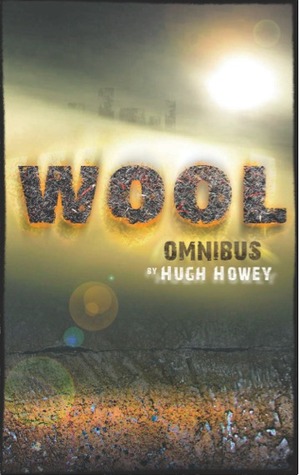
So here we start, with a little taste of Ensign Steve Konkoly’s days as a division officer, aboard one of the finest warships in the Pacific fleet, the Oliver Hazard Perry class frigate, USS THACH (FFG43). It really was a good ship, but at times I felt like she was probably better suited for combat on the waters that made Oliver Perry famous, Lake Erie.

Here I am, hard at work in my stateroom, wearing my favorite hat…which I could only wear in my stateroom, and had to remove quickly if I heard the Captain or Executive Officer nearby. The picture may be a little fuzzy, but this was me about 15 years ago, and the hat is not official Navy issue. A little masking tape, a red marker and a “confiscated” red hat that someone had left lying around. It reads BOTT, and if you can figure out what it means right now, you’re way ahead of me on this post…and you too may have been scarred deeply by the Navy.

I created this hat at the height of the ship’s readiness training cycle. We had been working for months to prepare for the Navy’s  evaluated readiness rating tests, which the ship had to pass in order to remain certified for deployment to the Arabian Gulf…or to just leave port, I think. Either way, I can’t possibly express the importance of these evaluated drills in the life cycle of the ship, and the lives of the crew. If a ship failed one of these drills, the Captain’s career hit a major speed bump, and shit rolled down hill from there. Imagine a career stomping avalanche of shit. All of the senior officers performance reports (Fitness Reports) would be scarred, senior enlisted evaluations marked low…you get the picture. The preparations for these evaluations were exhaustive, stressful and all-consuming. They were so important, that the ship’s crew started preparing for this certification…

One of the key principles to the entire system was The Training Team…many of them actually. You see, not only was the ship graded by the crew’s ability to handle prescribed emergency situations (missile attack, loss of ship’s power, fire in the engine room, flooding, chemical attack, etc.), but the ship must have a qualified training team, capable of continuing this training throughout the year. The training team taught and evaluated the crew, and in turn was evaluated and trained by our ship’s superior command, The Destroyer Squadron in Japan. It actually made sense. When we were 30 days out to sea, we constantly trained, and we needed competent teams to evaluate our performance.

On a ship of approximately 200 sailors, this presented an interesting dilemma, which led me to create my special hat. We had a lot of training teams, and these were coveted positions. Let me list the teams: Combat Systems Training Team (CSTT), Shipboard Training Team (STT), Damage Control Training Team (DCCT), Engineering Control Training Team (ECCT)…and there must have been more. I can’t remember them all, because they ran out of colors of the rainbow for their distinctive hats (like the one I created…actually, red was for the DCCT). With ten or more members on each team, a comprehensive shipboard drill could involve 50-60 personnel roaming the ship, evaluating different aspects of the crew’s performance.

These pictures are not from my ship, but it gives you an idea. Notice in one picture, there are two trainers in the same spot!

So what? Well, first of all, this didn’t leave a lot of crew to man the ship, and it caused a lot of turmoil. Finally, and most importantly since this is my blog…I wasn’t on a formal training team. As a “seasoned” junior officer, and one of few qualified to stand Deck Watch on the bridge, I spent most of my time in the open air staring out at the ocean, making sure the ship stayed on a safe course and out of harm’s way. I probably wasn’t the best Officer Of the Deck (OOD) in the Navy, but I held my own on USS THACH, and this station eventually became my General Quarters post. If the General Quarters alarm sounded, I reported to the bridge to take command of the deck. I performed well under stress on the bridge, and I loved the responsibility. Until I realized this would keep me from serving on one of the Training Teams, and would land me in a bizarre seagoing purgatory.

Over the course of several stints at sea, I grew tired of the bridge. I already rotated through the regular “at sea” OOD position with two other junior officers, so every  8 hours, I reported to the bridge to stand watch for 4 hours. Then, I would finally be relieved, and guess what? We had an emergency fire fighting drill in one hour, so guess what? I got to visit the head, drink a glass of “bug juice” (Navy term for Koolaid…but way worse) in the wardroom, and head back up to the bridge, because the officer that just took over the watch was on one of the training teams (he had to meet with the training team 30 minutes before the drill). I’d be up there another hour or two, until the fire drill concluded, and the “training team” had debriefed, with coffee I’m sure. Even better, I’d finally be off duty for a half hour, then I’d see my roommate (stateroom is the official Navy term) put on one of his multi-colored hats, and start to leave. Full of dread, I’d ask him where he was headed, and he’d whisper that the ship would experience an unannounced flooding drill in thirty minutes. Son of a mother $%!@$&, I’d be back up on the bridge against my will again!

After a month of this, every day, I started to get resentful. Back and forth to the bridge to relieve other officers for 1.) their “training team” meetings, 2.) General Quarters because of the “training teams.” 3.) my regularly scheduled watch, or my favorite 4.) some one had to take a $#@! and needed me to take over the watch for a while. I didn’t just resent the bridge, I hated it. I also hated the “training teams,” so I decided to form my own.  Can you guess what it stands for yet?end Over Training Team

That’s pretty much how I felt every time I climbed the ladder leading to the bridge. I think I was the only one on board with an actual hat, but I wasn’t the only one on the team. Anyone not assigned to one of the Training Teams was automatically enrolled. We had a lot of members, and I guess I was their de facto leader. A fact I would become extremely proud of as the days at sea rolled into weeks.

You see, upon successful completion of our various certifications, I finally saw the light. The system worked, and it produced a highly trained crew, capable of keeping THACH in the fight, under the harshest combat conditions. I left THACH a month later, with some damn good ship handling and surface warfare skills. Too bad it would all go to waste. I was scheduled to report for duty as a ground liaison to the Marines in a few weeks. At least I left my only sea tour on a positive, if not rushed note…

That’s me standing on the bridge, with the old fashioned WWII helmet that we were required to wear, in case a paperback book fell on our heads. Wouldn’t do much to stop a fragment…I think I cracked one putting it one the navigation table while taking a break from the heat. Still, it’s a timeless picture that could have been taken before one of the great battles of the Pacific during WWII (I’m pretty sure the helmet was a relic of that time). I guess life could have been worse for me. I could have been dressed up like Batman in firefighting gear for hours on end, in 100 degree heat. Some officers found a blissful peace during these drills, which came in the form of a precariously balanced nap in their stateroom. Sorry, Chip, this isn’t the best representation of your work product, but it was the only picture of an officer napping that I could find. I couldn’t take a picture of myself, and frankly, who could have seen my sleeping in this mess. I hope you enjoyed this little glimpse into life at sea.

We made a business decision to miss the fireworks…

and I’m still bummed out about it almost a week later.

This is the time of the year when I feel the most nostalgic about my military past, and find myself digging up old photos and memorabilia from those days. Leaving the Navy was bittersweet for me, but it was the right decision. For every one thing I miss, there are probably five that I don’t. I do know that the biggest thing I would have missed, if I had stayed on for several more years, was my family. I had found that I resented time away from home, more and more as our family grew, and this is how I knew it was time to part ways. I had given 12 years, if you count my 4 in Annapolis, and would have gone anywhere Uncle Sam had seen fit to send me. I was extremely fortunate to have hit one of the peaceful cycles in our nation’s history, 93′ to 01′, which would be shattered just three short months after I left.

Back to the fireworks. Unfortunately, the 4th fell on a Monday, and my wife and I were facing a full week of work and summer camp…so, as the afternoon progressed, we both started grumbling about getting home after ten o’clock, fighting traffic, getting bitten by mosquitoes, packing lunches for camp. The list of grievances continued until we decided to bag the fireworks. The kids weren’t happy, but we eased their pain with the promise of sparklers and ice cream. We were both exhausted from the long weekend, and went to bed pretty early, so we could hear the fireworks through our bedroom windows…and this is when I truly realized what I loved about the fireworks. THE NOISE!

“The rockets red glare…the bombs bursting in air” is spectacular, and gets most of the ooohs and aaaahs, but I enjoy the deep resonating booms and sharp crackles more. I count the time it takes the sound to reach us, from each flash, applying an old field trick to determine distance to a target. What? You say. Well, I spent the last four years of my Navy career working with Marines, first as a forward observer and then as an instructor for the Navy/Marine Corps school that taught new forward observers. I have always loved explosions and the sound of gunfire, but these four years turned it into a love affair. As a forward observer and forward air controller, I got to “radio in” just about every munition in the Navy or Marine Corps arsenal. A few years later, as an instructor down in Coronado, California, I was assigned to a rare job, filled by only three naval officers and one Navy Chief.

We ran the Navy’s only ship to shore bombardment range, which was located about 50 miles off the Orange County coast, on a nasty little chunk of rock called San Clemente Island. It’s sister island is a day trip oasis known as Catalina Island. Somehow, stuff thrived on the other island…or at least someone tried to make it happen. San Clemente was a washed out rock, beautiful in its own way, but sparse and mostly abandoned. On the south-west tip of the island, sits the Navy’s Shore Bombardment Area, and a few  horrifyingly old structures used to house the “range safety officers.” ME.

We’d sit in a bunker, and “radio” fire missions to ships off shore, or we’d oversee Marines doing the same thing. Either way, if someone was firing at that range, we were required to be there. This is where I fell in love with the sound of high explosives. The 5 inch shells fired by our modern navy pale in comparison to the 8 inch and larger guns of the older fleet, but it was still impressive. I’d make a radio call, engage in a scripted back and forth conversation with the ship, and less than a minute later, 5 inch shells would crash into the beach area below…way below. It sounded exactly like the Fourth of July. When ships were looking to dump ammo, we’d call in lots of shells. The more the better, and we’d try to move the impacts closer and closer to the “bunker.” We were told it could withstand a direct hit from a 16 inch shell. The concrete was easily three feet thick, but I had my doubts about that…but these were only 5 inch shells. Still, I wouldn’t want to be anywhere near one of the “smaller explosions.” I have a piece of shrapnel from one of these, and it could easily remove your head.

So, as I lie in bed last Monday, I was bummed that I wasn’t closer to the sounds. My thoughts drifted to my days out at San Clemente Island. There was no other experience like it at the time. Today, there are a lot of veterans and active duty military personnel that would be happy to never hear a sound like that again, and I can only imagine how many of them watched fireworks displays with a little anxiety, AND A TON OF PRIDE. 

My hat goes off to all of them, and especially the ones who have heard the REAL THING…and probably not from a bunker like the one I got to sit in ten years ago.

I’m going to commemorate these veterans by releasing an uncut scene from a book that I published last fall. I had read several accounts of 2nd Marine Expeditionary Brigade’s attack through An-Nasiriyah, particularly the fierce fighting around the bridge over the Saddam Canal. The day saw fierce fighting all throughout the city, but I was drawn to Charlie Company, 1st Battalion, 2nd Marines’ story. They heroically held the bridge, in the confused absence of reinforcements, for most of the day, suffering 18 killed. Worse, they were repeatedly attacked by U.S. A-10 attack jets, who mistook their vehicles for an incoming enemy armor offensive. I chose to use their incredible story as background for the main character of my novel. The scene is historical fiction, based on the fight to hold the Saddam Canal Bridge, and I hope I did some justice to these Marines and Sailors.  They truly deserve it. You can find the scene here: UNCUT BATTLE SCENE from The Jakarta Pandemic

Clean up day for new novel

As you can see, I have a little mess brewing on my desk. About two weeks worth of sticky notes, with ideas that popped into my head while walking around the house, driving my car…or lying in bed. Most of these notes pertain to a specific scene I am writing, or have just written. Details I missed or changes I feel compelled to make. I gather these and then address each one in turn. I usually tackle a few per day, to keep the pile from growing, but you can see that this system isn’t working well. This is actually a good thing. I’ve been faithfully writing close to a thousand words early each morning, every day for the past three weeks, which is why the pile has grown. All of my time has been spent moving the story forward. Check out the word count at the top of the blog. Not bad. I’m shooting to wrap this thing up around 110K…I can hear Joe groaning.

Now to eliminate the yellow mess.

New blog header…

by Jeroen ten Berge

It’s grim, marginally creepy and gritty…just like my stories. Thanks, Jeroen.

If you don’t have anything nice to say…

Then don’t slam me with an ill constructed review on Amazon. Post it to your blog. If you get as many blog visits per day as I do…I’m pretty sure that your review will live forever in obscurity.

However, if you have something nice to say, I’d like to help you get the word out to the masses. I found this unsolicited review of my book while conducting one of my daily vanity searches on Google.

http://nicksteckel.blogspot.com/2011/06/book-review-jakarta-pandemic.html

What a nice thing to find. Someone who took the time to write an extensive, meaningful, well constructed review of my novel. I actually felt guilty about some of the short reviews I have written recently. Here is someone that invested a considerable amount of positive, mental energy on my book…beyond just reading it.

I ask you to take the time to read Nick’s review. I couldn’t have written a more poignant review of the book myself. He really captured the essence of my intention for the story, and for his efforts, I think his blog deserves some attention. Many thanks, Nick.

One last note: I added a word count for my next novel to top right corner of my blog. I’ll post two dates, with word count, so you can send me a message if it appears that I have slacked off. A little personal accountability, with oversight. I started the week with 24,244 words.

What a character would do…

Or rather be caught dead than doing.

Character development is a complicated aspect of writing. Like in our own lives, a glaring inconsistency draws a ton of attention, especially on paper (or e-ink).

This post was long overdue, and a minor criticism at my last writers group meeting motivated me to tackle the subject. What was the criticism? My protagonist, male…a former deep-cover operative, pulled a bottle of Riesling out of the refrigerator to share with his wife. Apparently, men don’t drink Riesling. Not even in 2005. And I thought it would go nicely with the Thai food they were eating. I was a little defensive, maybe a little hurt…I like Riesling (not a first or second choice, but it does pair well with spicy food). Alas, everyone agreed that a beer was more appropriate. This is a character compromise I am more than happy to make…if only this was their only suggestion about my new story, Black Flagged. PREVIEW.

This is a pretty minor criticism compared to some of the critique I have received over the months regarding the protagonist of my first book, The Jakarta Pandemic. Alex Fletcher, decorated war veteran, and former Marine Corps officer, grates on some peoples’ nerves! Who has the most trouble with this character? Conservatives. Alex takes a few jabs at Fox news, here and there. And, he’s a vegetarian that has installed solar panels on his roof. He also keeps his guns responsibly locked in a safe (until there is a definable danger), and doesn’t immediately kill any potential hazard to his family with extreme prejudice. I have also been accused, in a few of the reviews, of pushing a liberal agenda through this character. Huh? Did I mention that Alex is pro-choice and supports gay marriage? No, I didn’t…so I though I was safe from the appearance of political partisanship in the book. Apparently not. Probably a little naive on my part. One reviewer, who loved the story overall, said that the “author was conflicted,” because I created a character that didn’t comfortably fit into ANY political classification. I’m actually proud of that.

Still, all of this raised some awareness about character actions, and I do keep this in mind while writing my next book. I have dozens of characters, all with their own thoughts and rationales for what they do. Once again, I miss the good old days of The Jakarta Pandemic. It’s pretty difficult to keep a character “in line” throughout a 300-400 page book, so this will be one of the primary focuses that I assign to all of my pre-readers (those that will read the first edition before it goes to print), writers group and EDITOR (that’s you Felicia).

Keep my male characters away from ANY drinks that come with a pink umbrella!

More Excuses…two of them

I have become really proficient at coming up with excuses not to write…don’t worry, I’m “running” out of them. So here is my dilemma and a possible solution:

I used to write in the evening, after everyone “sallied forth” to bed (including my beloved), however, I recently started to run in the morning…and if I stay up past 10:00, I will not get up in time to run, fix breakfast for two fully competent kid (get it…they can make their own breakfast), pack lunches/snacks (another thing they can do) and watch a few minutes of tragedy or “men behaving badly” on the Today Show. Of course, “the crew” does not retire for the evening until 8:45, and my spirited daughter can be heard running back and forth, or bouncing on her bed until well after 9. She stays up later than my wife on most occasions. It doesn’t leave me with a lot of time.

Running in the morning, which at first seemed to be another hindrance, may turn out to be my savior. I run every other day, but still wake up rather early on non-run days (especially during the summer months). I think this will have to be my new writing time. A fresh cup of coffee, hopefully a cool breeze blowing through the office…and compete silence in the house for a few hours. This will have to work for me, or it may be a long time until you see a finished copy of Black Flagged. The Plot Chart is staring me in the face.

As a side note. Through Amazon sales channels, I noted that 10 copies of The Jakarta Pandemic were purchased (at the same time) through the expanded sales channel option (used by bookstores and vendors to purchase at wholesale prices). What does this mean? I can only assume that a bookstore purchased enough copies to stack them on a shelf. I really wish I knew where. Keep your eyes open, and if you see copies of my book…please let me know, I’d like to personally thank them (and sign all ten copies).

The Culprit

Not sure how this will look on my blog…this is my first mobile posting. The vessel in the picture is the reason I have written a grand total of two pages in two weeks. Painting, waxing, buffing, varnishing, washing…more waxing. Leaving town for Memorial Day weekend didn’t help either.

Vessel Name: Dolci (Italian for candy or sweet). She certainly is a sweet boat, and well worth the distraction. Thanks to April showers, she’s almost three weeks late reaching the water. Today is the big day.

One more excuse for a low word count…but can you really blame me?

The structure of a plot…

My new novel’s Plot Chart

Or what I like to call…Order out of Chaos. I recently submitted this picture to my writers group, with a short explanation of my “to be discussed” submission (Chapter Three of my next novel Black Flagged). As a joke (a dry one), I told them that if my explanation was confusing, then they should refer to this plot chart, which would clarify things. They got the joke, and everyone that responded, kindly informed me that they couldn’t read the chart, which was my intention…I can’t give away the entire plot that easily.  I figured that only someone with a relative or friend working in a CSI lab could turn this into a readable image. They knew that too. Joke’s on me.

I often get the question, how do you even start writing a novel?

That’s the easy part (or maybe the hardest for some). You take a story idea brewing in your head, and start to craft a scene. Then you start writing. Does it have to be the beginning of the story? No. In my opinion. Once you get to writing, you’ll know soon enough were the scene fits. This is where you start to develop a problem. You really need some form of structure in order to continue. Even if it’s a simple notebook outline.  I should come to a SCREECHING HALT at this point. I can feel the heat on the back of my neck. Yes, many writers start with the structure before writing. Characters. Places, Everything. You can buy software to help you craft everything before you write a word, or you can borrow a book that gives you the framework for creating basic story structure. This approach is pretty common.

And, I don’t think I’ll ever really do it that way. I like to get the concept of the book formed in my head, and start writing a scene or two…but very soon after, the over-organized, ex-military side of me needs to start working on the details of structure. It really gnaws at me. I scribble a comprehensive outline in my notebook (15-20 pages), leaving room for additional information. I like time lines to be accurate, so I always start a historical time line of events. I start a character info sheet…nothing too fancy (names, basic info, description). I have to stop myself at some point and get back to writing. I love details, so this can become an over-consuming task.

Once the writing flows again, I will turn to something like the Plot Chart once the plot lines start to confuse me. Chapter Five for Black Flagged. Once I started involving multiple government agencies, with their own interests and action…I had to switch from the notebook to a large visual device. I used a similar device for The Jakarta Pandemic, but not for the plot. You’ve already seen my neighborhood map (added to the book at the request of readers), which helped me keep track of over 30-something households in the story. I created this pretty quickly, once I couldn’t visualize who lived next to who on Durham Road. Overall, The Jakarta Pandemic’s plot line was simple. Most of the story took place inside the neighborhood (one house mainly) and stuck to the protagonist’s point of view.Easy…I miss those days.

I don’t have this luxury in Black Flagged. I have FBI agents, CIA managers, covert agents, private security contractors/assassins, pentagon officials,  rogue generals…and they’re all pursuing their own agendas.

I better make a readable copy of this chart ASAP…my daughter has a bad habit of “helping” me by putting her crayola markers to creative use!

If you haven’t read the prologue to Black Flagged, check it out HERE: PREVIEW.

Updates to The Jakarta Pandemic…

On April 28th, I alluded to some changes by unveiling The Jakarta Pandemic’s new cover. One month later, The Jakarta Pandemic is officially DONE!!! I know, the book was “done” in late October, then again in November…I think I substantially changed it every month since it was first launched.

I really mean it this time. I’m through tweaking this book, and so is my editor. I can’t thank Felicia (editor) enough for convincing to make some necessary changes to the format and content. I am extremely pleased by the final product…enough to leave it alone, which is big for me.

What major changes can you expect to see in the latest revision?

First, the book is about 25 pages lighter than before, thanks to some aggressive editing of “long” news segments and a few scenes that really didn’t propel the storyline. STREAMLINING. Almost all of these cuts came from the first third of the book, which is good news for readers…the nasty pandemic induced mayhem comes quicker. I love story setup, so it was tough to part with some of this content, but I firmly believe the words were not sacrificed in vain. A moment of silence please.

Second, I changed the tense from present to past. Actually, my editor did this…she’s still probably suffering from verb tense PTSD.  Prior to giving the “go ahead” on this change, I sampled a few chapters of converted manuscript (compliments of said editor) and was surprised by how much I liked the past tense version of the story. 95 plus percent of stories are told in the past tense, and though I might have argued you to death three months ago about my decision to write the story in present tense…I was sold when I read Felicia’s converted version. Plus, I wasn’t the one that would have to change every verb in the 400 page story. Amazing how my attitude changed. Seriously though, it is a major improvement.

I also included a preview of my next novel, BLACK FLAGGED. No, it’s not a NASCAR novel…I haven’t gone completely mad. Black-flagged is a term used in the espionage world to describe an agent or operative that is to be interrogated and summarily shot if captured. In the preview, you’ll be introduced to the main character of the book, during a time in his life when he might have prayed for Black-flag treatment if captured. If you thought The Jakarta Pandemic was a dark, gritty read, you will thoroughly enjoy my next novel…whenever I finish it.

If you’ve already read The Jakarta Pandemic, don’t get upset…you can check out the preview here: PREVIEW

Pass the word. Now is the time to download or order your copy…before I jack up the price (I’ll blame it on gas prices, or the cost of produce at Whole Foods).

Six months into self-publishing, and what have I learned?

Everything…from the ground up. Uhhh.

I’d like to sit here and tell everyone that I’m always a “do it yourself” kind of guy. I framed our attic for its eventual transformation into a beautiful 800 square foot home for my son’s Xbox 360 (that’s about sums up its purpose now). I even did all of the trim work, built shelving and helped paint (I hate painting). But I didn’t mow my own lawn last year. Why? Because I’m not obstinate when it comes to the do-it-yourself mentality…and when a good price comes along, I’ll let someone else breath noxious fumes and spend two hours on a lawn that’s going to brown up in August anyways (no matter how much water or fertilizer I pour onto it! Even The Lawn Dawg couldn’t prevent that). It doesn’t look like I’m going to win the noxious fume argument this year. My wife wants to direct this money elsewhere, which is fine…I really don’t mind mowing the lawn. So, what am I talking about at this point?

Self-publishing. I get a lot of inquiries about my experience, from other aspiring writers and curious friends. The question I get from everyone is: “Did I choose to self-publish?”  Yes and no. If my first query letter to a NYC agency had been received with a warm welcome and a huge advance on royalties, I’d probably be scoffing at self-publishing right now. How dare these so called “writers” publish their own material, without the nod of the traditional literary institution. I fired off about seven letters in total, before I decided against continuing to prostrate myself to “the industry.” Once again, I wasn’t opposed to the concept of a lavish check, in advance of my certain bestseller, and I’m sure there’s a number out there that would convert me immediately. We all have our buy off amount.

What did I do differently than most of the aspiring writers that send hundreds of letters a year to agents? First, I quit sending letters. I’ll tell you why shortly. Second, I self-published The Jakarta Pandemic for the Kindle, NOOK and as a paperback…before I started sending letters to literary agents. Now, for the hardcore pursuers of a NYC literary agent, this is tantamount to committing writer suicide. Tainted! No agent or publisher will touch you now that you’ve had the audacity to self-publish your CRAP, without them. And that’s the key to it all. Without them. I’m not going to reiterate what a million other blogs have repeated, but the traditional publishing industry has a vested interest in scaring aspiring self-publishers. Just like real estate agents have no interest in you putting a “for sale by owner” sign in front of your house. Imagine if Stephen King took his business “in house.” It doesn’t cost very much to put a quality book on the market yourself. Good editor, good cover artist…a few more bells and whistles. With Stephen King’s name…the books will sell. You get the picture. Imagine if this became the standard across the literary landscape. It’s a post-apocalyptic tale for publishers. So, don’t you dare try to self-publish.

Why did I quit sending letters? I started reading blogs and articles by authors that have successfully navigated the self-publishing world. I didn’t reach this decision by myself…I’d love to say I did, but that would be dishonest. The more I read about the declining traditional industry, and the rise of the self-publishing realm…the more I wanted to give this a go on my own. Their words appealed to the deep rooted part of me that didn’t like to beg (the industry) and the visionary side that said “I can find readers for this book on my own.” I liked the idea of having complete control of my book, a larger share of the yet unseen profits, and the challenge of learning some new skills, like how to create a website, start a blog, and market my book. If I had a million dollars, I would have hired some help from the star…I’m practical. Since I didn’t have a large book launch budget, I found my own way.

More and more authors should be finding their own way. The traditional publishing world is in jeopardy, and they aren’t taking as many chances on new authors. It’s simple financial math for them, nothing personal…Borders is closing stores everywhere, local shops are scraping by (if they’re lucky). People aren’t buying as many physical books anymore. Blame the economy…OR blame E-readers, but make no mistake, E-readers are here to stay, and they’re proliferating at every turn. iPad 2…3 coming soon? Kindle for $114. I bet it goes for under a hundred this next holiday season. Every electronics company has a version of an e-reader. Hell, I’ve had people read my book on their iPhone! (I felt like sending them a free copy for the effort…holy cow that would hurt my eyes).

New authors will still get through, but not as many. Every time I walk through Borders, I see more books by the same, financially sound names. I don’t blame the industry, but I’m not going to lock my novels in a vault and wait for an agent to take a chance on my book. I’ll take my own chances. So far, nearly 4000 readers have taken a chance on my book.

If you’re interested in reading more on the topic of self-publishing, you need to check out Joe Konrath’s Blog, A Newbies Guide to Self-Publishing. He predicted the rise of Self-Publishing years ago…and turned his back on the traditional publishing industry. He’s gruff and tells it like it is. His blog archives motived me to keep the rights to my books…for now. Coincidentally, I just read his most recent post, and he also predicts the under $100 e-reader by Christmas. I swear I wrote this minutes before I read his post.

Some changes afoot…

Artist Jeroen ten Berge created an incredible cover design for The Jakarta Pandemic. Check out his write-up of my novel…along with more of his influential design work. 

Jeroen ten Berge

Eagerly awaiting my 40th…

book review.

I turned 40 at the end of February, and the event was anti-climactic. I didn’t feel the decay of old bones, or slight degradation in my eyesight. One more candle, and a wonderful family birthday party. I was spared the surprise, “this is your life” event that I’ve seen unfold for other quadragenarians.

My book turned 30 last week, which kicked off an exciting flurry of review activity. I had high hopes for the 30th review…looking for a reason to celebrate. The title of the review? “Wow…this book.” And not in a good way. A one-star 30th birthday review for The Jakarta Pandemic. The review was quite lengthy for Amazon, and had nothing good to say. The only positive? I could tell that the reviewer hadn’t read the entire book, probably not more than 30 pages. Needless to say, I was a little irritated. I wrote a nice response and let it go. Not everyone is going to like this book…or any book. Little did I realize that this would be the first of nine reviews written in four days. Thick skin? I would have felt better suited up in Kevlar.

Every time I checked Amazon, I cringed. I took two more solid hits, and then nothing but good reviews. I have been solidly impressed by the quality of people reviewing my book, and the readers that have reached out via e-mail. I frequently invite reviewers to contact me, especially if I see something that worries me (misunderstanding of meaning or purpose of my writing…not for pointing out typos). The reviews help shape future works, and revisions of the Jakarta Pandemic. I’m self-published, so I can do whatever I want with the book. I have a free-lance editor (who reviewed my book and responded to my request for help) working on some improvements as I type. These are all reader suggested enhancements, which will be available in new editions by mid-May (I hope).

Before I check Amazon for more reviews…Fridays always seem to be the biggest day for The Jakarta Pandemic…let me share with you an example of how not to handle a negative review. Read the string of posts, if you can. It’s cringe-worthy. Warning: Profanity.

How Not To Handle A Negative Review

Wish me luck on my 40th Review…it’s out there somewhere. Maybe it’s one of you.

You Tube review of The Jakarta Pandemic

As all of you hopefully know, I encourage readers to contact me with questions or suggestions regarding my book, and I actually hear from some of them. Most of them are surprised to hear back from me, which I can’t believe. Hearing from readers is one of the most rewarding aspects of writing a book. It’s proof that someone actually read it, and didn’t just need to spend the remaining three dollars on their Amazon gift card. I suppose some of you will remind me of this post, when I hit the big time author circuit, and get swamped with fan mail. Back to reality Steve.

So the other day, I started a conversation with a reader from my home state of Indiana. After exchanging a few emails, he said he would do a review of my book on his You Tube channel. What? I thought people just posted videos that featured laughing babies on You Tube. I didn’t realize that some people actually used it for constructive purposes. I was wrong.  Below is the link to my first “live” review. The only thing that upsets me about this, is that I didn’t think of this first. Thanks, Hooser9mm for opening my eyes to a whole new marketing angle…and for a helluva nice review. Also, he offers a few additional videos that highlight some easy to implement, basic disaster survival strategies (for the family), which tie in nicely to the preparation strategies employed by the Fletcher family in The Jakarta Pandemic.

You Tube Review of The Jakarta Pandemic.

Realistic dialogue…

in 19th Century London…what a mess.

My wife is reading a very thick, fiction novel set in 19th century London, and she occasionally draws my attention to passages from the book. Yes, she interrupts whatever I’m reading to do this, and since I love both historical fiction and my wife, I’m usually game to take a look.

I’m always amazed by the richness of detail in these novels, which can at times almost appear obsessive. From the era appropriate napkin folds at table settings, to intimate descriptions of every article of clothing that adorns a character…and not just the main character, but everyone in the scene. This is one of the main draws to period or historical fiction. The details of another time. It’s an amazing feat, which must involve painstaking research, travel and imagination. As a part time writer, I’m thankful for Google and an active, roaming imagination.

The other night, she pointed out another feature of this tome she’s lugged around for a few weeks. The dialogue. I couldn’t believe it, but the author had taken pains to mimic the speech of the 19th century London too. I can barely understand some of the thicker British accents even today! I must admit that I couldn’t stand it. I was forced to work too hard to understand the dialogue, and I can only imagine that my wife feels like she’s learned a second language at this point…though I don’t hear her complaining.

I take dialogue seriously, and if I can’t follow it, or it’s unrealistic, I’m likely to tune out of the book.  In fiction all dialogue is contrived, so I use a simple strategy to test it. I read and re-read lines of dialogue out loud (I don’t do this for every line…I seem to know when the test is necessary). It’s amazing how crappy a genius line can sound when you put a voice, and some inflection to it. I’ve eliminated some stinkers this way…and probably missed a few. I still find them.

Do you pay close attention to dialogue in a story, or are you more tied to the action?

Updates!

I have a few exciting updates to announce:

1.)    My book has been professionally edited, so the typos and grammar errors that most of you have been so kind not to mention, should be mostly eradicated. When I get unsolicited emails from readers, complimenting the story, then volunteering to edit my next book…I know it’s time to put this in the hands of a professional. Still, I took a few readers up on the offer to sweep The Jakarta Pandemic, and they turned up enough errors (I’m embarrassed to say how many), that my editor didn’t consider re-negotiating terms in the middle of the project. Thank you guys and ladies for taking the time. You know who you are. And thank you, Noah Mullett-Gillman, for taking on the editing project. You should check out his book, Luminous and Ominous, another recently released Post Apocalyptic tale.

2.)    Noah also recently hosted Post Apocapalooza II, a series of interviews with new/indie Post Apocalyptic writers…and I was included in this group. The term apocalyptic fiction wasn’t in my vernacular until a few months ago, and I’m not kidding. I’ve read plenty of PA fiction…The Stand, The Road, World War Z…and I love apocalyptic movies, but I classified my book as a thriller/horror novel. Noah contacted me regarding this interview series, and I did a double take…it was really so obvious, I almost laughed. I wrote a book about a pandemic that will likely wipe out over 700 million people, which certainly places you well within the PA genre. Thanks again, Noah. Check out the Post Apocapalooza II. Several writers are featured, and their books range from pandemics to zombies, to biblical prophesies…back to more zombies.  You can read an excerpt of my interview below…regarding zombies.

NOAH K. MULLETTE-GILLMAN: “If a world-wide zombie outbreak occurred, what would you do?”

STEVE KONKOLY: “I’m not worried about this one, because I think at this point we should be well prepared for a zombie outbreak. Hundreds of films, dozens of books…even an instruction manual for surviving a zombie attack (thanks to Max Brooks). Human awareness of zombies is at an all-time historic high, so I can’t envision a scenario where an outbreak could spiral out of control. Unless it was an infection like in 28 Days, and then I would barricade myself and re-read Max’s book, over and over again.

Did you ever notice how people fall victim to zombies (slow moving type) at the beginning of most zombie movies…like they have no idea what they are confronting. We watched The Walking Dead this fall on AMC, and I turned to my wife at one point and said, “I guess this whole genre is predicated on the concept that nobody has ever heard of a zombie before.”

3. I added a prologue to The Jakarta Pandemic, to give the readers a glimpse into the future of the disaster that unfolds in suburban Maine, when the Jakarta Flu is in full swing. The story takes a little time to gather steam, as the groundwork for the epic disaster is carefully put into place, so I thought that the addition of a prologue would give readers some reassurance that they are in for a thrill ride through panic-stricken suburbia.

Jakarta Pandemic New Prologue

Enjoy!

Don’t characterize my characters…just yet.

Good plot. Immersing detail. Popular genre.  Quick tempo. All the trappings of a worthy read…right? While these qualities in a book might draw you in, and keep you there for a spell, nothing, in my humble view, detaches the reader quicker than hollow characters. I’ve read the reviews (not on mine thankfully…yet). “Cardboard, one-dimensional, flat, undeveloped, unrealistic…” The list goes on.

Unrealistic?   Now this description captures my attention the most, because it reminds me of something Stephen King said about writing good stories. I am paraphrasing at my worst, but he said something to the effect that an interesting story pits normal people against extraordinary circumstances, not extraordinary people against normal situations. Realism defined? I don’t know, but I like reading stories about characters that have to struggle to overcome an extraordinary problem. Is James Bond one of these characters? At first you’d probably say “no way!” I might agree, but I’d argue that he is an extraordinary person pitted against insanely extraordinary circumstances. It’s the same formula, just presented in a higher octane fashion, which is why it works…more so in the recent Bond films.

Ever read a book where the protagonist is an unstoppable, unbeatable hero? Mentally or physically? It’s fun for a while, but falls flat very quickly, because ultimately, there is no real drama. You know the protagonist will come out on top. It might be fun getting there, but on some level I get bored…really quickly. If the protagonist’s success is in question, or he/she takes a beating along the way…even though I still suspect, or know it’ll turn out alright, I’m pulled along.

Another aspect of a realistic protagonist is their moral stance. I think a little moral complexity is critical for a realistic character. We don’t all help old ladies cross the street…sometimes we’re in a hurry and don’t want to stand two more places back at Starbucks. Sorry. Moral complexity can vary across the spectrum, which can become confusing, so traditionally, we think of categorization in terms of good vs. evil, or some form of this. It’s a simple recipe for conflict, which usually drives a story along.

In my first novel, The Jakarta Pandemic, the moral ambiguity was a little hazy. The structural “good guys vs. bad guys” dichotomy was fairly simple to process, and I’ve received little feedback to suggest otherwise. However, since the book’s release, I still eagerly wait to hear from the camp of people who think that Alex Fletcher was a terrible person, and could not associate with them at all. I built a subtle stage for this into the story (maybe not so subtle), and so far, nobody has walked up onto it for a solid rant against them.

My next story won’t be so easy for most of you. Although most of you will like the protagonist from the start, and turn the last page with the same sentiment intact (mostly)…the ride may leave you with an uneasy feeling. You might find yourself not so eagerly clinking champagne glasses with this character, as you sail away into the sunset.

What kind of protagonist keeps you reading a story?  What kind makes you toss the book aside?

Enduring the next epic disaster

Does the current situation in Japan qualify as an “epic” disaster?

I don’t know, but the unfolding drama at the Fukushima Daiichi nuclear plant will cast the final vote.  All eyes are focused on the crisis, but what exactly are most of us seeing…and learning?

As a writer that recently launched a novel centered around an “epic” human disaster…The Jakarta Pandemic, I saw frightening similarities between the research driven scenario I had created for my story, and the media stories spilling out of Japan. I admit, there is a big difference between the instantly devastating impact of an earthquake/tsunami hit, and the slower burn of a gradually worsening pandemic disaster. However, I wasn’t thinking in terms of the immediate blunt physical impact.  I really focused on the after-effects.  Stories of evacuation, refugees, food and supply shortages…and not just for the immediate victims, but everyone ultimately affected, even as far away as Tokyo.

I especially considered the citizens forced to evacuate the 12 mile radius around the Fukushima plant.  What did they bring with them? How much did they have to bring? What about the people in the next distance ring, who were told to stay indoors? Do they have enough food, water and supplies to stay put for an extended period of time?  Or would they be forced to flee due to lack of necessities. Where are all of these people going?

I wondered if the individual families had ever planned for this type of disaster?  I know you can’t devise a plan to thwart a thirty foot high wall of water, but did people immediately head away from the coast after the earthquake? They certainly didn’t have much time to react.

I thought about the concept of what survivalist/preppers call a Bug Out Bag (BOB)…actually, they have an entire lingo (Bug Out Vehicle, Bug Out Location…etc).  A BOB is a conveniently located, pre-packed bag designed to get you (and your family) through the first 72 hours of an emergency that requires you to leave your home.  I won’t get into detail about the contents, but you get the idea.  If the tidal wave alarm sounds, or you experience an earthquake (and you live close to the ocean)…you can throw this bag into your BOV, start driving inland, and rest assured that you have the basics covered (cash, clothes, first-aid, food, water…more).

There are some basic preparation steps that can make an immense difference, whether you are stuck in your residence with no way to resupply essential items, or are forced to flee (immediately or with plenty of time)  a disaster zone.  Many of these preparations overlap, and can serve you well during something as minor as a nasty winter storm.

How much thought have you put into some of the more likely or unlikely disaster scenarios for your area?  (Even a two day power outage)

Past or Present?

Tense.  This isn’t exactly a new topic for writer’s blogs, but it’s an amusingly controversial one.  If you Google “present vs. past tense writing,” you’ll end up in the middle of an angry battle between the fiercely entrenched forces of the past, and the anti-establishment present.  I’m not going to reiterate the arguments here, you should really check them out for yourself.  This one heats up pretty quick (Fiction Master sounded like he wanted to punch the blog author in the neck).  I think it’s fair to say that we’ll see Glenn Beck and President Obama having beers together in the White House garden before any of the “pro-past tense” folks acknowledge the possible use of the present tense in fiction writing.

I feel like I’m listening to an argument between two sci-fi fans over time travel, and I’ve heard it all before…maybe because I’m caught in a perpetual time travel loop that keeps replaying my past experiences…or I’m listening to an author tell a story, which clearly already happened, giving me the impression that I’m hearing it again.  Does any of this make sense?  Probably not, because if you’re like me, after listening to the time travel argument for let’s say…two minutes, I feel compelled to interject.  “Time travel doesn’t exist, so what exactly are you arguing about?”  The same goes for arguing that the present tense has no place in fiction writing.  It doesn’t matter whether you think it happened in the past, or the present.  It really never happened at all, and only the author holds the key to why the tense was chosen.  This is the heart of the matter, as I have experienced.

The Jakarta Pandemic started in the present tense for no reason at all.  I wrote the story solely from the protagonists view, and after writing about ten pages, the present tense dominated.  I actually had to rework the pages to eliminate the past tense.  About fifty pages later, I re-read one of my favorite writing guide books, Stephen King’s, On Writing.  At some point in there, he discusses tense, and states that present tense is typically only suited for short stories.  I didn’t remember much more than that, because I had closed the book and uttered a few profanities.  I really didn’t want to dig back through fifty pages and shift the tense back to the past, but I did…or at least I fought my way through about five pages.  It was miserable, and didn’t work for me.  For my story, it became clear that the past tense was not the right choice, and that a single point of view, fast paced story was well suited for the present tense.  Not that I haven’t received some critique.  I can live with it, because the past tense failed to propel The Jakarta Pandemic forward.

As for my new novel?  With multiple points of view, changing settings, a much larger host of characters, I naturally tended to use past tense.  I strayed back to present tense for action sequences (out of habit), but upon re-reading a few pages, it became clear that sticking to the present tense would not be a sustainable practice for the novel.  I edited about fifteen pages to conform everything to the past tense, and at first it felt like I was writing in a foreign language, but after a few pages, it flowed naturally.

I think the story chooses the tense, and not the writer.

What do you think?

Behind the scenes of The Jakarta Pandemic

About a month ago, I received some great feedback regarding my book.  My neighbor and I were discussing the book, and he thought that a map of the novel’s fictional neighborhood would have helped him to visualize the action in story.  A friend of his shared the same sentiment, going even further to say that he quit trying to keep it straight after a while.   There are thirty-eight households on Durham Road, not all of them an intrinsic part of the story, but most of them are referenced repeatedly.  If you read carefully, you should be able to figure it all out…just kidding.

I sympathize with anyone who had trouble geographically tracking the story throughout the Durham Road neighborhood.  As a stickler for details, I couldn’t hope to keep it all clear in my own head while writing the story, so I created a cheat sheet from the very start.  Actually, it was a poster-board, very much like the one created by Alex Fletcher in the story.  Take a look at both versions.  One is obviously my marked up, faded “cheat sheet.”  The other is a page I added to the beginning of The Jakarta Pandemic, at the request of some concerned readers.

Starting somewhere

How to start this blog?  I can’t imagine going wrong with a thank you to anyone who has put their stamp on my first novel.   Whether you took the plunge and bought the book, or simply passed the word on to a friend (or both hopefully), I’m humbled and impressed by your efforts.   Clearly you have all done something very right to help the word get out…sales via Amazon have steadily climbed since I uploaded the book into Kindle format.  I’m sure Amazon’s Christmas Kindle Proliferation didn’t hurt.  How many Kindles were sold last year?  iPads?

I certainly can’t claim to have pulled off a mastermind marketing campaign.   Or maybe I did, in sort of a low budget, high tech way.  Facebook, email lists, business cards (which my wife hands to everyone…she hands out ten for every single card I sheepishly offer).  I can’t thank her enough (though she might disagree).  I also started posting chapters on a fantastic survivalist/disaster preparation forum, mainly to get feedback from “the experts.”   People who really give some serious thought to modern day survival scenarios (every aspect).   I’d be willing to bet that this group spread the word far and wide.  Many thanks to the WSHTF readers…I’m almost done posting the entire novel there.

So what’s next?  Another novel for sure.   Not a disaster survival thriller, but more of a fast paced (frenetic) thriller, with plenty of twists.  I can envision a series of three novels…now if only I could start to envision my hands on the keyboard, writing the first book.  I’ve started, no worries there, and I’ve roughly mapped the story.  I just need to get serious about carving out some time.  Between family, friends, full time job, maintaining a house, TV shows I can’t miss, and exercise…what was I talking about?  Yes.  More excuses not to sit down and dig into a great story.

Before I get back into the mindset of my new protagonist…please let me know what you’d like to see or hear about on this blog.  You can post comments, review The Jakarta Pandemic…whatever you’d like.

Warmest regards,

Steven